
Iceland in Winter: What to Expect and 15 Amazing Things to Do


Are you planning on visiting Iceland in winter? We’ve visited the country many times during the winter months, and here are all of our top tips!
Iceland is beautiful in winter. While the summer definitely attracts more attention, winter in Iceland is not to be underestimated. Of all the times we’ve been to Iceland, we keep coming back in the colder months.
Winter is pretty magical in Iceland. You have snowy landscapes, frozen waterfalls, and, of course, the northern lights dancing across the sky.
And yes, you will have limited daylight and the weather conditions can be quite random, but it’s so beautiful that it’s worth it!
So, if you’re visiting Iceland in the winter months, here are the 15 best things to do.
*This post may contain affiliate links that earn us a small commission at no extra cost to you. For more information, read our disclaimer.
Iceland Winter Must-Do’s!
Short on time? These are 5 bucket-list things you NEED to do in Iceland in winter! ❤️
- Go on a Glacier Hike
- Soak in the Blue Lagoon
- Visit Katla Ice Cave
- Tour the Golden Circle
- Chase the Northern Lights
Save on car hire with this company.
1. Drive the Golden Circle
This is one of the most popular tourist routes in Iceland and something everyone should do in Iceland at least once.
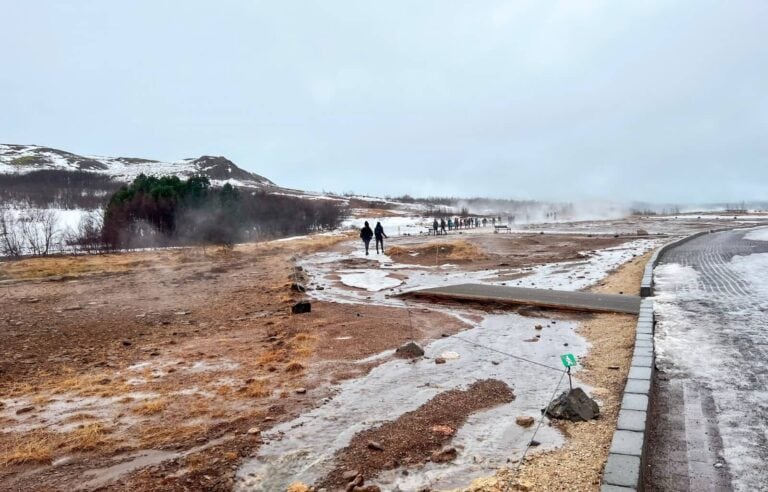
The Golden Circle covers 3 main sites: Thingvellir National Park, Geysir Geothermal Area, and Gullfoss Waterfall. Many tours also include Kerid Crater, and some include the Secret Lagoon as well.


You can explore the Golden Circle all year round. This was the first tour we ever did in Iceland in the middle of December, and it is a great way to get a taste for the magnificent landscapes in the country.
Because of its popularity, it can be quite busy. However, a visit in the winter will be much less crowded than if you were to visit in the summer.
You can either visit the Golden Circle on a guided tour or a self-drive. If you’re not a confident winter driver, we highly recommend booking a tour.


The roads can be dangerous in winter, and while this route is often kept clear, the weather can be unpredictable, and you can never completely rule out a snowstorm.
However, if you do decide to drive, you may be able to squeeze in a few extra stops on the route.
❤️ If you don’t fancy driving, we recommend this Golden Circle tour.
2. Visit Skogafoss
Arguably the most popular waterfall in Iceland, Skogafoss is located along the south coast. It’s about 2.5 hours from Reykjavik along the Ring Road towards Vik.
Once again, this is a popular spot to visit, but there’s something quite magical about Skogafoss in winter. When we were there, the entire ground in front of the waterfall was frozen (and pretty slippery to walk on), and we saw rainbows in the mist.


You can visit Skogafoss via a guided tour or a self-drive along Route 1. The tour will also cover a lot of the more popular spots in the south of Iceland and is ideal if you aren’t a confident driver or are staying in Reykjavik.
This is what we did when we visited Iceland for the first time, and we loved it.
TOP TIP: While on the south coast, also consider visiting Seljalandsfoss and Gljufrabui, which are also beautiful.
❤️ This South Iceland tour is perfect for the winter months.
3. Go on a Glacier Hike
This is hands down one of the best things we’ve ever done in Iceland.
The easiest glacier hike to do if you’re visiting Iceland in winter is Solheimajokull along the south coast. It’s the most accessible glacier, especially in winter, and there are a lot of tours you can book.


We did a glacier hike on our south coast day tour from Reykjavik, and it was fantastic. Our guide was informative, gave us plenty of time at each stop, and the hike itself was insane.
However, if you have your own car and are okay with winter driving, you can also meet the guides on location along the south coast.

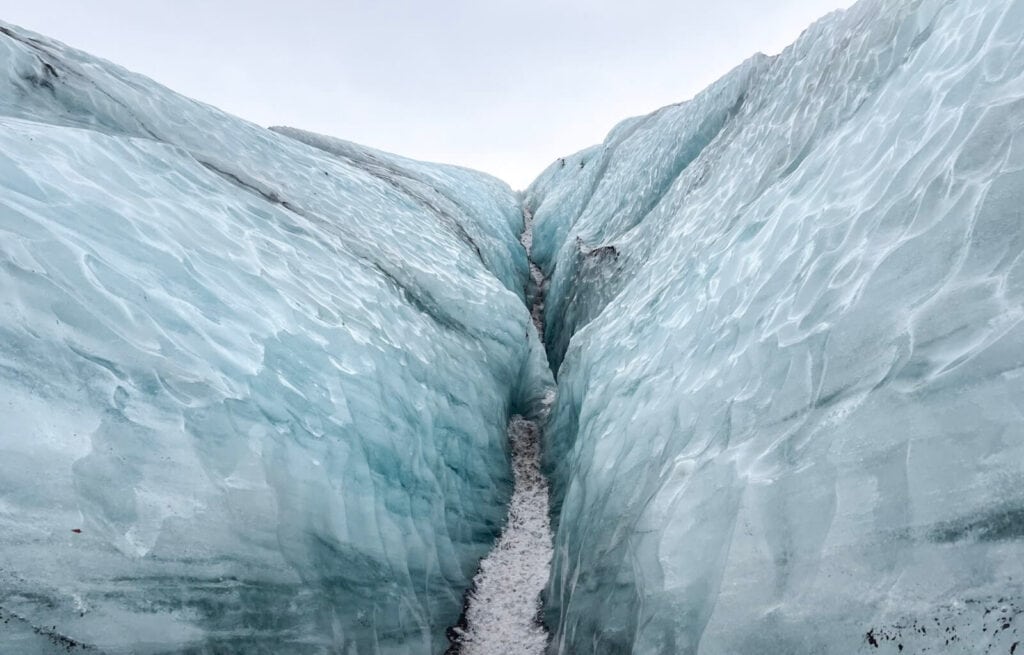
You’ll likely be on the ice for around an hour, and this will include the hike on and off the glacier, and maybe even heading into a tunnel of two.
It’s an insane experience and one we highly recommend.
❤️ Don’t skip this Glacier Hike Tour if you visit Iceland in winter!
4. Go Husky Sledging
You can do this in either north or south Iceland; however, we chose to go sledding in the north, near Akureyri. North Iceland gets a lot more snow than South Iceland in winter, and we wanted this to be as snowy as possible.
Honestly, this is another incredible experience. We had a private tour and spent some time getting to know the dogs first.

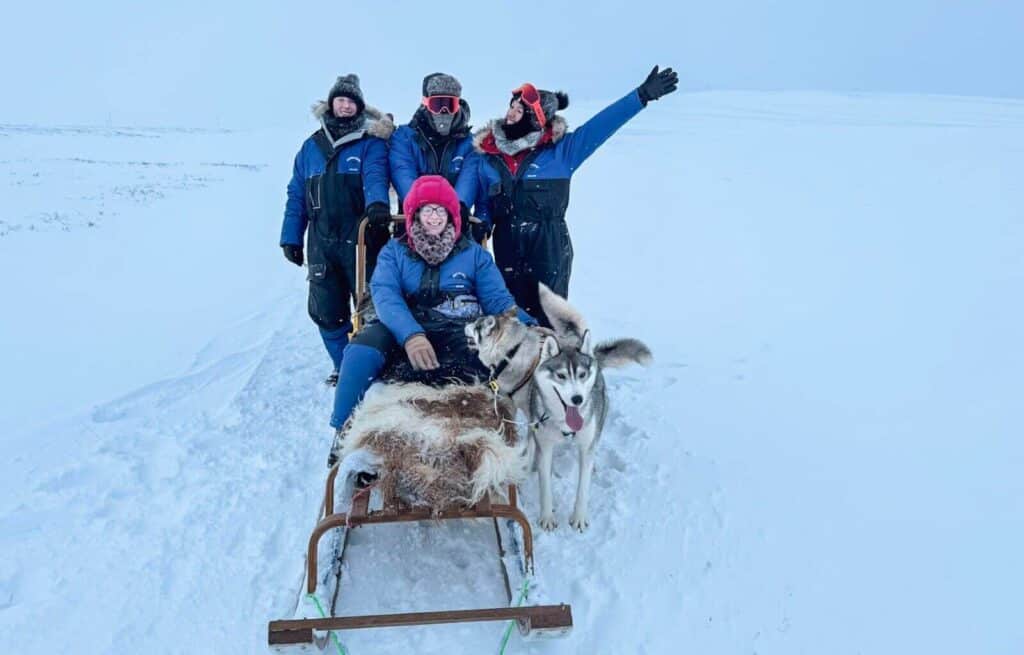
Then, we got into our sledges and went whizzing across the snow. The dogs were so excited, and our guide even let us take the reins for a bit!
There are limited spaces, so this is definitely something we recommend booking in advance, but a must-do for anyone visiting Akureyri.
❤️ We loved this husky sledging tour, and it’s such a bucket list experience in Iceland.
5. Chase the Northern Lights
Can you really visit Iceland in winter and not try to spot the Northern Lights? This is one of nature’s more impressive phenomena and something almost everyone should have on their Iceland bucket list.
Of course, since this is nature, there is an element of luck to this.
You need the right conditions: clear skies, high aurora activity, and complete darkness. However, if you have all of those, you’re in for a truly magical night.


You can see the Northern Lights in Iceland any time from mid-August through to mid-April, but usually the best times are between October and March due to the longer, darker nights.
We saw the Northern Lights from our hotel room in March, and it was truly one of the best experiences we’ve had in the country. But, if you want a higher chance of seeing it, we recommend booking a tour.
❤️ This is the tour we recommend if you want to chase the Northern Lights.
6. Visit Kvernufoss
This is one of our favourite waterfalls in Iceland. Located just off the beaten track, around the corner from Skogafoss, Kvernufoss is still a bit of a hidden gem.


If you didn’t know this waterfall was there, you’ll likely never see it. It’s tucked in a canyon and involves a short, 15-20 minute hike along the river to reach it.
Once you do, you can walk all the way behind the waterfall and, when it’s frozen, it’s incredibly impressive.
7. Visit the Sky Lagoon
When in Iceland, you have to visit a geothermal lagoon! We’ve visited many during our time in the country, and the Sky Lagoon is one of our favourites.
It’s one of the newer thermal spas and the closest to Reykjavik, at only 20 minutes from the city centre by car. It also has some of the best views we’ve ever seen from a geothermal pool.


The main pool is basically a giant infinity pool overlooking the ocean. But then, our favourite part was the 7-step ritual. This was located inside a turf house and included a cold plunge, steam room, sauna, and more.
It was so relaxing and easily one of the best things to do on those cold winter nights.
❤️ You’ll need to book tickets in advance for the Sky Lagoon as spots sell out quickly!
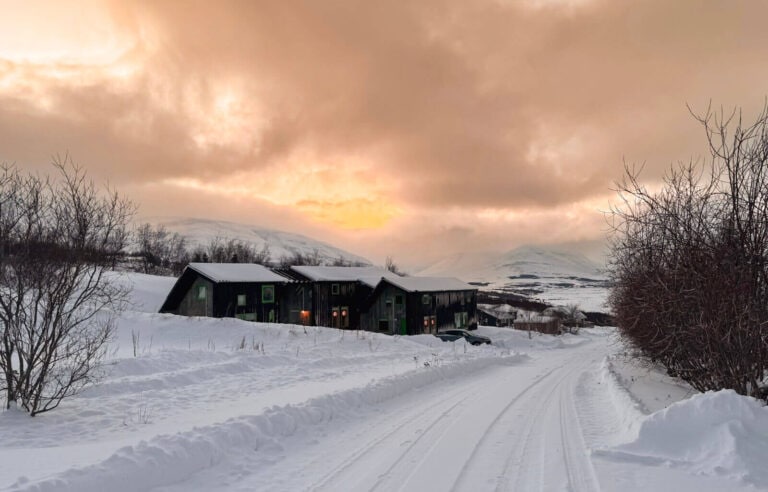
8. Stay in a Cosy Cabin
There’s something so peaceful about a remote cabin in the middle of winter. We always try to choose somewhere in Iceland to stay where we can be surrounded by nature.
In the winter months, this is even more important to us. If we stay in the city centre, we have virtually no chance of seeing the northern lights from our accommodation, and I don’t always want to rely on guided tours.


We highly recommend choosing a cabin stay in the winter months, both for peace and to enjoy the surroundings more.
❤️ A few of the best cabins we’ve stayed at over the years include these cute cabins about an hour from Reykjavik and these beautiful hot tub suites just outside Akureyri.
9. Explore Reynisfjara Black Sand Beach
This is one of the most beautiful but also most dangerous beaches in Iceland. Located along the south coast, near Vik, Reynisfjara is another spot that you’ll visit on a south coast day tour.
It’s one of my favourite beaches in Iceland due to how captivating the waves can be. The scenery here is also incredible.


It’s famous for its basalt columns, huge caves, dramatic rock formations, but also deadly sneaker waves that can wash people out into the ocean.
It’s a beautiful place, but it’s so important to abide by the safety precautions here, especially in winter when the weather can be more unpredictable.
10. Soak in the Blue Lagoon
The most famous geothermal lagoon in Iceland, we just couldn’t write a guide on Iceland in winter and not recommend this spot. The Blue Lagoon is located in the Reykjanes Peninsula, just 20 minutes from Keflavik Airport.


It’s easiest to visit either as soon as you arrive in Iceland or before you leave. However, you can get guided tours that will take you to both the Blue Lagoon and the Golden Circle.
It’s a great spot to visit, and soaking in the milky blue waters is incredibly relaxing.
❤️ Book tickets for the Blue Lagoon before they sell out!
11. Go Whale Watching
Many people regard this as a purely summer activity, but we strongly disagree.
Yes, you will likely see more whales in the summer months as they come closer to the shores to feed. However, don’t dismiss whale watching in Iceland in winter.


North Iceland is one of the best whale watching spots in all of Europe, and you can see whales in the waters around Akureyri and Husavik all year round.
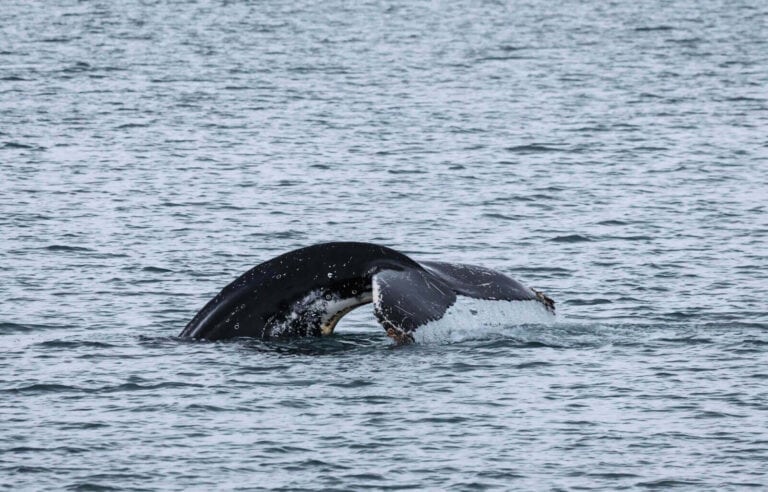
We went whale watching in Akureyri in January and saw a humpback whale. It was an amazing experience seeing these gentle giants up close, and you definitely won’t regret doing this!
❤️ We highly recommend this experience as it was absolutely magical!
12. Visit Akureyri
Whilst we’re talking about northern Iceland, it’s well worth exploring this area a little more. Most people who visit Iceland fly into Reykjavik, but the northern capital is becoming more popular.
You can now fly directly to Akureyri from both London and Manchester.


And, in our opinion, Akureyri is the perfect place to base yourself for a few days.
You can explore the streets, visit the nearby Godafoss Waterfall, take a day tour to Myvatn Lakes, and soak in the beautiful Forest Lagoon. Plus, it’s a great place for husky sledging, whale watching, and seeing the northern lights.
13. Admire Jokulsarlon Glacier Lagoon
If you’re looking for unique landscapes in Iceland, you can’t go wrong with Jokulsarlon Glacier Lagoon. This is the most popular glacier lagoon in Iceland and one of our favourite places along the south coast.
Part of the largest glacier in Europe, the lagoon is full of hundreds of icebergs that have broken off the glacier tongue.


It’s quite surreal seeing the lake full of huge chunks of ice. You can also often see seals bobbing around in the water.
Between May and October, you can go for a boat trip out onto the lagoon to see the icebergs up close, but this isn’t available in deep winter.


While you’re at Jokularlon, we also highly recommend heading across the road to Diamond Beach. Most of the icebergs from the lagoon eventually wash up here, and it’s pretty insane to see a black sand beach covered with glittering chunks of ice!
Once again, you can visit this spot via either a guided tour or a self-drive.
We recommend a guided tour if you’re visiting Iceland in winter, as the drive is long and the road can be quite dangerous. We’ve had some pretty severe wind along this route before, so you need to be extra careful.
❤️ If you don’t fancy the long drive, this tour will take you to Jokulsarlon Glacier Lagoon from Reykjavik.
14. Visit Katla Ice Cave
One of the most impressive natural phenomena in Iceland is the ice caves.
There are several ice caves in Iceland, either along the south coast or further east at Vatnajokull National Park. Katla Ice Cave is possibly the most impressive and also the most easily accessible.


You’ll most likely meet your guide in Vik, as they’ll take you up to Katla in a super jeep from the town. Alternatively, you can also book a guided tour from Reykjavik if you don’t have your own car.
The cave is very cool. It’s the perfect example of why Iceland is called ‘The Land of Fire and Ice’ because it’s a combination of glacier and volcano – you can see a lot of the volcanic ash and black sand in the ice.
The tour lasts around 3 hours and is one of the most unique experiences you can have in Iceland.
❤️ You need to book a guided tour to visit this incredible place.
15. Explore Reykjavik
Last but not least, Reykjavik is a perfect place to base yourself when you visit Iceland. The city is vibrant, colourful, and often overlooked in favour of nature when people come to the country. However, there are so many amazing things to do in Reykjavik.
If you’re doing a city break, spending 3 days in Reykjavik is one of the best ways to get a feel for Icelandic culture. Plus, it’s home to some of the best museums in Iceland, like Perlan and Whales of Iceland.


Then, you have unique experiences like the Lava Show and the Reykjavik Food Tour, which we absolutely loved.
On top of that, if you’re thinking of booking a guided tour, almost all of them offer pick-up in Reykjavik, so you can easily explore the island without having to rent a car.
We spent our first ever 3 days in Iceland in Reykjavik and had the best time.
Should you drive in Iceland in winter?
Honestly, this depends.
Iceland can be a challenging place to drive in the summer months, but winter can be downright dangerous if you don’t know what you’re doing.
We’ve driven in Iceland in winter twice – once in March and a second time in north Iceland in January. In March, we were hit with a freak windstorm that blew sand at the car, and we could literally feel the vehicle being buffeted around the road.


And in January, we were caught in a snowstorm on the way back to our apartment, and the blowing snow made visibility extremely difficult.
Luckily, Andrew is a confident driver and handled both of these situations very well, but it was quite scary at the time. And, if you tend to panic or aren’t used to extreme driving conditions, you could struggle, or worse, end up causing an accident.
On top of that, you really have to consider that your plans might change. Extreme weather can make it impossible to reach a destination you had planned to visit.
Check safe.is before you set off for live updates on weather warnings and road conditions. But ultimately, you always need to be sensible and put your safety first.

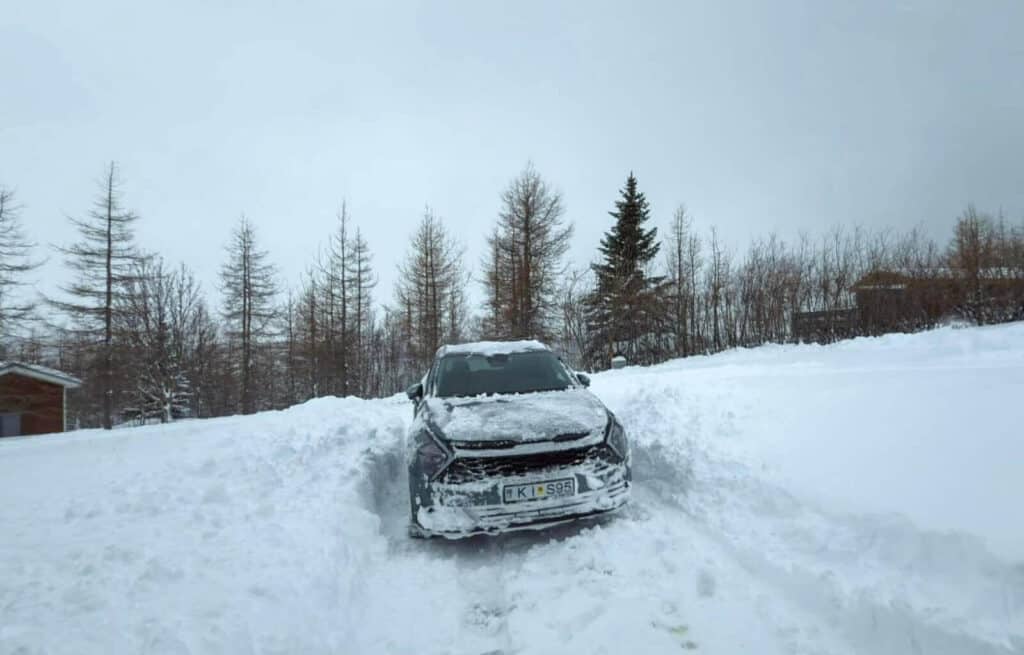
So, we think you can drive in Iceland in winter if you are confident, know how to handle potentially adverse weather conditions, drive sensibly, and accept that your plans might have to change.
If you would rather not have to worry about things like this, we recommend booking guided tours instead with locals who drive in conditions like this regularly.
👉Check out our full guide to the best time to visit Iceland for all our tips.
Is it worth visiting Iceland in winter?
Yes, yes, and 100% yes! We’ve loved every trip we’ve ever done to Iceland in winter. Even when we got snowed in, even when the heavens opened and we got soaking wet, even with the 4pm darkness, and even with the freezing cold.
The country is beautiful, and the serenity of frozen landscapes is what keeps us captivated.
You definitely have to adapt your trip to the circumstances, but there’s so much to see in winter, and we can almost guarantee you’ll be coming back for more!
👉 Any questions about Iceland in winter? Ask us anything in our Facebook Group!
❤️ Planning on chasing the Northern Lights this winter? Check out the best Northern Lights hotels in Iceland!
Pin for Later!