Driving in Iceland in Winter: What’s it Really Like? (With Photos & Tips)


Are you planning on driving in Iceland in winter? Here’s our experience (and photos) from two people who have driven in all kinds of winter conditions in Iceland!
Driving in Iceland in winter is an entirely new challenge compared to driving in Iceland at any other time of year. We’ve driven here in the winter months twice and in all kinds of conditions.
Our very first time driving in Iceland was in March, so the weather was still very wintry with snow on parts of the Ring Road and quickly changing conditions.
We’ve also driven in North Iceland, which is known for having harsher weather than the south, in the middle of January.
It’s safe to say, when it comes to Icelandic driving conditions, we have our fair share of experience! And, it’s definitely an experience and a challenge, but it can also take you to the most incredible winter scenery in the country if you can handle it.
So, if you’re planning on tackling Iceland’s roads in winter, here’s everything you need to know.
*This post may contain affiliate links that earn us a small commission at no extra cost to you. For more information, read our disclaimer.
🚗 We’ve rented a car from both Keflavik and Akureyri in winter. We only ever use this company as they have a great range of cars and always have the best prices.
Is It Safe to Drive in Iceland in Winter?
This is ultimately the most important question. And you’re right to be asking it.
Safety is so important when it comes to winter driving. Get it wrong and you could be stranded out in the snow or worse, skid off the road and get into a bad accident.
But safe winter driving in Iceland very much depends on two things – the conditions and the driver.
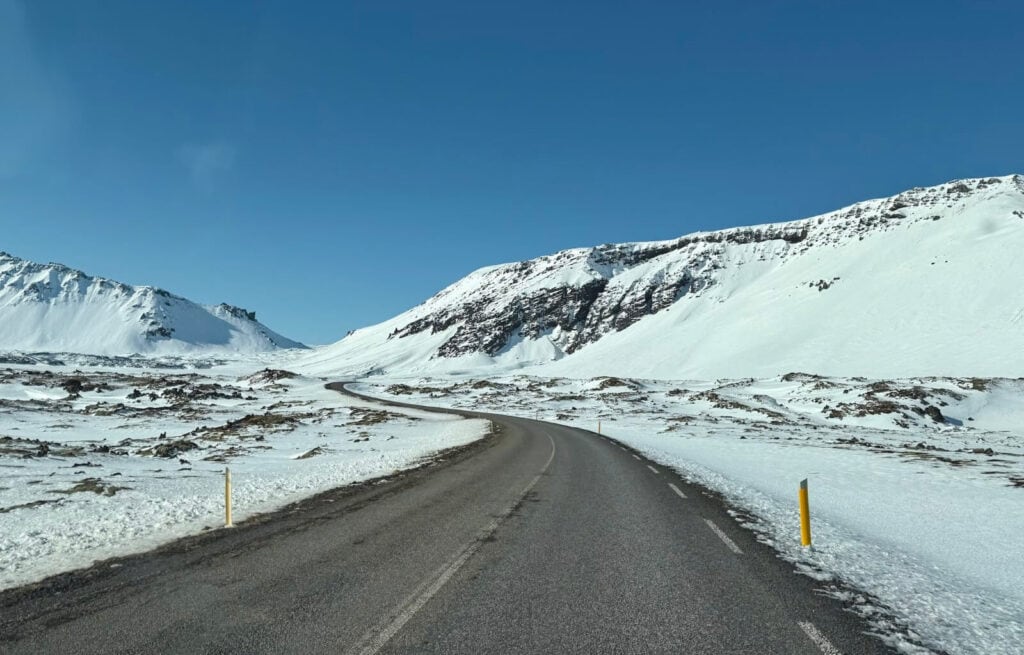
Yes, it’s generally safe to drive in Iceland in winter if there are no weather warnings, you are an overall confident driver, and you are used to winter roads.
However, if you’ve never driven in the snow before, are not very confident behind the wheel, or if there are any weather warnings, then it could easily become very unsafe.
Conditions in Iceland are known for changing at the drop of a hat, so it’s super important to check weather apps before you head off.

Our go-tos are safe.is and vedur.is. These will give you the most accurate weather and road updates for the day and are the apps that locals rely on to check the weather conditions.
Only head off once you’ve checked these and made sure that everything is clear for the day along the route you are travelling. But you may still need to adapt your driving to the weather.
Road Conditions in Winter
You’ll likely encounter all sorts of road conditions in Iceland in winter, and we’re going to show you a few examples of what it could be like. This isn’t to alarm you, but more to make you aware before you decide to get behind the wheel.

Please bear in mind that Andrew is a very confident driver who has driven in all kinds of road conditions all over the world. So, despite having experienced a range of different weather conditions during our trips to Iceland, he was okay with the driving.
Here are a few things you’ll likely encounter.
Snowy Roads
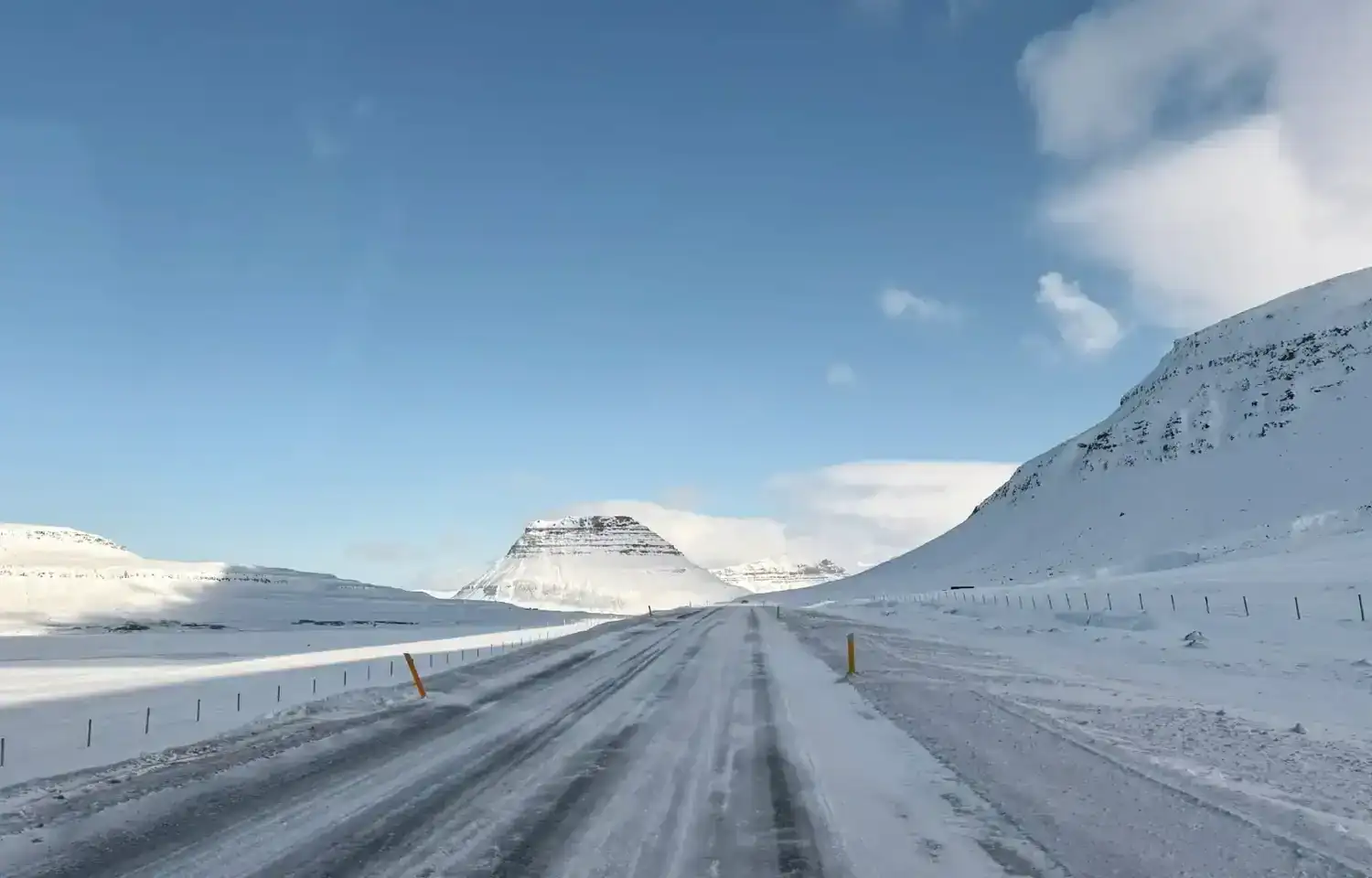
Snow is fairly common in Iceland in winter, and, depending on which month you visit, you can encounter it all over the country.
The worst snow we’ve ever experienced was in Akureyri in January, where we ended up snowed in one morning and had to be ploughed out. This was after a weather warning the night before and a very heavy snowstorm.
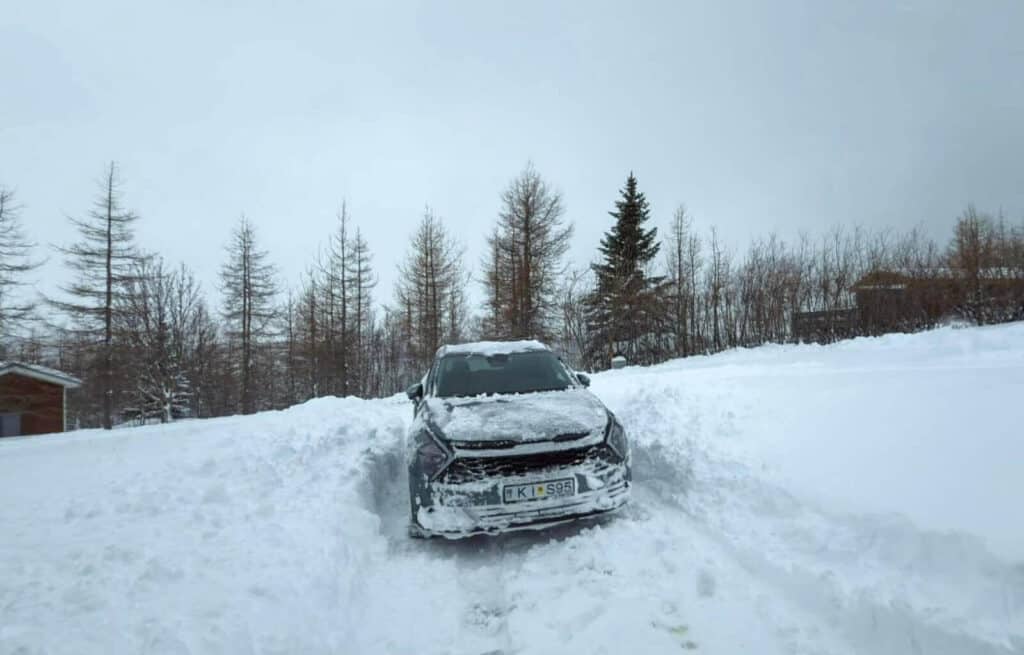
We eventually made it out around midday, and the roads had been ploughed, so it wasn’t too bad, especially since the snow had mostly stopped falling.
That afternoon, we drove to a husky sledding experience in Akureyri after all the weather warnings had cleared.

There was still ice and snow on the roads, but we stayed calm and took the roads very carefully as the snow had compacted in places, which made it quite icy.
Overall, it was fine, but it took around 20 minutes longer than it would have, and we were going very slowly.
If you’re near Reykjavik or driving along the south coast, the roads are generally kept clearer than in the north because it’s a more popular destination. However, still be careful and beware of black ice.
Blowing Snow
This can be quite scary and is one of the more extreme weather conditions we’ve encountered on a winter road trip in Iceland.
When you combine the snowy roads with the strong winds that Iceland is famous for, you can end up with snow blowing across the road, which can lead to very poor visibility.
We once again experienced this in the north in Akureyri when we were driving 10 minutes from the city centre to our apartment. This was also only 5pm, but it was pitch black, which made visibility very poor.

We got caught at the beginning of the snowstorm and luckily, didn’t have far to go. We checked the weather app and saw it coming in, so it was lucky we made it back when we did before it got really heavy.
Considering it was only a 10-minute journey back to our apartment, this was one of the biggest challenges we’ve had when driving in Iceland in winter.
The apps we mentioned before will warn you which roads have blowing snow, so you can judge the drive before you set off. Because even if it’s not currently snowing, this condition can make the roads really bad.
Strong Wind
This is the second scariest experience we’ve had driving in Iceland in winter. The worst winds we’ve encountered have been along the south coast between Vik and Jokulsarlon Glacier Lagoon.
There’s a stretch of road just past Kirkjubæjarklaustur, which is extremely open with gravel and dust on either side. When we drove it, the winds were so strong that it was buffeting the car from side to side and throwing gravel and dirt at the windscreen.
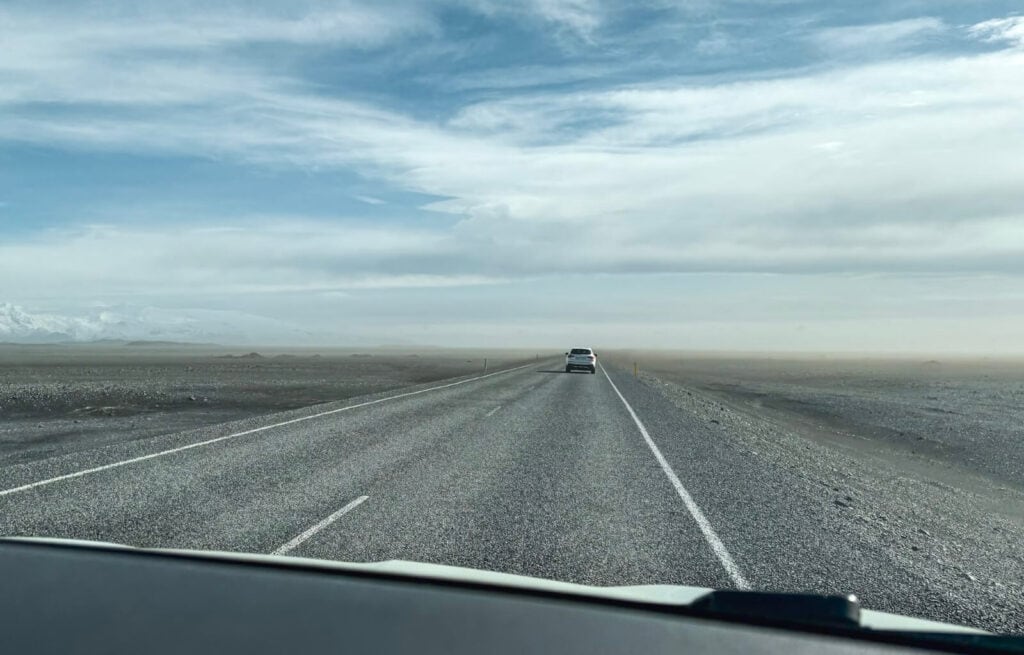
Even though it doesn’t look that bad from a photo, we passed several larger tour buses that had been forced to slow right down or pull over to the side of the road.
Strong winds are very common in Iceland to the point where car rental companies will warn you almost every time you pick up a car about opening the door into the wind in case it rips it off its hinges. But driving in it is a whole different ball game.
Luckily, the roads weren’t icy. This was in early April in Iceland, so towards the end of winter and the start of spring. Nonetheless, if there was ice, the road would likely have become impassable and been closed.
Our Experience
Whenever we drive in Iceland, we always drive according to the road conditions and are extra careful if things become a little more treacherous.
We’ve had to slow right down a few times due to very high crosswinds and blowing snow, but we have never been out in conditions that have halted our journey completely.
This is partly because, if we see really bad weather on our apps, we simply won’t (or can’t!) go out.
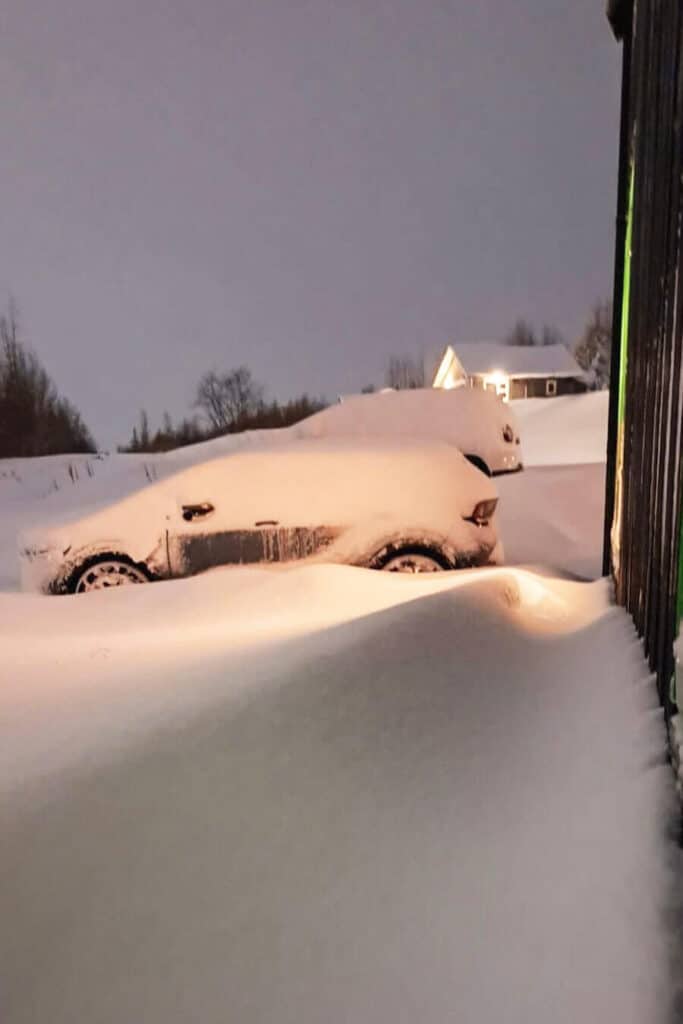
We’ve seen videos online of terrible winter road conditions in Iceland where people were stuck in the pitch dark with terrible winds and blowing snow, and this is something we’d never want to experience.
Please, please, please don’t ever put yourself in that position!
It’s so important to check the weather before you go out, and we also recommend making sure you are back at (or at least close to) your accommodation before it gets dark.
Route 1 is typically very well maintained in winter, which we could tell by the number of snow ploughs we saw out and about clearing the route.
Obviously, the highlands and all F-roads are closed outside of the peak summer months of June and September. But if you go down little side roads off Route 1 to reach attractions, you may find worse conditions here, too.
Plus, the poughs aren’t out 24/7, and there is always an in-between period where snow builds up again. So you always have to be alert, drive carefully, and take your time.
Driving Tips for Winter in Iceland
Even if you’re prepared, Iceland is good at throwing out unexpected challenges. Here are a few tips we’ve learned from driving in Iceland in winter over the years.
- Always make sure to rent a 4×4 vehicle if you’re driving in winter, especially if you’re heading outside Reykjavik. Even if all drivers are legally required to have winter tyres, a 4×4 handles snow, ice, and wind far better than a smaller car.
🚗 We only ever use this company for car hire as they have a great range of cars and always have the best prices.
- We will say this until we’re blue in the face, but always check road.is and safe.is before setting off to get the latest updates on weather and road closures.
- Watch out for wind gusts. Strong crosswinds are common in Iceland and can easily catch car doors or affect steering. Always hold onto your door when opening it, and avoid parking where it faces the wind directly.
- Use headlights at all times. It’s required by law in Iceland, day and night, and it helps with visibility during low light or snowy conditions.
- Packing smart is so important. You’ll always need to dress for the winter weather, so wear layers and waterproof and windproof clothing. But also bring a blanket, extra snacks, and warm drinks in your car in case you need to stop unexpectedly.
- We also recommend packing a windscreen scraper, as most rental cars don’t seem to include one.
- Lastly, when driving, remember to keep a good distance from the car in front of you; icy roads can make stopping distances much longer than you’d expect.
Overall, when you’re driving in icy or snowy conditions, listen to your gut.
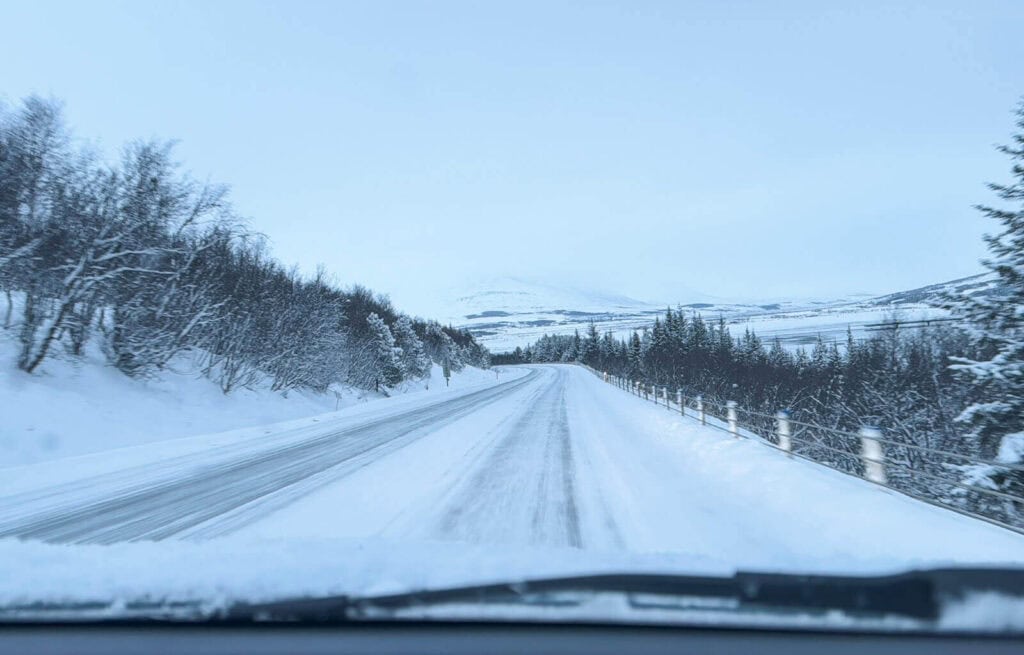
If the weather starts to turn or visibility drops, it’s always better to pull over somewhere safe and wait it out. Locals often say, “If the Icelanders aren’t driving, neither should you.”
Where to Drive in Winter (Recommended Routes)
The south of Iceland is always better maintained than the north. Plus, the Ring Road is the main route around the island, so this is usually kept in the best condition (besides roads within Reykjavik).
Here are a few routes that are generally safe to drive in winter:
The Golden Circle
Besides the Ring Road, this is one of the most popular places to visit in Iceland. It’s visited by lots of tour groups each day and is generally well-maintained, even in winter.
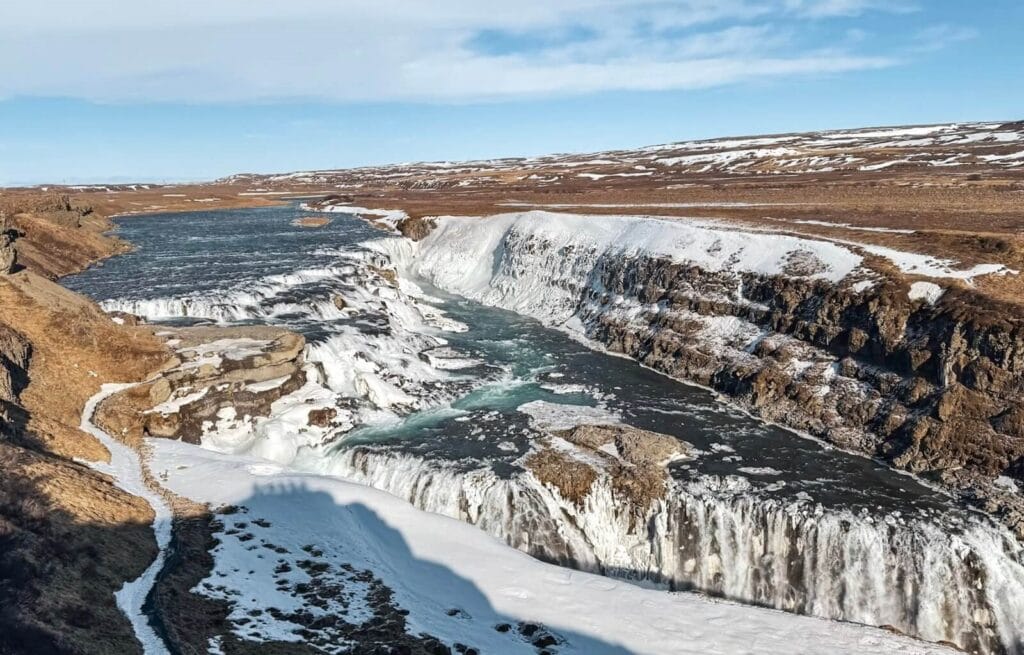
We’ve visited the Golden Circle twice in winter – once in December and a second time in March – and both were fine and the roads were reasonably clear.
👉 Check out our guide to the Golden Circle in winter for more info!
The South Coast to Vik
The route between Reykjavik to Vik is another of the most popular routes to drive in Iceland.
It’s one of our personal favourite road trips, and you can see some of the most stunning scenery in the country here. You’ll find black sand beaches, incredible waterfalls, cute little towns, glacier tongues, and much more.
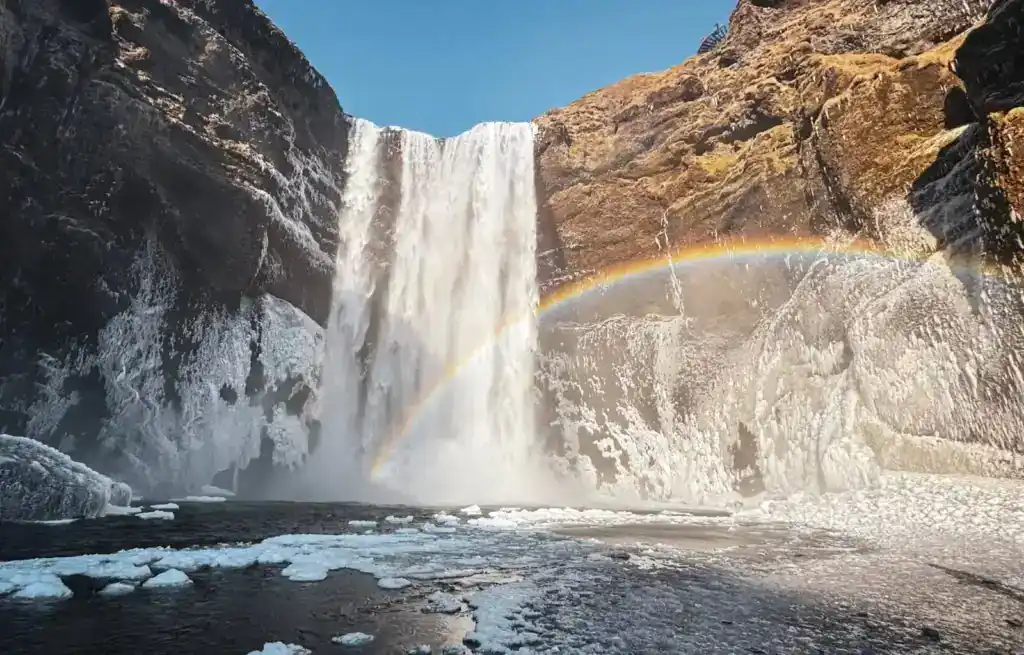
The route to Vik is entirely along Route 1, so it is usually kept relatively clear. But of course, always check the weather before you set off and, if you have any doubts, book a south coast tour instead of driving.
Snaefellsnes Peninsula
This place is stunning and is known as Iceland in miniature because you can find all sorts of landscapes tucked into a tiny area. It’s beautiful in winter, but you do have to be a little more careful if you plan to visit.
The weather can be a bit more hit and miss due to the fact that the peninsula juts out into the ocean.
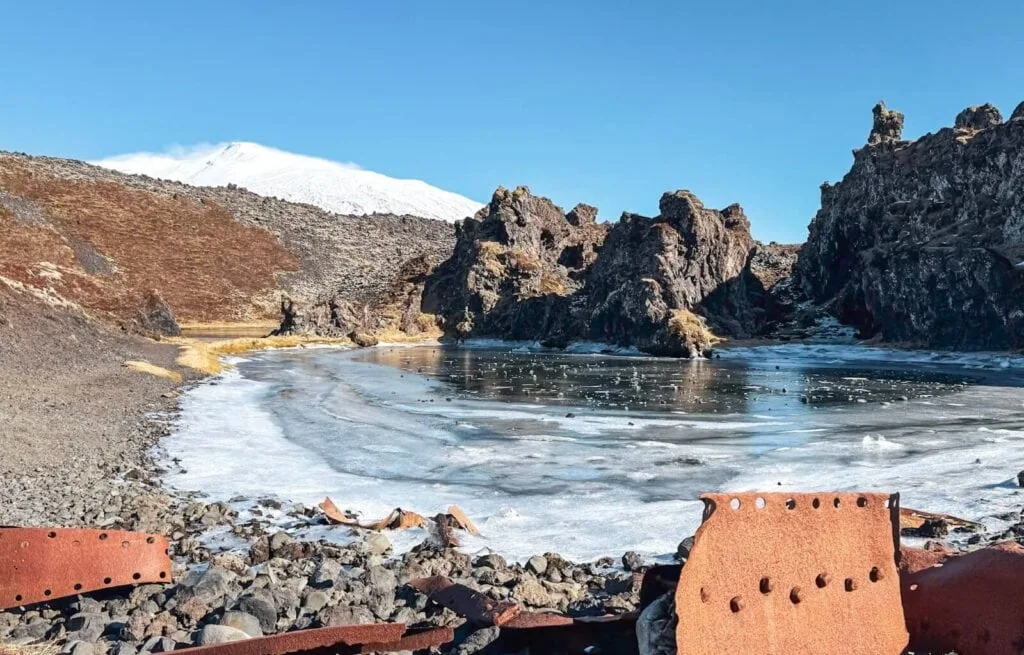
You’ll find particularly harsh weather on the northern side, where you’ll find the famous Kirkjufell. This is because it’s literally blocked off from the rest of Iceland by towering mountains and glaciers, so you’re much more isolated.
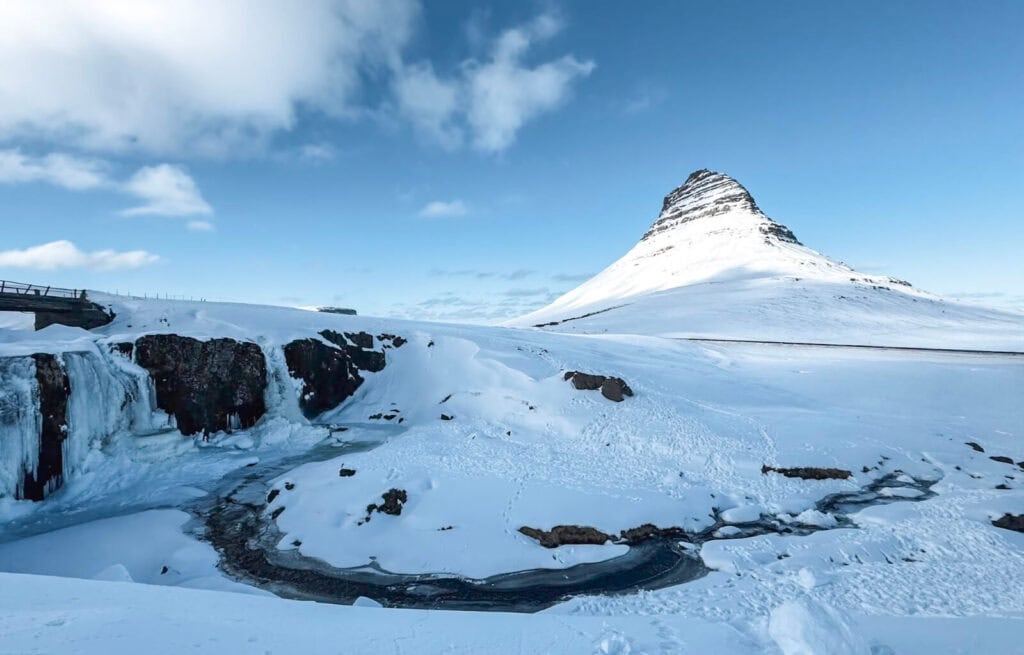
You’ll likely find snowier roads here and potentially worse winds, so be extra careful and triple-check the weather before setting off.
However, if you do get a good day, it’s a really beautiful place to explore in the winter.
What about the Ring Road?
Personally, we’d avoid driving the entire Ring Road in the dead of winter. It’s a lot of driving in the summer months when you have long hours of daylight and no snow. In the winter, it can be downright dangerous.
The weather can change so quickly that it can end up cutting you off completely in one direction. There are parts of the Ring Road, the Eastfjords in particular, that are incredibly remote.
Snow ploughs don’t maintain the roads regularly – some of them aren’t maintained at all. Plus, they’re often hours from a fuel station, town, or any sign of civilisation.
On top of that, you’ll only have about 4 hours of daylight in the peak winter months, so you’ll likely be driving long distances in the snow and the dark… Not something we recommend!
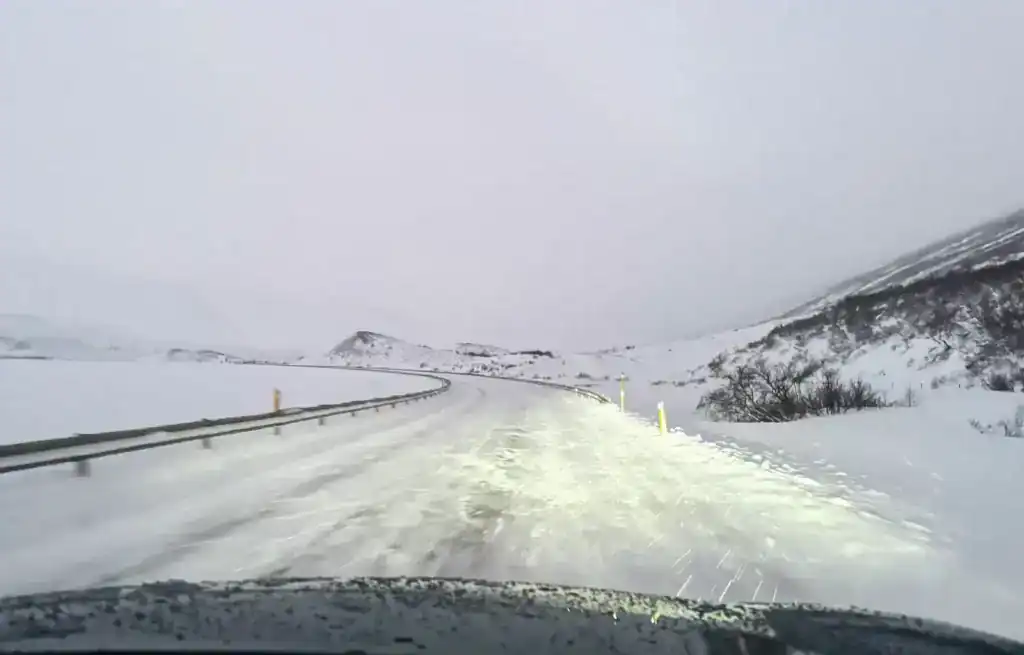
In our opinion, from November to at least mid-February, we don’t recommend tackling the entire Ring Road.
Instead, we recommend this south coast winter itinerary.
However, once the days get a bit longer and the weather isn’t quite so harsh (from March onwards), it is possible to drive the Ring Road in winter.
Allow at least 12 days in case of changes in weather and emergency road closures, and we suggest always having a backup plan. But, while it’s challenging, it’s doable, and gives you the chance of seeing the Northern Lights!
👉 If you are considering driving this route, check out our Ring Road itinerary.
Alternatives to Driving Yourself
Of course, if you’d rather avoid driving completely, we totally understand. Winter driving in Iceland can be scary, and we’d always recommend erring on the side of caution.
Instead, there are so many winter tours you could take with a base in Reykjavik. We would recommend:
- A Golden Circle Tour – One of the most popular areas in Iceland, where you can see geysers, volcanic craters, and tectonic plates.
- South Coast Tour – This is perfect for those wanting to see black sand beaches, some of the country’s most stunning waterfalls.
- Glacier Hike – One of the best tours we’ve ever done in Iceland is a hike on Solheimajokul Glacier – we highly recommend it in winter! And you can get picked up from Reykjavik and combine it with the south coast.
- Ice Caves – Winter is peak ice cave season, and there are some truly stunning caves in Iceland that you can only visit via a guided tour.
- Northern Lights Tours – Driving in the dark and the snow is never fun! So, for spotting the elusive aurora, there’s no better way to find them than on a tour across the country.
While many of these places are reachable via a rental car, weather conditions in Iceland are sometimes best left to the locals. Tours are a great alternative, and we’ve loved every tour we’ve been on in Iceland.
FAQ’s
Do you need a 4×4 in Iceland in winter?
Yes, we’d recommend hiring a 4×4 car if you’re driving in Iceland in winter. Despite all rental cars being equipped with winter tyres, a 4×4 will give you much more grip and traction against snow and wind than a smaller car.
🚗 We only ever use this company for car hire as they have a great range of cars and always have the best prices.
Can you drive the Ring Road in January?
You potentially can, but we wouldn’t recommend it. The Ring Road encircles the entire island, and while areas of the south coast are generally kept in good condition, the east and north can be much wilder, more remote, and less maintained.

In January, if the weather changes, you could end up getting caught in a freak storm or cut off completely if roads close. Plus, you’ll have very little daylight in Iceland in January, so you will likely be doing long stretches of driving in the dark.
So, while you could drive the Ring Road in January, we recommend waiting until March to do this trip.
Is it dangerous to drive in Iceland in snow?
No, not necessarily. All cars in Iceland are required to have winter tyres by law from November onwards. These have spikes which grip the snow and ice much better than regular tyres.
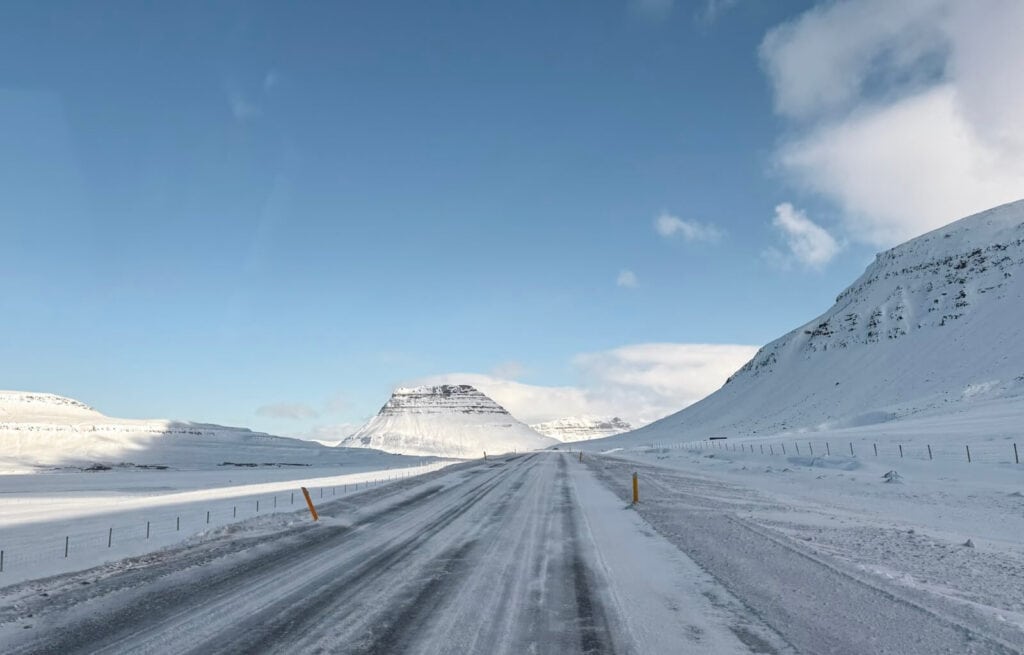
As long as you drive cautiously, check the weather and road conditions before setting off, and stick to main routes, driving in Iceland during winter can actually be a really enjoyable experience.
That said, storms can roll in fast, so it’s important to stay flexible with your plans and never push through bad weather.
Final Thoughts: Should You Drive in Iceland in Winter?
Driving in Iceland in winter can be a complete mixed bag. If you’re comfortable driving in snowy or icy conditions, renting a car gives you the freedom to explore at your own pace and see parts of the country that guided tours skip.
Personally, despite a few challenges, we’ve loved every trip we’ve done to Iceland in winter. And most of those, we’ve been driving ourselves!
Of course, if you’re not confident or you’d rather not deal with unpredictable weather, don’t risk it! There are plenty of fantastic guided tours that will take you to Iceland’s top winter sights safely and stress-free.
Either way, Iceland in winter is absolutely magical, and with a little preparation, you can have the winter road trip of a lifetime!
We hope this article has helped you prepare for winter driving in Iceland, but any questions, head to our Facebook group!
👉 Planning a winter trip? Check out the best northern lights hotels in Iceland!
Pin for Later!