
Iceland in Spring: Everything You Need to Know


Are you planning a trip to Iceland in spring? After visiting multiple times during this season, here’s everything you need to know!
We’ve visited Iceland in nearly every season now, and honestly, spring might be one of the most underrated times to go. The snow starts to melt, waterfalls roar back to life, and the landscapes transform from frozen white to vibrant green.
You still get a taste of winter with snow-capped mountains, icy caves, and maybe even a glimpse of the Northern Lights. But, you also get longer days, milder weather, and far fewer crowds.
We’ve absolutely loved our road trip around Iceland in spring, and it’s one of our favourite trips to Iceland to date. Ironically, we also had much better weather on that trip than we did on our trip in the summer.
So, if you’re thinking about visiting Iceland in spring, here’s everything you need to know, from the weather and what to pack to the best things to do and what to expect each month.
*This post may contain affiliate links that earn us a small commission at no extra cost to you. For more information, read our disclaimer.
Iceland Spring Must-Do’s!
Short on time? These are 5 bucket-list things you NEED to do in Iceland in winter! ❤️
- Go on a Glacier Hike
- Soak in the Blue Lagoon
- Visit Katla Ice Cave
- Tour the Golden Circle
- Chase the Northern Lights
Save on car hire with this company.
When is Spring in Iceland?
Spring in Iceland typically runs from late March to May.
It’s a bit of an “in-between season”, where winter is fading away and summer begins to peek through. The weather can be a real mixed bag during this time and often changes by the hour.


We’ve had entire days of bright blue skies, some scattered rain and lots of wind. When we visited the Golden Circle in spring, the wind gusts were so strong at Gullfoss that we had to hold onto the barriers.
We’ve also had journeys where we were driving in very strong winds and had to slow right down. Nonetheless, you can pretty much drive most of the main roads comfortably.


A few other benefits are that the prices are generally lower than in summer – we stayed in a cabin in the west that was under half the price in April than it was in June – and you’ll often find yourself at major attractions with barely anyone else around.
It’s a great time to drive the Ring Road, although you may have to be extra careful in more remote areas, and the north can still feel a bit like winter. But you’ll have cheaper prices and half the number of tourists compared to summer.
The Ultimate Done-For-You Iceland Itinerary!
Hate the stress of trip planning?


Planning a trip to Iceland can get overwhelming! That’s why we created our Done-for-You Southern Coast Itinerary: to save you hours of research and help you make the most of every moment!
👉Grab your itinerary now and start planning the adventure of your dreams!!
What’s the Weather Like in Spring?
Spring weather in Iceland can be unpredictable (to put it mildly!). You might get sunshine, snow, rain, and wind, sometimes all in the same day.
The average temperatures are between 2°C–10°C (35°F–50°F). However, you can get all sorts of variations of this. When we visited Iceland in April, the weather was around 5°C each day; however, in places, the wind chill made it feel much colder.


In terms of daylight, one of the best things about spring in Iceland is that the long days are back. You’ll have around 12 hours of usable daylight in late March, stretching to 20 hours by the end of May.
This gives you so much time to explore the country and, as we’ve mentioned, it’s ideal weather for road trips.
Plus, if you visit Iceland at the end of March, at the very start of spring, you’ll still have the chance to spot the Northern Lights.
It becomes too bright to spot them by around mid-April; however, the start of spring really gives you the best of both worlds.


The conditions for us were also a real mixed bag. We had snow in places – lots still when we explored the Snaefellsnes Peninsula – but the south coast was a mixture.
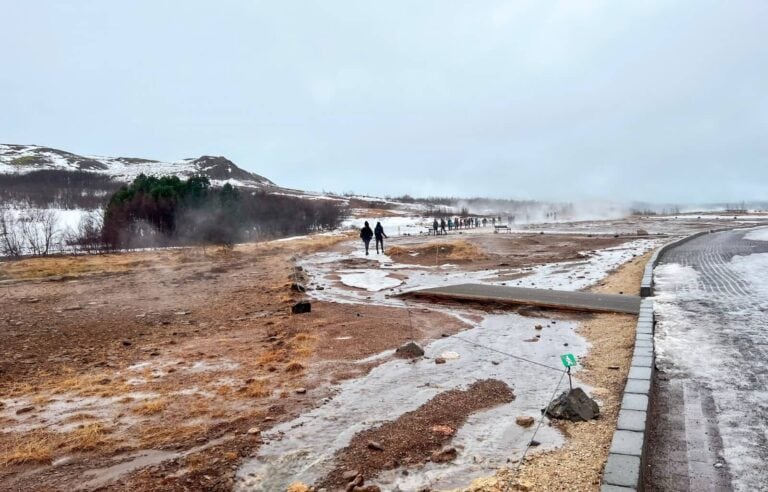
In some areas, there was snow and ice. For instance, Skogafoss was super icy in April. It was actually icier than it was when we visited in winter.
However, there was definitely greenery starting to defrost. It wasn’t the vibrant green of summer and was more of a muddy brown colour, but it wasn’t the bright white of winter either.

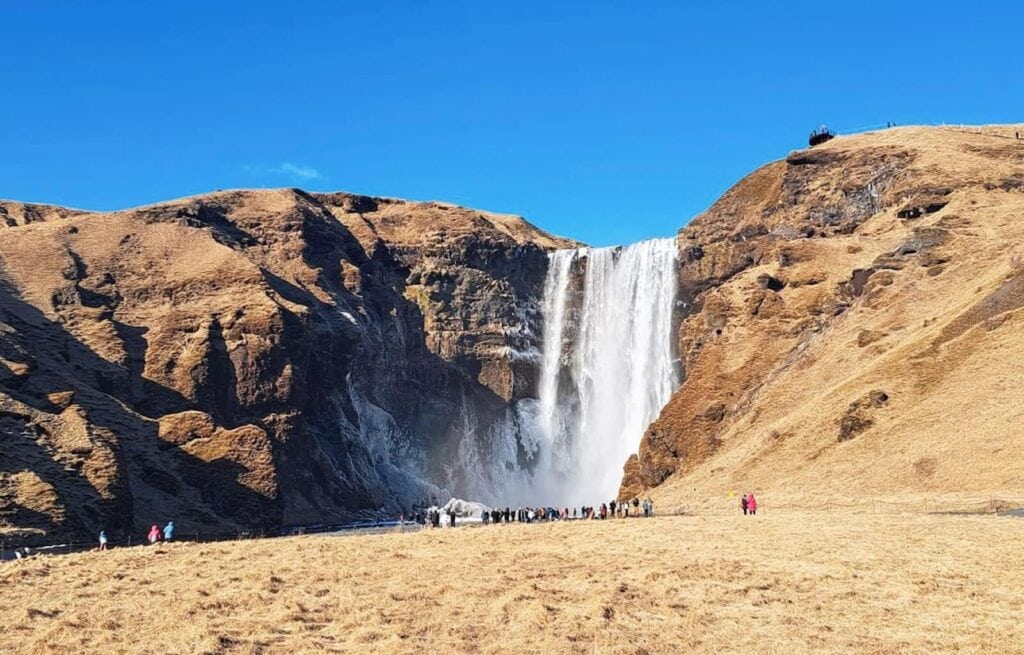
So, the scenery can be really interesting in Iceland in spring.
As for temperature, March and April are still quite chilly, but by May, you’ll start seeing wildflowers bloom and the start of the Midnight Sun, where the nights barely get dark.
Driving in Iceland in Spring
For the most part, we found driving in Iceland in the spring pretty easy. By late March, the roads across Iceland are generally clear and easy to drive, especially the Ring Road and the South Coast.
We encountered much snowier and icier conditions on the Snaefellsnes Peninsula and had to be a little more careful. Plus, when we drove to Jokulsarlon, we had super strong winds to the point where it was buffeting our car around.


But, for the most part, driving was fine. That said, Icelandic weather is known for throwing a few surprises. Throughout our road trips around the country, we’ve had days where we drove through sunshine, fog, and snow all within a few hours.
We always recommend checking road.is daily for road conditions. It’ll inform you of any road closures and things like blowing snow on roads, which is quite horrible to drive through.


It’s also worth booking a 4×4 if you’re visiting in early spring or planning on heading to north Iceland, where the weather will be much more wintry. We also suggest carrying layers, snacks, and a full tank of fuel for remote drives.
🚗 We always use this company for car hire and it saves a lot of money!
Best Things to Do in Spring in Iceland
There are so many great things to do in Iceland in the spring.
We think spring is one of the most rewarding seasons for exploring – everything’s reopening, the waterfalls are at their most powerful, and you can enjoy many popular spots without the summer crowds.
Here are some of our favourite things to do in Iceland in spring:
1. Explore the South Coast
The South Coast is spectacular year-round, but it’s especially beautiful in spring when the snow starts to melt.


You can explore Seljalandsfoss, a particularly frozen Skógafoss, and Gljúfrabúi, as well as the black sands of Reynisfjara Beach and the stunning town of Vík.
It’s also a great time of year to hike to Reykjadalur Hot Spring Thermal River, as you’ll get a wonderful combination of mountains, snow, and hot springs.


Plus, the contrast of dark sand, green moss, and lingering snow patches makes for some incredible photos.
2. Drive the Golden Circle
The Golden Circle route is one of the most popular drives in Iceland and is accessible all year round. You can get huge crowds here in summer, and spring gives you the beauty of the area, but without the crowds.


You’ll get to see Thingvellir National Park, Geysir, and Gullfoss Waterfall surrounded by melting snow and spring sunshine.


It’s also a great time to soak in nearby geothermal pools like the Secret Lagoon, which is Iceland’s oldest swimming pool.
👉 Check out our full guide to the Golden Circle.
3. Go Whale Watching
Technically, you can go whale watching in Iceland all year round. We went in Akureyri in January and saw a humpback whale. It’s still one of the most amazing experiences we’ve had in the country.
Although summer is often labelled the whale-watching time of year in Iceland, spring is actually the start of whale-watching season in Iceland.


You can find tours departing from Reykjavik, Akureyri, and Húsavík. If you get seasick, we recommend Akureyri as the waters in the fjord are much calmer. But the waters around Husavik tend to be busier!
You’ll have a good chance of spotting humpback whales, dolphins, and even puffins returning to the cliffs if you visit in May.
❤️ We recommend this whale watching tour and it’s an incredble experience.
4. Soak in a Hot Spring
You can’t travel to Iceland and not visit a hot spring!
It’s one of the things that the country is most famous for, and even as the weather begins to warm up, Iceland’s hot springs are always a good idea. We loved our trip to the Sky Lagoon and their sauna is one of the prettiest we’ve been to.


We recommend the Sky Lagoon for luxury, the Secret Lagoon for something more rustic, or Reykjadalur Hot River for a unique outdoor experience (it’s a 45-minute hike but so worth it). Alternatively, the famous Blue Lagoon is always a good idea!
It’s one of the oldest traditions in Iceland and one of the most relaxing ways to spend an afternoon.
5. See Puffins Return
Iceland is home to thousands of puffins, and by late April and May, many of these adorable birds start to return to their nests.
You can see them in Dyrhólaey, Borgarfjörður Eystri, or the Westman Islands, but one of the best and easiest places to spot them is Ingólfshöfði, near the South Coast.


We spotted them on Dyrhólaey when we visited Iceland in June, but they actually arrive much earlier than that.
As with any nature, be sure to keep your distance and not go trampling all over their nests. And don’t forget to bring your binoculars!
❤️ If you want a higher chance of spotting them, this puffin tour is fantastic!
6. Visit the Snæfellsnes Peninsula
This is one of our favourite places to visit in Iceland, and spring is a fantastic time to explore.
The Snæfellsnes Peninsula is absolutely beautiful and is often called “Iceland in Miniature” because it has a bit of every type of unique landscape in Iceland.


It’s much quieter here in spring than in summer, and you’ll see waterfalls, cliffs, black sand beaches, lava fields, and the famous Kirkjufell Mountain, all without the crowds.


Most of the roads are clear by May, so it’s an easy and scenic drive from Reykjavik. But be careful if you’re visiting earlier in the year, as we found the roads much icier then.
❤️ If you’d rather not drive, we reocmmend this Snaefellsnes Peninsula tour.
7. Experience the Waterfalls in Full Force
If there’s one thing Iceland is famous for, it’s waterfalls. And for good reason, since the country is home to over 10,000 of them, ranging from small trickles to one of the most powerful waterfalls in Europe.

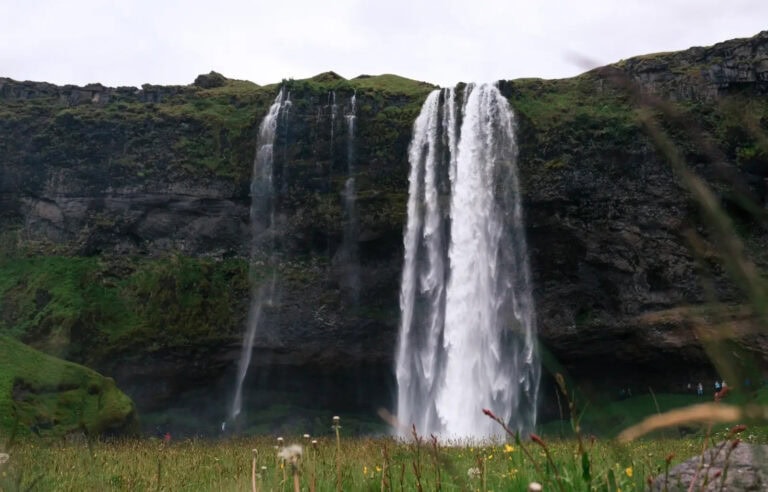
Because of melting snow and ice, spring is when Iceland’s waterfalls are at their most powerful. Many of our favourite waterfalls in the world are in Iceland: Dettifoss, Godafoss, Skogafoss, and Seljalandsfoss, which are all incredible in spring.

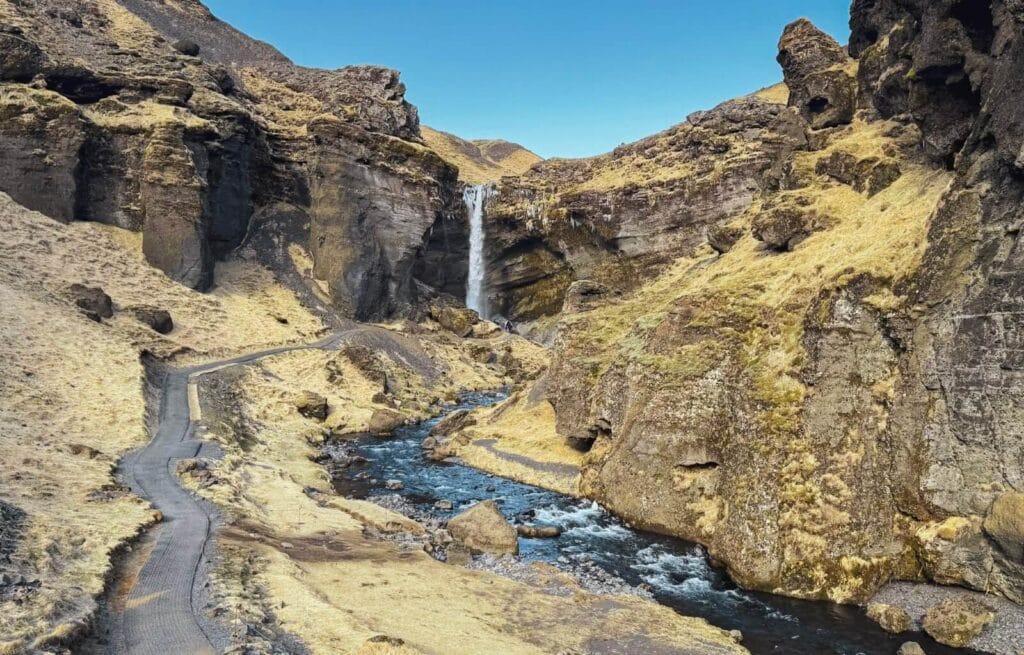
It’s a wonderful time of year to go waterfall hopping in Iceland, whether you’re sticking to the famous spots or searching for a few hidden gems. Just be careful on the trails, as some may still be muddy and slippery from snowmelt.
👉 Check out our guide to the most beautiful waterfalls in Iceland.
8. Enjoy Reykjavik in Bloom
Spring is a lovely time to explore Reykjavik. The city starts to come alive again after the long winter, locals sit outside with coffee, the harbour buzzes with activity, and the flowers begin to bloom.


It’s a completely different atmosphere from the rest of Iceland. Reykjavik actually feels quite built up in parts, whereas most of Iceland feels isolated and remote. It’s a great place to mingle with the Icelandic people and the culture of the country.
You can easily spend a couple of days in Reykjavik, checking out the museums, visiting the famous Hallgrímskirkja Church, and strolling along the waterfront to see the Sun Voyager.
9. Go on a Glacier Hike
Glacier hiking is literally one of our favourite things to do in Iceland.
We first did a glacier hike in the south of Iceland in December, and it was one of the best memories we have of the country. It’s still one of our favourites today, and it’s just such a bucket list experience.


Glacier hiking is often labelled as a winter activity, but you can hike on the glaciers in Iceland year-round. We love spring as it’s a great balance where you still have colder weather, but also have longer days and fewer storms.
There are several glaciers to hike on in Iceland, but our favourites are Solheimajokull on the South Coast or Skaftafell towards the east.

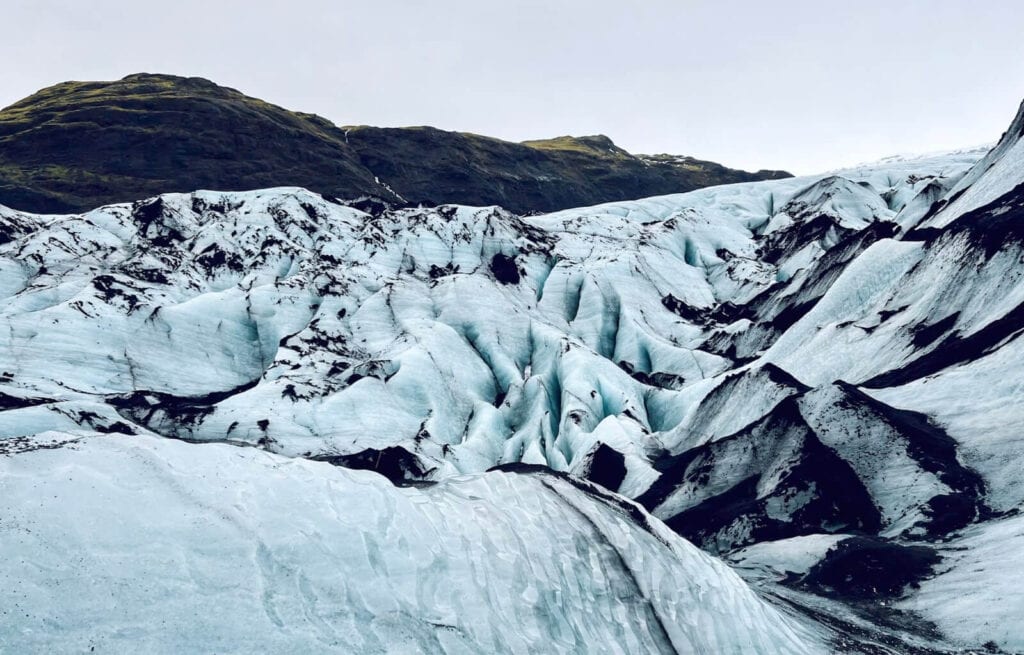
Both offer an amazing experience – Solheimajokull is much easier to get to from Reykjavik, and Skaftafell is the largest glacier in Europe.
Remember to book your hike well in advance – spots sell out, even in spring!
❤️ We highly recommend this glacier hike and it’s an amazing experience!
What to Pack for Iceland in Spring
Spring weather in Iceland can be a bit unpredictable, so it’s a good idea to prepare for anything.
Packing layers is essential, as some days can be quite warm, whereas other days will remind you how close you are to the Arctic! You’ll want clothes that can handle both cold mornings and milder afternoons.


Here’s what we recommend:
- Waterproof jacket and trousers
- Warm base layers and a fleece
- Lightweight down or puffer jacket
- Waterproof hiking boots
- Hat, gloves, and scarf
- Swimsuit for hot springs
- Sunglasses (snow glare is real!)
- Reusable water bottle
- Microspikes if visiting in March or April (some trails can still be icy)
You’ll likely need closer to a winter packing list than a summer one, as the island can still be pretty chilly in spring, even if the sun does come out.
👉 Check out our full Iceland winter packing list for all our recommendations.
Can You See the Northern Lights in Iceland in Spring?
Yes – but only in early spring!
In late March, it’s still dark enough to see the Northern Lights. We took the photo below in very late March in Iceland. By mid-April, the nights will be too bright for true darkness, and you won’t be able to see the aurora even if the skies are clear.


So if spotting the Northern Lights is high on your list, plan your trip for late March or very early April.
👉 Grab our Northern Lights cheat sheet for all our aurora spotting tips!
Final Thoughts: Is Spring a Good Time to Visit Iceland?
100% yes!
Spring is one of the best times to visit Iceland if you want to avoid the crowds of summer but still enjoy decent driving conditions and long days.
It’s one of our favourite times of the year to visit because you literally get the best of both worlds. You’ll get cheaper accommodation, stunning scenery, and a mix of winter magic and early summer colour.
The landscapes are changing daily, and you can still find snowy peaks next to green moss, and days that get longer and longer as the months roll on.
It truly is a wonderful time of year to visit Iceland, and we hope this guide has helped answer all your questions about visiting Iceland in spring.
Anything else to ask? Head to our Facebook Group!
👉 Need somewhere to stay? Check out our favourite hotels on the South Coast!
Pin for Later!