Visiting Djúpalónssandur Beach: Everything You Need to Know


Are you planning on visiting Djúpalónssandur Beach? Here’s exactly what to expect and everything you need to know!
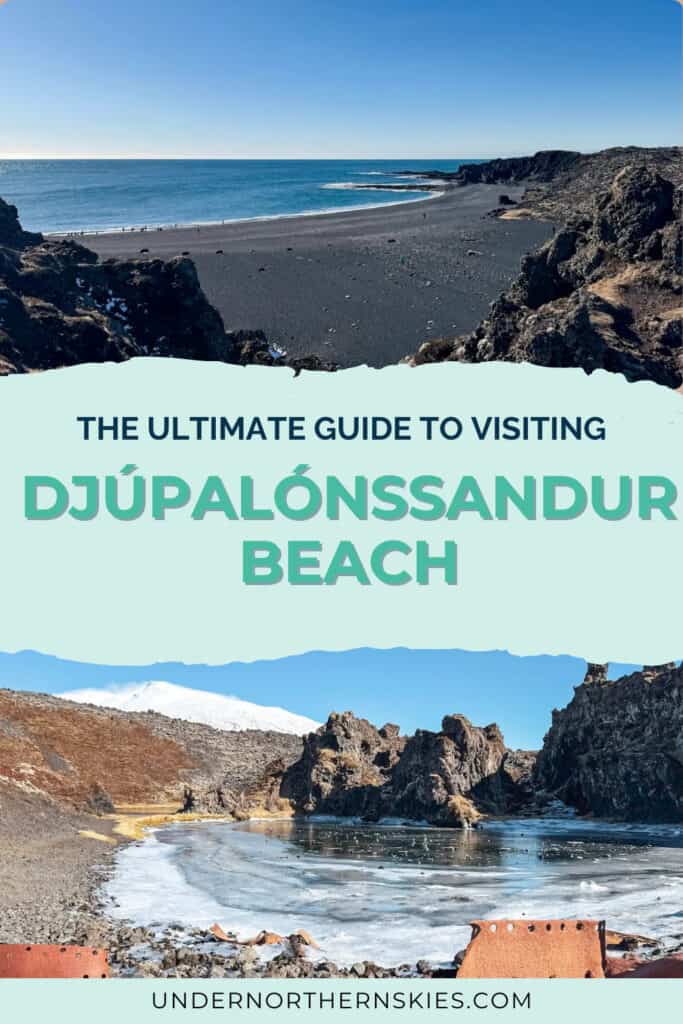
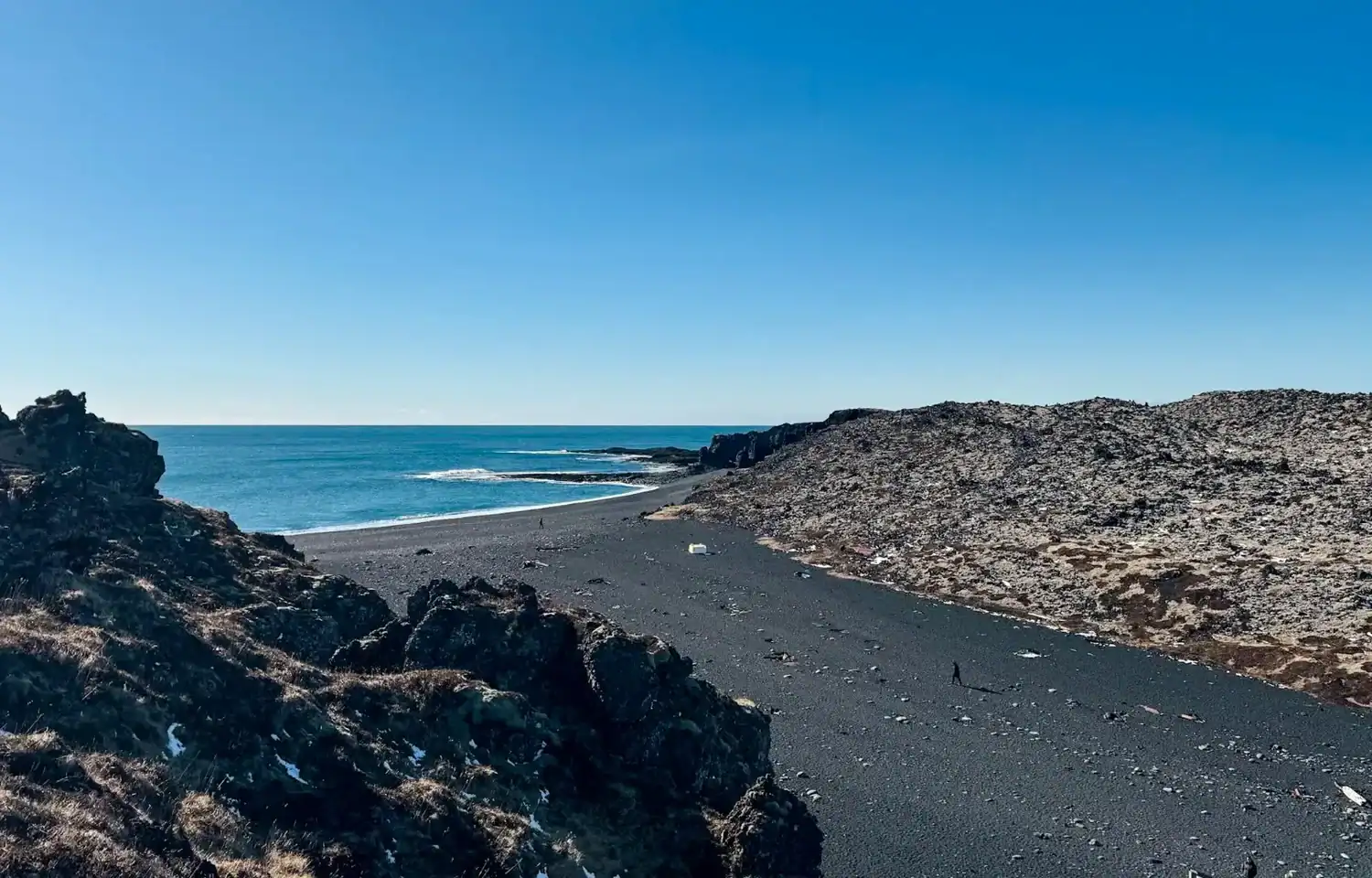
Djúpalónssandur Beach is one of the most unique black sand beaches in all of Iceland. It’s located on the western tip of the Snaefellsnes Peninsula and is a wonderful spot if you enjoy classic Icelandic scenery.
We visited Djúpalónssandur during our winter trip to Iceland in March, and it ended up being one of our favourite stops on the peninsula.
There’s something so beautiful about this place, with jagged lava fields, crashing waves, and moody coastal landscapes.
So, if you’re exploring the Snafellsnes Peninsula and are considering stopping at Djúpalónssandur Beach, here’s everything you need to know and all our top tips.
*This post may contain affiliate links that earn us a small commission at no extra cost to you. For more information, read our disclaimer.
Snaefellsnes Must-Do’s!
Short on time? These are 5 bucket-list things you NEED to do on the Snaefellsnes Peninsula! ❤️
👉 If you’d rather not drive, this is the best Snaefellsnes day tour
Where Is Djúpalónssandur Beach?
Djúpalónssandur Beach is located on the far western tip of the beautiful Snaefellsnes Peninsula.
It’s around a 3-hour drive from Reykjavik and making it an easy day trip if you start early, or a perfect stop on a multi-day Snæfellsnes itinerary.


The beach is well signposted from Route 54, and the final stretch of road leads you through black lava fields. There’s a dedicated parking area, and from there it’s a short walk through a canyon down to the beach.
What to Expect at Djúpalónssandur
Well, for starters, you can’t swim or sunbathe at this beach. It’s a wild stretch of Iceland’s coastline, and while it’s beautiful, definitely not to be messed with.
The main beach at Djúpalónssandur is covered in smooth, rounded black pebbles instead of sand. To get onto the beach, you’ll follow a marked path that winds through lava formations before opening up onto the beach itself.


It’s also well worth visiting Dritvík Cove, a historic fishing cove located right next to Djúpalónssandur Beach.
Centuries ago, Dritvík was one of the largest fishing stations in Iceland, with up to several hundred people living and working here during the peak fishing seasons.
Today, there’s no village left, but you can still see remnants of stone foundations and ruins scattered around the area.

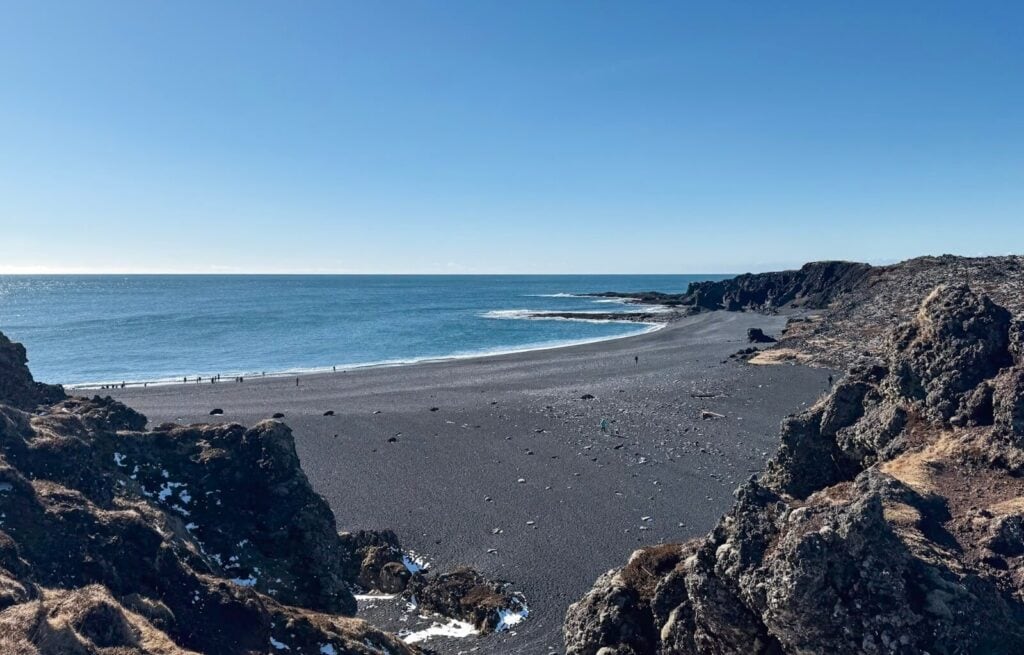
If you’re already exploring Djúpalónssandur, it’s well worth taking a few extra minutes to wander through Dritvík Cove as well.


At both of these beaches, we recommend being extremely cautious near the water’s edge. Just like Reynisfjara Beach in the south, sneaker waves are a danger here, and warning signs should always be taken seriously.
Other landmarks
Here are a few other things we recommend looking out for at Djúpalónssandur Beach:
Lifting Stones
One of the most famous things on this beach is the lifting stones. There are four stones of increasing weight, and lifting them determined whether you were considered strong enough to work on a fishing boat.
You can still try to lift them today, which is incredibly entertaining to try. It’s also a fascinating glimpse into Iceland’s fishing history.
The Shipwreck Remains
One of the most unique features of Djúpalónssandur is the shipwreck remains. Scattered across the pebbles, you’ll find the rusted metal remains from the British trawler Epine GY7, which wrecked here in 1948.


The pieces have been left where they washed ashore as a memorial to the sailors who lost their lives. There are plaques on the beach where you can read about the history, and it’s an important reminder of how dangerous these waters can be.
The Rock Formations
Lastly, the lava rock formations surrounding the beach are also well worth a look.


These dramatic lava rock formations have been shaped by volcanic activity over the years. You’ll find jagged arches and window-like portholes, and they’re quite eerie and beautiful.
Best Time to Visit Djúpalónssandur
You can visit this beach all year round. We visited during our winter trip to Iceland in March and had the most wonderful luck with the weather. It’s also beautiful in summer when the surroundings are lush and green.
The only time when it could be difficult to reach the beach would be in the peak winter months when daylight is limited, and the weather can be quite challenging.


Because of its rather remote location, getting to this part of the Snaefellsnes Peninsula in winter – especially if there’s lots of snow – could be quite dangerous.
However, for most of the year, you can easily reach Djúpalónssandur, and it’s a wonderfully scenic stop.
How Long Do You Need at Djúpalónssandur?
We would say between 45 minutes to an hour is plenty of time at Djúpalónssandur Beach.


That’ll give you enough time to explore the beach itself, watch the waves, visit the other pools, explore the rock formations, and reach the information about the washed-up trawler.
If you enjoy photography or want to explore more slowly, you could easily spend a little longer here.
Facilities at Djúpalónssandur
There aren’t any facilities at Djúpalónssandur Beach. There is a parking area and basic information signs, but no cafés, shops, or toilets on site.
Be sure to bring everything you need with you, including snacks, water, and appropriate clothing for changing weather conditions. Also, remember to take everything with you, including rubbish.
🍃 Please take everything with you. It’s so important to leave no trace as it keeps these magnificent landscapes looking beautiful and helps to protect wildlife and nature. Leave nothing on the trails, take nothing with you, and stick to the designated trail paths.
FAQs
Is Djúpalónssandur Beach dangerous?
Djúpalónssandur itself isn’t dangerous if you stick to the marked paths and keep a safe distance from the shoreline, but the ocean here absolutely is.
The waves are powerful and unpredictable, and sneaker waves can surge much further up the beach than you might expect.
As long as you stay well back from the water and remain aware of changing conditions, it’s a safe and enjoyable place to visit.
Can you swim at Djúpalónssandur?
No, swimming at Djúpalónssandur is strongly discouraged.
The currents are extremely dangerous, the water is freezing year-round, and waves can be deceptively powerful.


Iceland has many geothermal pools that are much safer if you want to take a dip!
Is the road suitable in winter?
In most cases, yes – the road to Djúpalónssandur is paved and generally well maintained. However, because of its remote location on the Snæfellsnes Peninsula, winter conditions can change rapidly.
Snow, ice, and strong winds can make driving more challenging, especially during storms or limited daylight.
Always check road conditions on safe.is before setting off, and if the weather looks poor, it’s probably best to leave this stop for another day.
👉 Check out our full guide to driving in Iceland in winter for more tips!
Final Thoughts: Is Djúpalónssandur Worth Visiting?
Yes, we really loved our time at Djúpalónssandur Beach, and it was such a magical spot on the Snaefellsnes Peninsula. It combines the ocean, lava formations, dramatic landscapes, and history into one spot, which we really loved.
If you’re driving the Snaefellsnes Peninsula, this is a place we highly recommend visiting, as it truly is beautiful. It’s one of the most impressive beaches in the country and definitely a place well worth visiting in Iceland!
If you’re visiting Djúpalónssandur, we hope this has answered all of your questions about this beautiful beach. But if you have any other queries about anything Iceland, feel free to ask us in our Facebook Group!
👉 Need a place to stay? Check out the best hotels on the Snaefellsnes Peninsula!
Pin for Later!