
Golden Circle in Winter: Top Tips for Visiting





Are you planning on exploring the Golden Circle in winter? Here’s everything you need to know about visiting this beautiful part of Iceland in winter.
Exploring the Golden Circle is a right of passage for everyone visiting Iceland. Whether you explore in the winter months or visit during peak summer, this region is always popular and, let’s face it, pretty busy!
We’ll be the first to tell you that what time of year you visit will have a dramatic difference in your experience. The Golden Circle is icy and monotone in winter, with potentially challenging weather and, often, lots of snow! But, it’s still so beautiful.
So, if you’re planning on visiting the Golden Circle during winter, here’s everything you need to know.
*This post may contain affiliate links that earn us a small commission at no extra cost to you. For more information, read our disclaimer.
Winter-Specific Challenges
As with visiting any part of Iceland in the winter months, visiting the Golden Circle during this time of year will present itself with some challenges. How you deal with these first depends on whether you’re driving or taking a guided tour.
If you’re taking a guided tour, the tour guide and driver will likely take the brunt of the problems. So, as long as you’re dressed appropriately for the winter weather, you should be fine!
❤️ This tour includes both the Golden Circle and the Blue Lagoon.
Driving
If you’re driving the Golden Circle yourself, you’ll need to be well aware of the road conditions before you set off. The Golden Circle is inland, so the conditions are often more challenging than exploring the coastal regions.
We recommend checking safe.is before you set off to notify you of potential road closures.


You’ll also need to drive to the conditions. This does seem like an obvious thing to say, but tourist accidents due to underestimating the road conditions are pretty common in Iceland.
You don’t want to end up in a ditch. Trust me, the fine can be pretty steep!
Take it slow and steady and allow for extra time where possible. Driving can be even more challenging in winter, especially in December and January, due to the limited daylight hours.
❤️ If you haven’t hired a car yet, this is the company we recommend!
Shorter Daylight Hours
Our very first time exploring the Golden Circle was during mid-December. This is one of the darkest times to visit Iceland, and there’s usually very little daylight. The sun doesn’t rise until around 11am and sets around 3:30pm.
If you’re exploring during this month, you’ll need to aim to get there as soon as the sun rises and leave before the sun sets unless you’re confident driving in the dark.
We also recommend travelling the longest distance first. This is usually Gullfoss Falls, which is around 2 hours from Reykjavik by car.
If you also wanted to see Kerid Crater, I’d recommend heading here first and then up to Gullfoss, then back via Thingvellir. This way, you’ll be making your way back to the city as you visit the next stops.


The distance from Thingvellir National Park to Reykjavik is around 45 minutes, so it won’t be as long a journey as if you were driving from Gullfoss. Plus, you’ll see more street lights as you get closer to Reykjavik.
To make things easier, you could also stay on the Golden Circle. This would allow you to explore the area in more depth and mean you aren’t rushing to get back in limited daylight.
Another benefit of this is that since the Golden Circle has very little light pollution, it’ll give you a higher chance of spotting the Northern Lights.
👉 Check out our guide on visiting Iceland in December
Winter Weather
The next challenge you’ll have when visiting the Golden Circle in winter is the weather.
Iceland is notorious for its challenging weather, and the winter months will give you the worst of it. You can often have sunshine one moment and then rain and snow the nex,t and it’ll usually be very windy.


Never underestimate the weather in Iceland, especially in winter. Even though the actual temperature might not get that cold. It usually hovers between -1°C to 3°C (30°F to 37°F) in December, which is much milder than people expect.
However, the wind can be so strong that it very quickly makes 0°C feel like -10°C!
We’ve always found especially strong winds around Gullfoss. The last time we visited, the wind was so strong that we could lean into it and stay standing! We’ve had a similar experience with Kerid Crater, but also with sideways rain!


So, remember to pack high-quality layers, reliable waterproofs, and good gloves and shoes.
Be Flexible with Your Plans
One of our top tips for anywhere in Iceland in winter is to be flexible. The weather can quickly change your plans, and you’ll need to be able to adapt if things take a turn for the worse.
You may end up having to stay in one place longer than you intended to wait for the weather to clear up, or find certain roads temporarily closed due to snow, ice, or high winds.
Some sites may be inaccessible, while others may be unexpectedly under fresh snow.


Having a flexible itinerary will allow you to take advantage of the moments when the weather cooperates. Always check the forecast regularly and stay updated on road conditions.
👉Check out our full guide to the best time to visit Iceland for all our tips.
Planning a Winter Golden Circle Itinerary
The Golden Circle can be visited all year round, so when it comes to your itinerary, you can plan to visit all of the stops that you would in the summer months. The only slight difference might be what you can and can’t do at certain sights.
For instance, in summer, you can walk down to a platform right above Gullfoss, whereas this is closed in winter as the ice and snow make it unsafe.

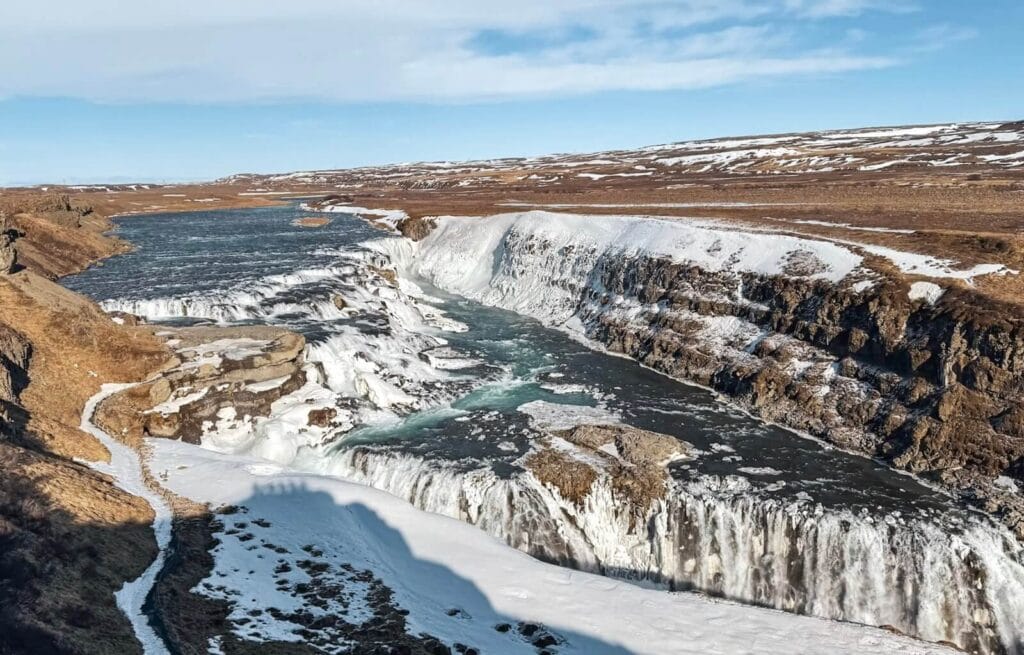
Geysir is accessible all year round, as is Thingvellir. I highly recommend visiting Oxarafoss waterfall as it’s beautiful in the icy weather.
The only thing that might change your itinerary is the daylight. If you visit in November, December, or January, you’ll have quite limited daylight hours.
We’ve visited Iceland in December and January – check out our guide to Iceland in January here.
This may mean you can only see the big 3 on the Golden Circle and won’t have time to go off the beaten path.


If you visit in October and March, you’ll still likely get the winter experience with colder weather and snowy scenery, but you’ll also have more daylight.
You’ll have more time during these months to see places like Bruarfoss, which the tour companies don’t go to.
👉 If you want our suggested Golden Circle itinerary, check it out here.
Unique Winter Experiences on the Golden Circle
There are also several things that you can only experience in the Golden Circle in winter. These can add a whole new experience to your time there and make it truly unforgettable.
For instance, winter is the best time to see the Northern Lights, especially if you’re away from city lights. Thingvellir is one of the best places to see the lights in Iceland, and many tours from Reykjavik will take you there.

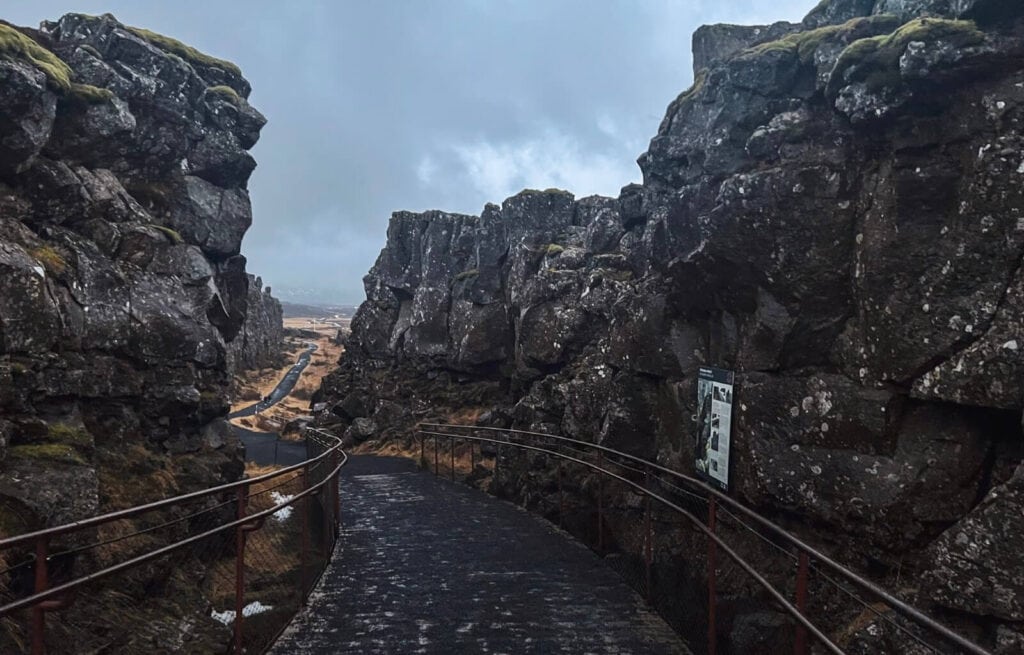
You can also experience frozen waterfalls, and if you’ve ever wanted to go husky sledging, you can do this in Thingvellir in the winter months.
Winter also brings fewer crowds, which is a much more peaceful experience.
👉 If you’re planning on chasing the aurora, check out our favourite Northern Lights hotels – some are on the Golden Circle!
Practical Tips for Visiting the Golden Circle in Winter
In reality, visiting the Golden Circle isn’t particularly different from the rest of Iceland in winter.
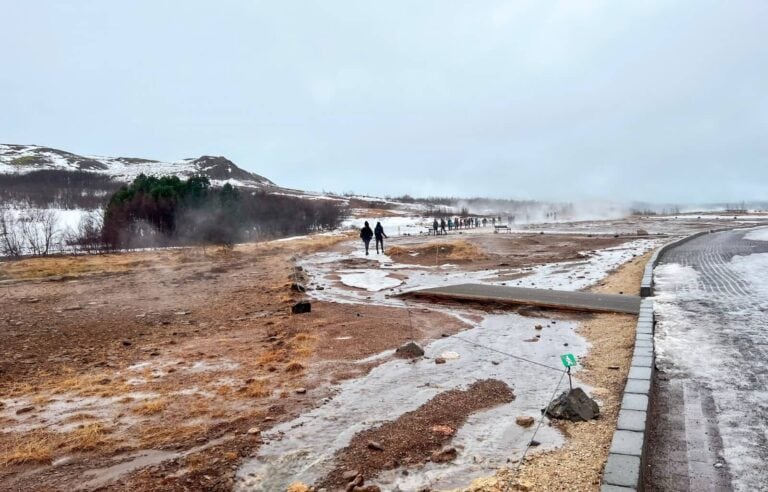
First, dress in warm, waterproof layers, as the weather can be unpredictable and temperatures can drop quickly. Good quality winter boots are essential, as paths around popular sites like geysers and waterfalls can be icy and slippery.


We highly recommend renting a 4×4 vehicle if you’re driving in winter, as snowy or icy roads are common. Also, always check the road and weather conditions before setting out.
You’ll find facilities at Thingvellir, Gullfoss, and Geysir are open all year round and have toilets and cafes, so you’ll be able to find places to warm up and grab some food.
Finally, plan for shorter days by starting early and where possible, try not to drive in the dark. If you want more time to explore, consider staying on the Golden Circle. This will also give you a great chance of spotting the Northern Lights.
Is It Worth Visiting the Golden Circle in Winter?
The short answer is yes! We’ve visited the Golden Circle twice in the winter months and loved it both times.
While the weather can be unpredictable, there’s a popular saying in Iceland: “If you don’t like the weather, wait 5 minutes.” This is often true! As long as you’re prepared for winter conditions, you should have no trouble.
Of course, if you aren’t comfortable driving in the winter months, we highly recommend going on a guided tour. We loved our guided tour experience, and it’s especially convenient if you’re staying in Reykjavik since you won’t need a car to get around the city.
We highly recommend doing a Golden Circle day tour if you’re spending anything from 2 to 3 days in Reykjavik (or longer), as it’s a really easy day tour from the city.
Overall, if you’re considering visiting this region in winter, go for it! The Golden Circle is stunning year-round, and the winter scenery adds a certain charm to this beautiful part of Iceland.
👉 Planning on staying on the Golden Circle? These are the most unforgettable hotels.
Pin for Later!