
Iceland in January: Weather, Tips & What to Expect




Are you planning on visiting Iceland in January? If so, here’s everything you need to know and exactly what to expect from the coldest month of the year.
Considering just how much there is to do there, it always surprises us that January is one of the least popular times to visit Iceland. Yes, it’s cold and dark, but it’s also cosy and beautiful and a true winter wonderland.
We’ve visited Iceland several times in the deep winter months and loved it each time – in fact, our very first visit to Iceland was in mid-winter, and it was that trip which made me fall in love with Iceland in the first place!
So if a wintery trip to Iceland is on the cards, here’s exactly why you shouldn’t discount January as one of the best times to visit Iceland.
*This post may contain affiliate links that earn us a small commission at no extra cost to you. For more information, read our disclaimer.
Iceland January Must-Do’s!
Short on time? These are 5 bucket-list experiences we recommend doing in Iceland in January! ❤️
- Tour the South Coast
- Go on a Glacier Hike
- Soak in the Blue Lagoon
- Chase the Northern Lights
- Explore the Golden Circle
Our fave hotel: Center Hotels Plaza
Weather in Iceland in January
I’m not going to lie to you, the weather in January in Iceland is pretty cold.
Average temperatures in Reykjavik hover around -1°C to 4°C (30–39°F), while inland areas and northern regions can get much colder. In Akureyri, where we stayed, it averaged between 1°C and -5°C (33-23°C) throughout our whole trip.

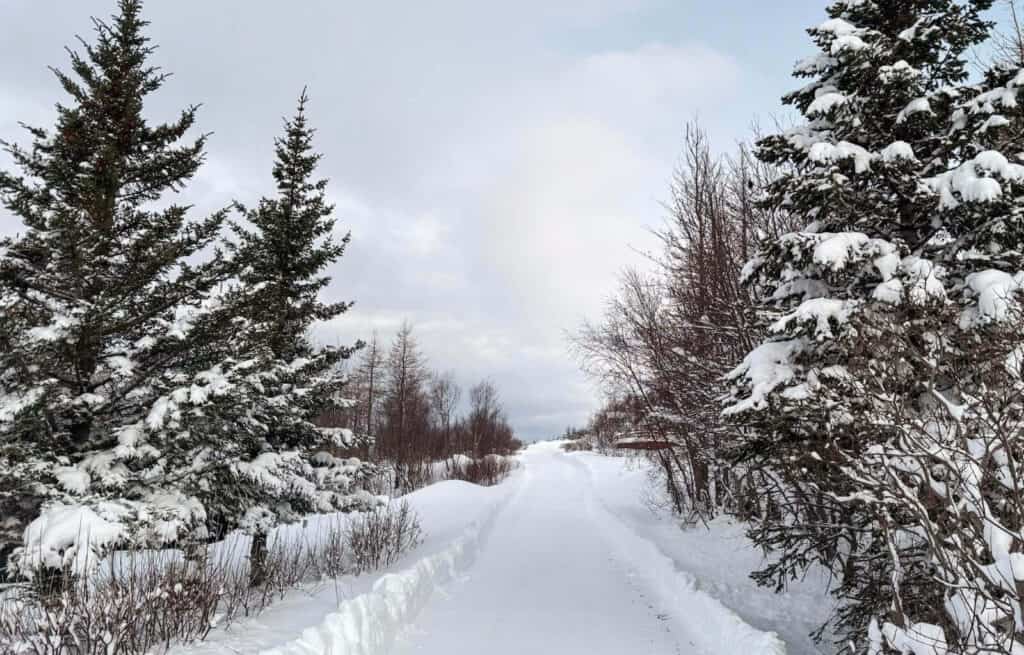
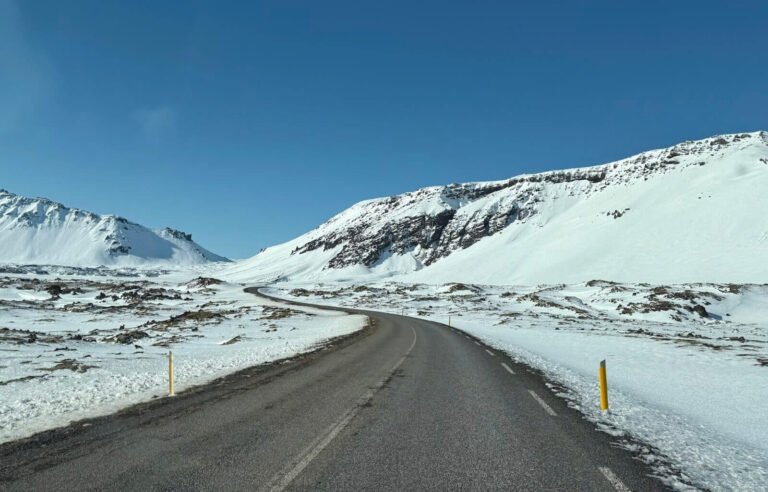
Snow is common, especially in the north and along the Ring Road, and wind can make temperatures feel even lower.
In fact, when we were in Akureyri in January, we had a LOT of snow to the point where we woke up snowed in one morning and had to ask a local to come and plough us out with his tractor!

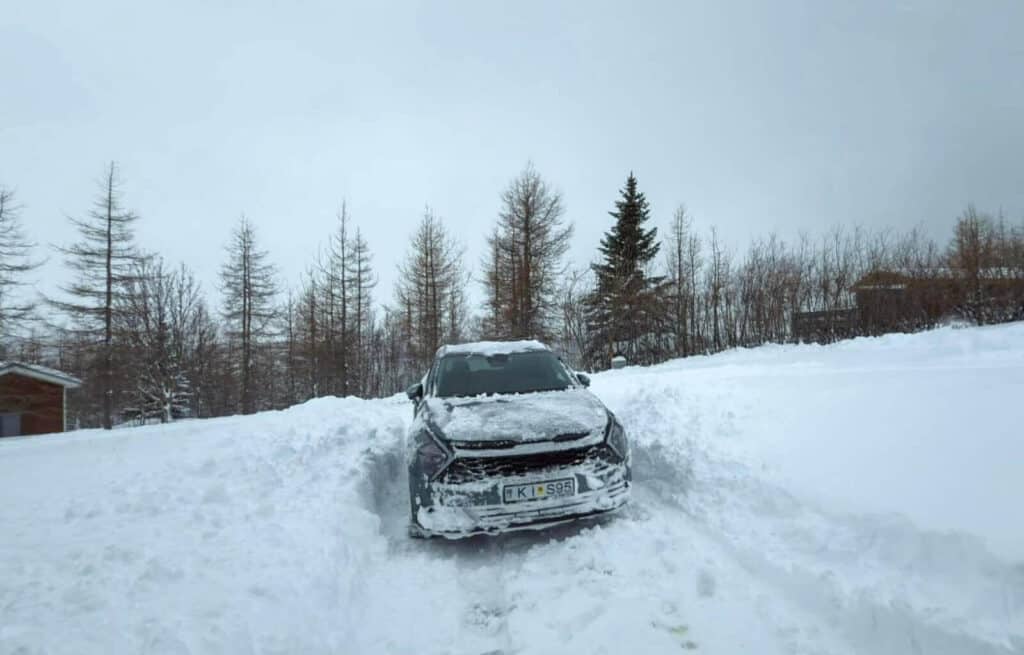
It’s also a very changeable month – you can experience sunshine, snow showers, and strong winds all in the same day.
This unpredictability is part of Iceland’s charm, but it’s also why you’ll want to check the Icelandic weather forecast regularly while planning your trip.
TOP TIP: We always use the Vedur app for the most accurate predictions of the weather.
Daylight Hours
One of the things that people often worry about the most when visiting Iceland in the winter is the daylight hours. And yes, it’s definitely much darker in winter than in the summer months.
Iceland in January averages around 4-5 hours of daylight, and slightly more in the south than in the north.

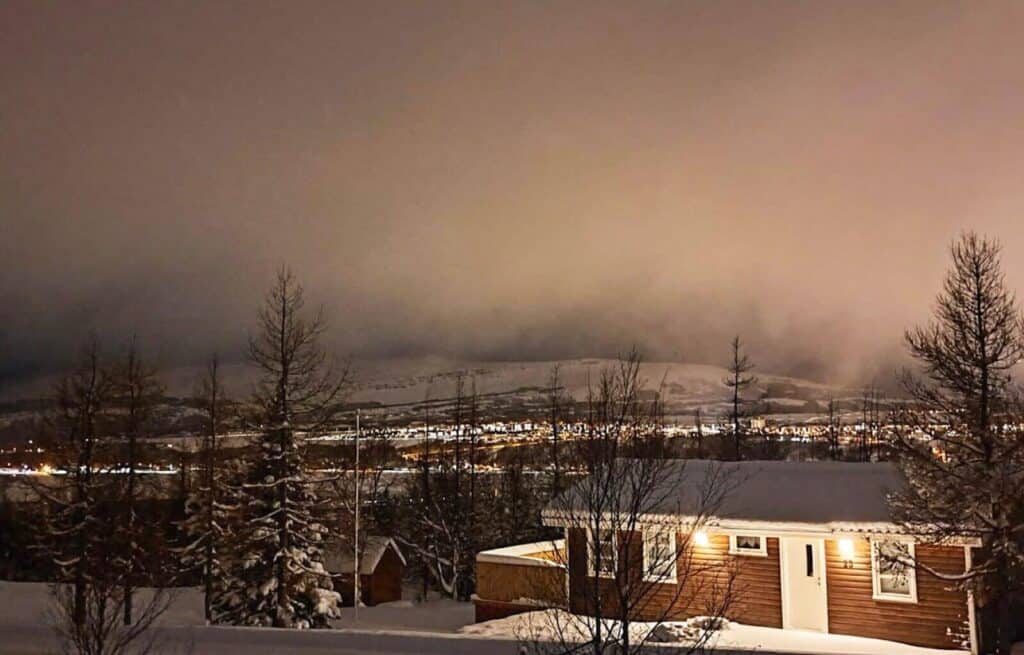
When we were in Akureyri, the sun rose at around 11am and set about 3:45pm, whereas in Reykjavik in mid-January, the sun rises at around 11, and sets about 4:30pm

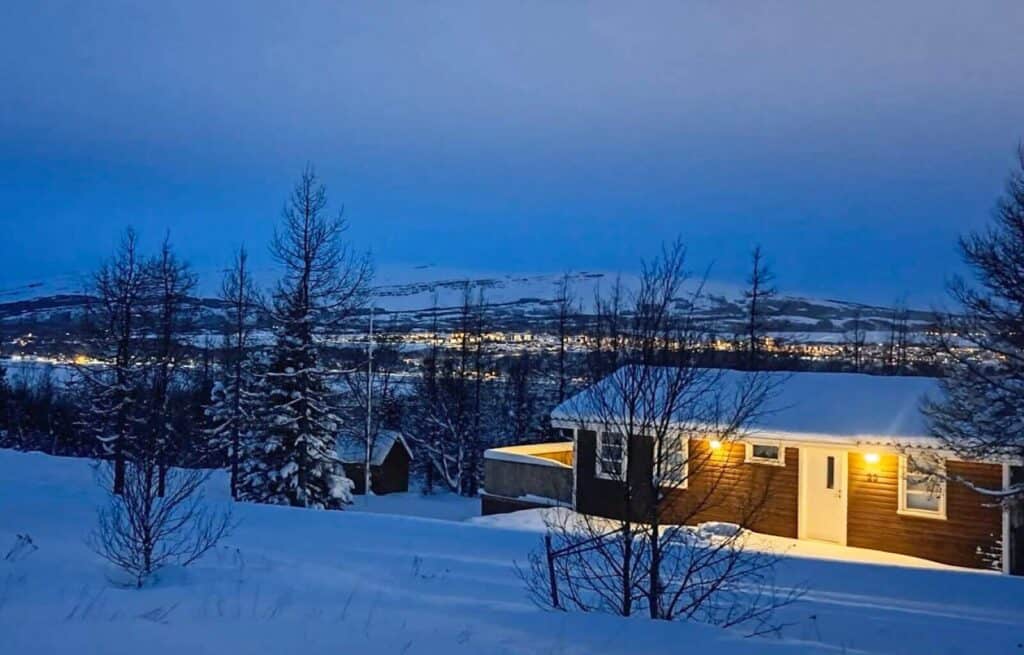
But by the end of the month, the sun will be rising around 10am and setting around 5pm.
Honestly, despite making our breakfast in the dark in the morning, which felt a bit odd, we didn’t notice a huge difference. The sun sets around 4pm in England in winter, so the day ending early wasn’t all that bizarre.

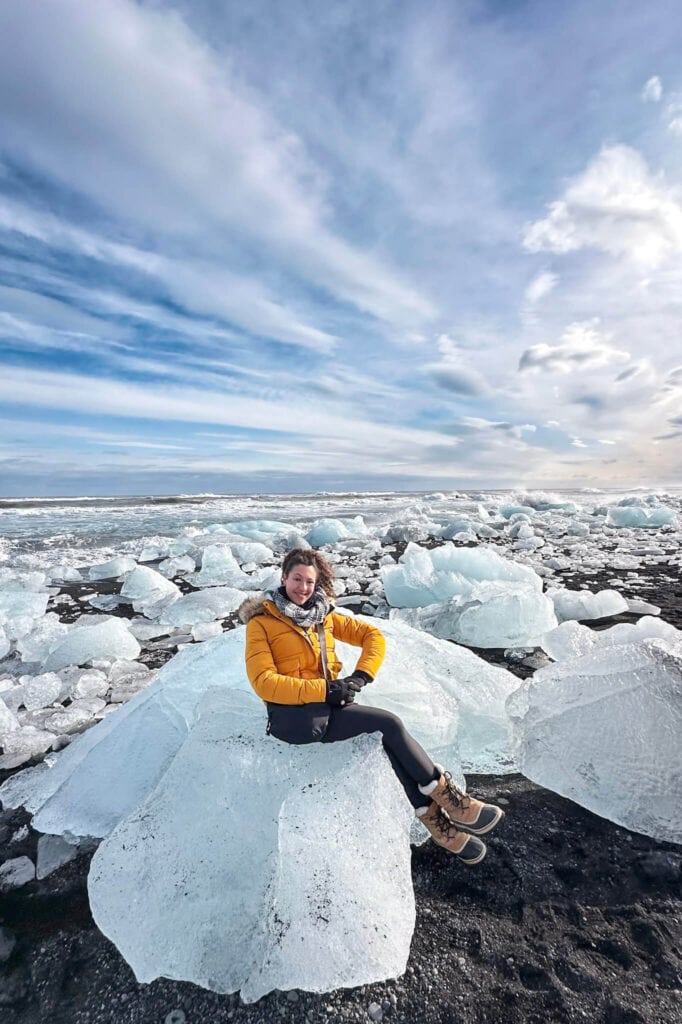
It did mean that we had to think a bit more about what we were doing in the day, though, as we didn’t want to be driving in the dark.
You’ll want to prioritise outdoor activities like waterfalls, geysers, and places like the Golden Circle and South Coast during daylight, and leave evenings for exploring the city centre, soaking in geothermal baths, or chasing the Northern Lights.
👉Check out our full guide to the best time to visit Iceland for all our tips.
What to Pack for Iceland in January
Packing for winter in Iceland requires some level of preparation. You’ll not only want to think about the cold, but also the wet and the wind. Wind in Iceland can be brutal and easily make a fairly mild evening feel absolutely freezing.
The first thing you’ll need to think about is layering. We recommend a thermal base layer, several mid-layers like fleece, which are good insulators, a waterproof and windproof jacket and trousers, a hat, gloves, and a scarf.
You’ll also need to think about footwear. In Iceland in January, we both wore snow boots, and it’s quite lucky we did, or our feet would’ve been soaking in regular hiking boots. We also recommend making sure your boots are grippy for icy conditions.


Strangely, we also suggest bringing sunglasses, especially if you’re driving, as the snow can create a lot of bright glare.
You may also want to bring hand warmers as well – we took these on our whale watching tour and they completely saved my hands!
A few other things you might want to pack include crampons for walking in icy conditions, and an ice scraper if you’re driving (not all hire cars provide these for some reason!).
👉 Grab our Iceland Winter Packing List for the full list!
Things to Do in Iceland in January
Despite the cold and short days, January is one of the most rewarding months to visit Iceland. There are so many amazing things to do in the snow, and it makes for some utterly stunning scenery.
Here are our favourite 10 things to do in Iceland in January.
1. Go on a Northern Lights Tour
Seeing the Northern Lights is such an incredible bucket list experience, and January’s long nights give you one of the best chances to see them!
There are lots of Aurora tours around Iceland, from big bus day tour from Reykjavik to smaller minibus tours in Akureyri. Each will take you out to the best local spots for Northern Lights spotting.

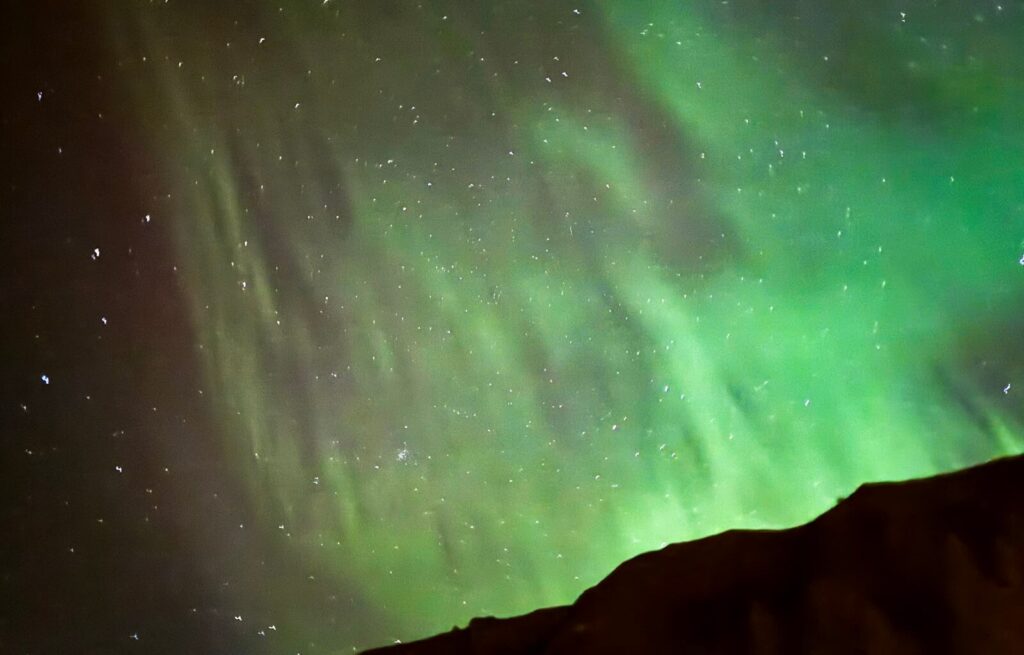
Guides know where the skies are clearest, provide thermal suits, and often help with photography tips so you can capture the lights on your camera. They often provide hot chocolate too, so that’s another win!
If you’ve always dreamed of seeing the Northern Lights in Iceland, this is one of the best months to do it!
❤️ This is the Northern Lights Tour we recommend in Iceland!
2. Relax in the Sky Lagoon
For those cosy evenings in the snow, there’s no better place to relax than one of Iceland’s thermal baths. The Sky Lagoon is the closest geothermal spa to Reykjavik, making it one of the easiest to get to, and it’s one of the newest, too.


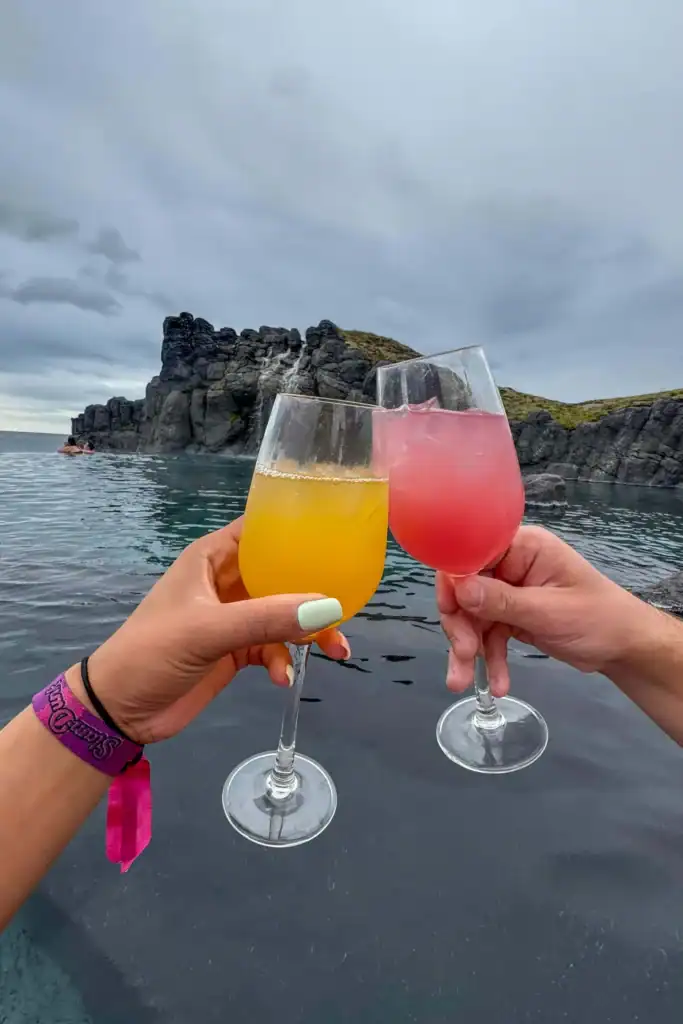
We absolutely loved our time in the Sky Lagoon. The infinity pool overlooks the ocean, and the steam rising from the water in the chilly air makes it a pretty magical experience.
One of our favourite parts of the Sky Lagoon was the 7-step ritual, which involved a cold plunge, sauna, and steam room and really added to the experience.
It was the perfect way to relax while enjoying Iceland’s snowy scenery.
3. Go on a South Coast Tour
A trip to the South Coast is one of the most popular tours in Iceland and for good reason.
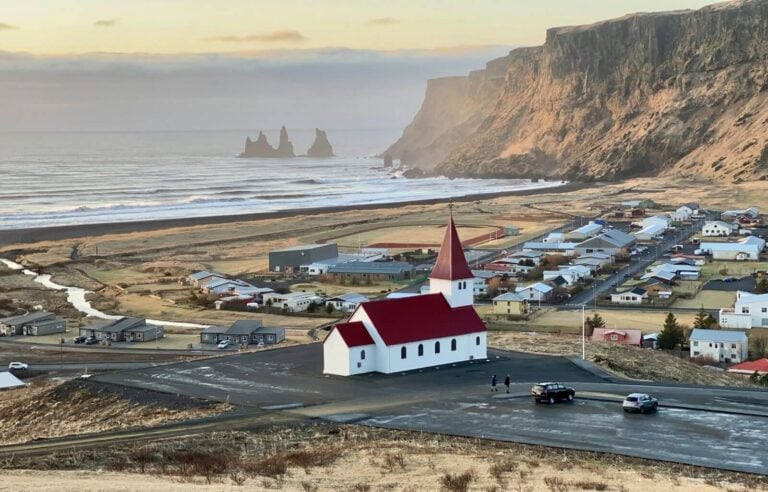
The south coast of Iceland is home to some of the country’s most iconic scenery, including famous waterfalls, black sand beaches, and cute Icelandic towns.

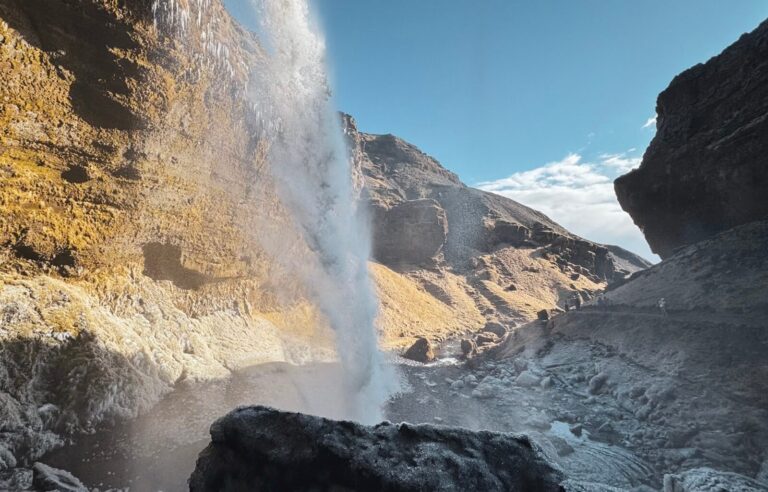
These places are so stunning in winter, with dramatic icicles on the waterfalls, the crashing waves on the beaches and the moody black sand. Skogafoss in winter is one of our fave places in Iceland.


If you don’t fancy driving in Iceland in winter, this is one of the most popular tours to go on, so we do recommend booking in advance.
The very first time we visited Iceland for 3 days, we went on this tour, and it was one of the best tours we did on our trip.
❤️ This is one of the best tours in Iceland, so be sure to book in advance!
4. Explore the Golden Circle
The Golden Circle is the most popular tourist route in Iceland, so it is both one of the most accessible and easiest to visit places in Iceland in January.
This itinerary covers three of the most visited spots in Iceland: the Geysir geothermal area, Gullfoss waterfall, and Thingvellir National Park. Depending on which tour you book, you might also visit Kerid Crater, a huge volcanic crater with beautiful colours.

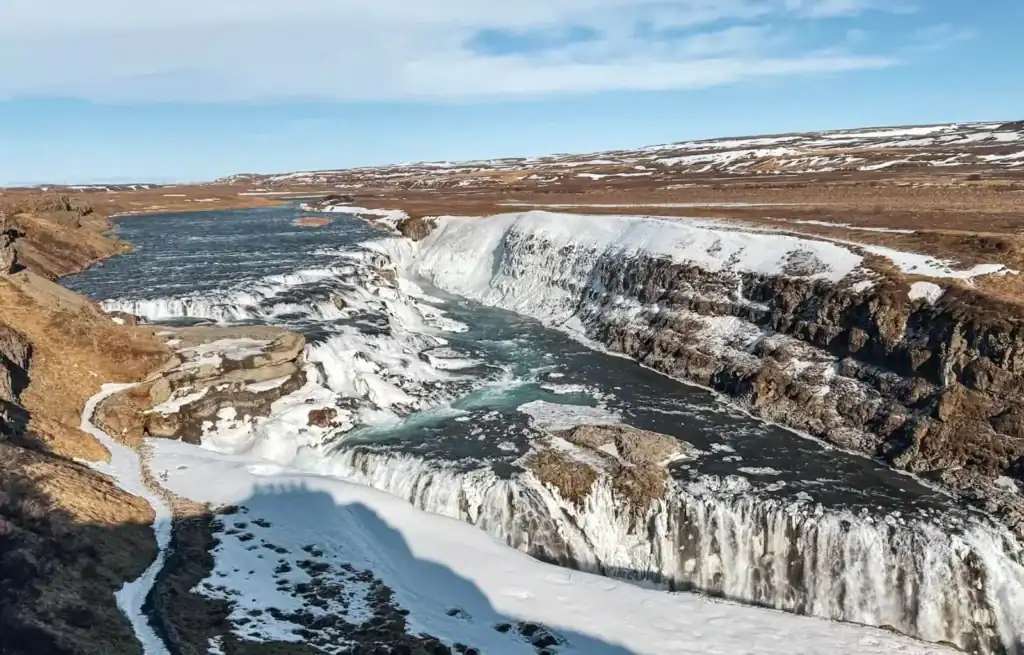
Our very first time to the Golden Circle was in December, and we loved it. Plus, it’s much quieter in the winter than in summer, which is a relief as it can get quite crowded in summer.
We recommend booking a guided tour in winter as the roads can be icy, and having a local driver means you don’t have to worry about the conditions.
However, if you prefer driving yourself, check out our guide on the Golden Circle in winter for tips on staying safe.
❤️ Don’t forget to book this tour in advance, or it’ll sell out!
5. Go on a Glacier Hike
This is possibly the most incredible thing we’ve ever done in Iceland. Hiking on a glacier is a once-in-a-lifetime adventure and definitely something you need to add to your Iceland bucket list.


We first did this in Iceland in December, and the conditions were cold, but the ice and snow made the scenery so much more dramatic.
Our glacier hike was on Solheimajokul Glacier in the south, but you could also head to Skaftafell if you’re further east.
Guided glacier hikes provide all the necessary gear, including crampons and ice axes, meaning you can safely get up close to stunning ice formations, and even climb into crevasses.

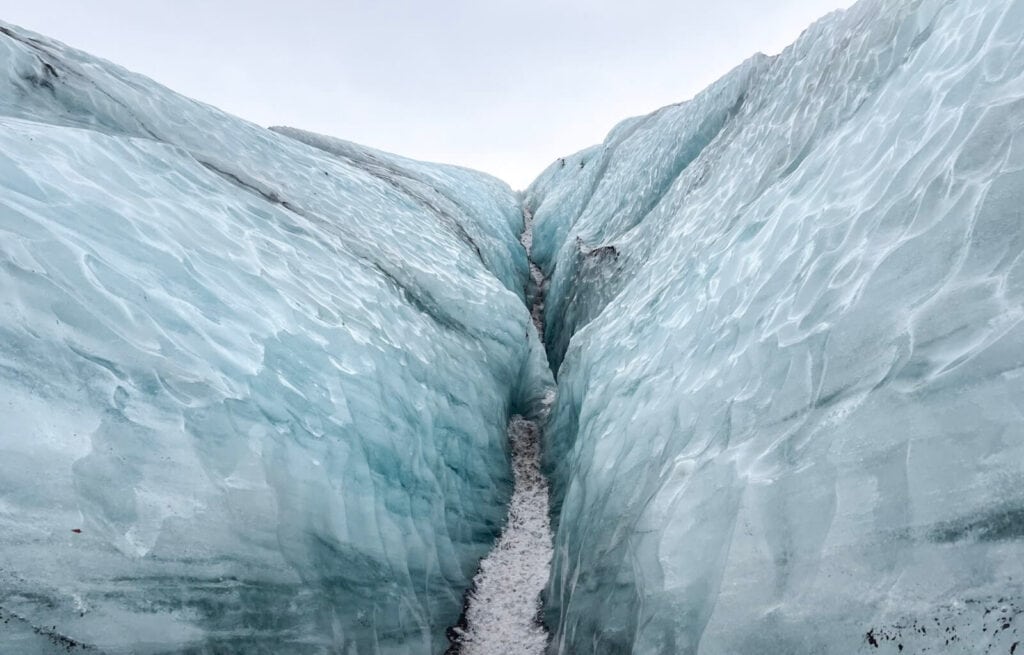
The quietness of the winter months also means fewer tourists, so you can enjoy the beauty of these landscapes more peacefully.
❤️ This is one of the most bucket list adventures in Iceland!
6. Visit the Blue Lagoon
Can you really visit Iceland and not visit the Blue Lagoon? This is the most popular thermal spa in Iceland, and January is a fantastic time to experience it with fewer crowds.
The warm, mineral-rich waters are perfect for soaking while the surrounding landscape is covered in snow.


It’s still pretty popular, so we recommend booking in advance; however, you’ll find prices a little lower than the peak touristy summer months.
It’s easiest to combine a visit here with either your arrival or departure from Iceland, since it’s only 20 minutes from Keflavik Airport.
There are also direct bus transfers from the lagoon to the airport and the other way round, which makes it an easy stop.
7. Go Whale Watching
While this is primarily considered a summer activity, we did our very first whale watching tour in Iceland in mid-January and absolutely loved it.
We went from Akureyri into Eyjafjörður, and it was incredible. We saw a hot waterfall, the boat was crunching through huge sheets of ice, and we saw a humpback whale, which our guides told us was called Piccolo.


Seeing these majestic creatures in icy waters is a surreal experience and one of the most amazing days of our 3-day Akureyri trip.
Our whale watching tour also included free hot drinks to warm us up, a cosy indoor seating area, as well as the outdoor deck, and thermal suits if we wanted them.


The guides gave us a gallery of photos to use and provided insights into whale behaviour, making it pretty informative as well.
❤️ This is one of the most bucket list winter tours in Iceland!
8. Explore an Ice Cave
There are a few popular Ice Cave tours in Iceland, the most popular and accessible being Katla Ice Cave, located along the south coast near the village of Vik.
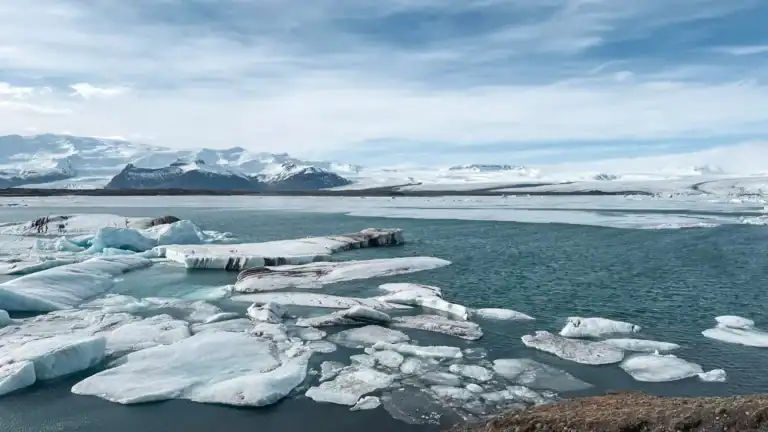
Alternatively, if you’re heading further south towards Jokulsarlon Glacial Lagoon, you’ll also be close to the Blue Ice Cave on Skaftafel Glacier.


These ice caves are a winter-only attraction and are at their most photogenic in January. Walking inside literally feels like entering another world, with translucent walls, deep blues, and shimmering ice patterns.
Exploring an ice cave is an incredible thing to do in January in Iceland.
Tours are essential for safety, as the caves are fragile and can be dangerous without a guide. But this is one of the most unique experiences in Iceland, and a must for your Iceland bucket list.
9. Go Husky Sledding
Many people consider husky sledding to be an activity reserved for Lapland or northern Norway; however, our first time sledding was in Iceland, and we loved it!
There are only a few husky sledding companies in Iceland, so you have a lot less choice than you would in Norway; however, the experience is unmatched, and we loved every second of our tour.

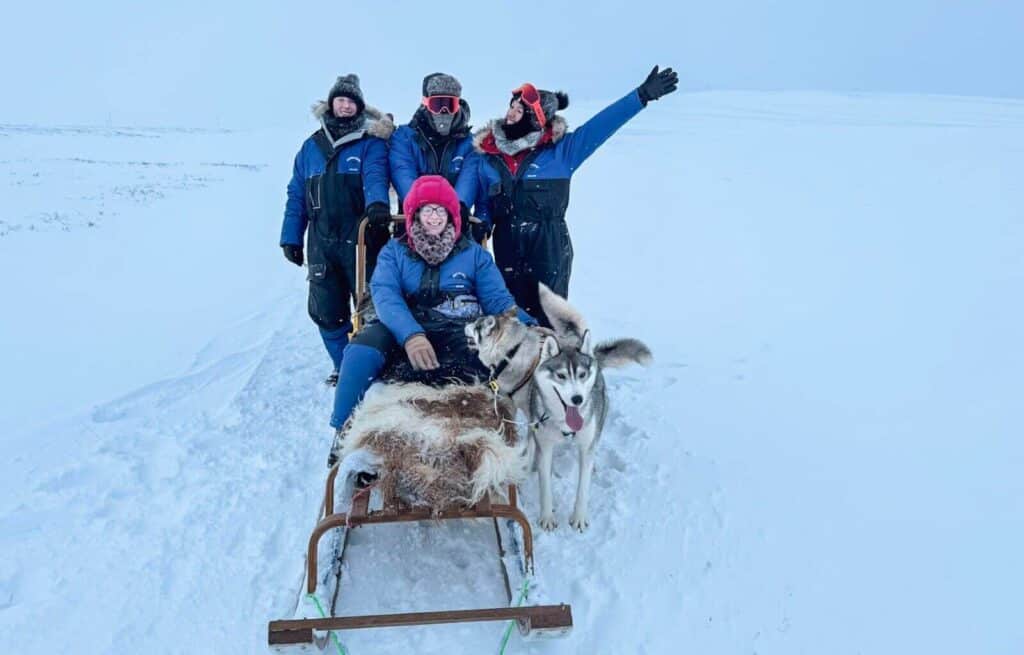
We got to meet the huskies, have cuddles with them, and then climb onto a sleigh to go bounding through the snowy landscapes. Our guide even let us drive our own sled for a while, which was a fantastic experience.
These tours are often set in remote, snowy valleys, giving you an unforgettable winter adventure while enjoying the beauty of Iceland’s wilderness.
❤️ This was such an incredible experience and the tour we recommend!
10. Soak in the Forest Lagoon
The Forest Lagoon is a much quieter geothermal spa in Iceland, located in Akureyri in the north, about a 5-minute drive from the city centre.


It’s a bit of a hidden gem that offers a more intimate experience than the touristy Blue Lagoon. It’s surrounded by forests and overlooks the fjord, and it’s perfect for relaxing after a day of sightseeing.
We spent the afternoon soaking here after our whale watching tour in Akureyri, and it was the perfect way to warm up and relax. As well as the main pool, there is also a cold plunge, a sauna, and a swim-up bar where you can buy a delicious cocktail.
Driving & Getting Around
Driving in Iceland can be changing in itself, but driving in Iceland in winter is a whole different ball game. It’s one of the best ways to see Iceland at your own pace, but it can be a little intimidating if you’re not used to winter conditions.
The roads can be very icy, especially outside Reykjavik; conditions can change at the drop of a hat, and you need to be prepared for winter weather.

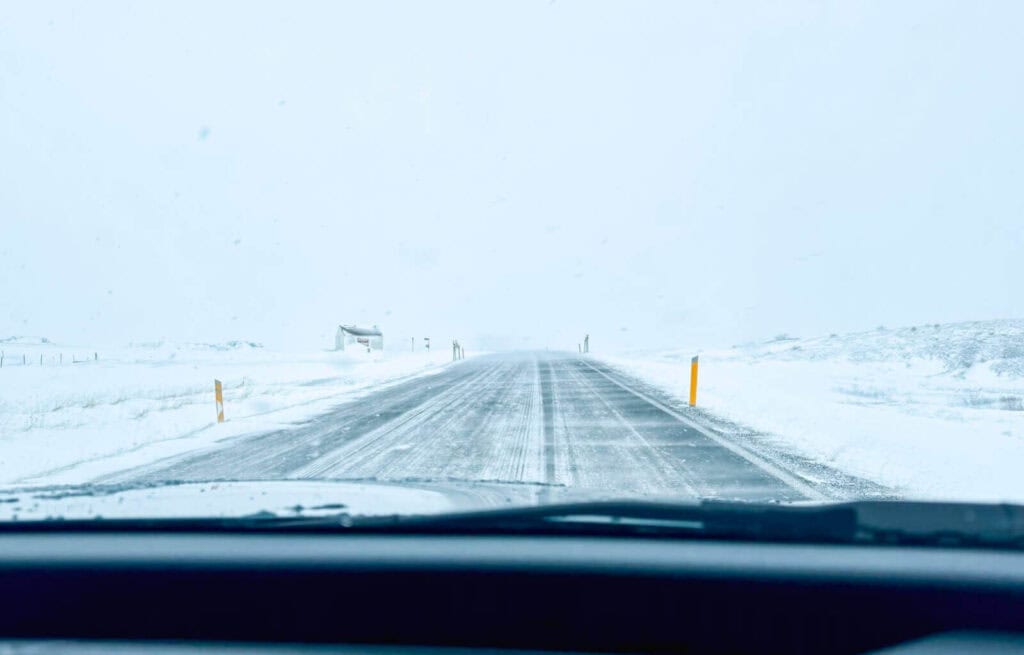
Main routes like the Golden Circle and the South Coast are generally well-maintained, but outside of this is often very icy and, in places, it can get very difficult to see the road.
We recommend hiring a 4×4 if you’re planning on driving in January, but whatever car you drive, they’ll give you studded winter tires, which really help with gripping the road.

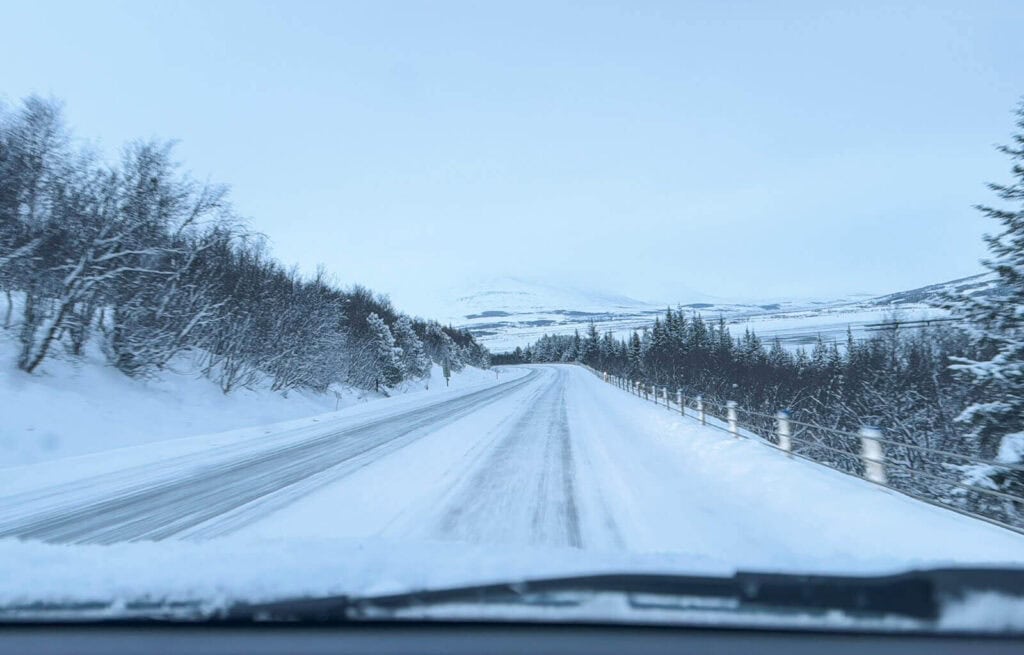
If you plan to drive yourself, always check road conditions on safe.is and the local weather forecast on vedur.is before setting off.
Keep a safe distance from other vehicles, drive slower than usual, and be extra cautious on bridges and exposed areas where strong winds can create hazards.
For those who prefer not to drive, guided tours are the safest way to get around as you’ll be driven by expert guides who know the routes, have special vehicles, and are used to winter conditions.
TOP TIP: Book your rental car in advance, as 4×4 availability can be limited in January. We recommend this company to find the best deals.
Final Thoughts
Overall, you do need to take a little bit of time to prepare for a trip to Iceland in January, but it can be one of the most rewarding times to travel.
You’ll find cheaper prices, fewer crowds, and often stunning snowy scenery. You’ll also have the chance to spot the northern lights, see whales, go husky sledding and soak in thermal lagoons surrounded by snow.
With the right preparation – warm clothing, careful planning, and flexible itineraries – you can have an amazing Icelandic winter getaway.
It’s a magical time of year to visit Iceland, and we definitely don’t recommend letting the cold or dark put you off!
👉 Haven’t worked out where to stay yet? Here are all of our favourite hotels in Reykjavik.
Pin for Later!