Driving in Iceland: Everything You Need to Know


Are you planning on driving in Iceland? It’s a little more complex than driving in other countries in Europe, so here’s our experience and everything you need to know!
If you ask us the best way to get around Iceland, we will always say hire a car.
We’ve done guided tours from Reykjavik and while they are a fantastic way to see the country if you’re short on time, aren’t a confident driver, or staying in the capital, you can see so much more with a hire car.
But, there’s a lot to think about before you hire a car in Iceland. The cost, the insurance, the road rules, and the weather conditions are just some of the things that make an Iceland road trip slightly different from other countries in Europe.
So, if you’re planning on driving in Iceland, here’s everything you need to know.
*This post may contain affiliate links that earn us a small commission at no extra cost to you. For more information, read our disclaimer.
🚗 We rented a car from Keflavík Airport and drove all over Iceland. We only ever use this company as they have a great range of cars and always have the best prices.
Do you need to rent a car in Iceland?
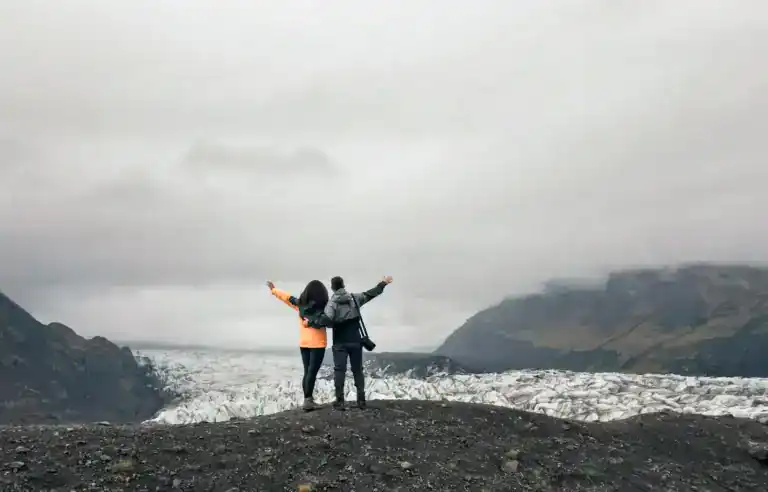
Technically, no, you don’t. There are lots of guided tours in Iceland, and we’ve taken several of them during our time in the country. The south coast glacier hike tour we did was especially good and a memory we will never forget.
(If you’re considering a glacier hike in Iceland, check out the hike we did.)
However, there is only so much you can do via a guided tour. Many of the tours have set times, set stops, and set itineraries.
There’s no room for spontaneity.
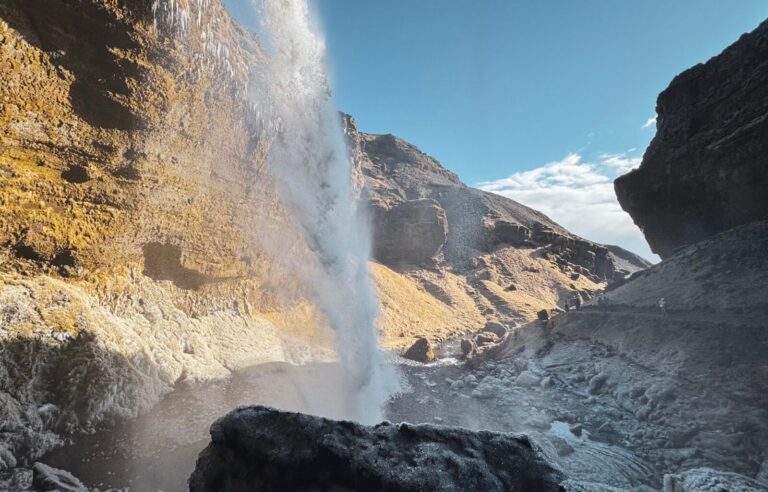
You can’t see something beautiful on the side of the road and pull over to have a look. You can’t find beautiful waterfalls (like we did with Kvernnufoss), 5 minutes around the corner from a major tourist attraction and go and investigate because you have no control over the route.
Plus, the majority of guided tours start and end in Reykjavik. This means a lot of back and forth to the capital when it’s often easier to stay along the south coast or continue on the Ring Road.
We’ve found it much easier to rent a car and explore ourselves. Plus, it gives us much more freedom. But, if you don’t want to drive, aren’t a confident driver, or are staying in Reykjavik anyway, getting guided day tours is a viable option.
Choosing the right rental company
The next thing you’ll need to consider when driving in Iceland is the right rental company. Because Iceland is such an expensive country to visit, I highly recommend choosing a well-respected company to hire your car from.
Some of the cheaper deals may look appealing, but if something were to happen to the car (which is possible with Icelandic weather), this can end up biting you in the butt.
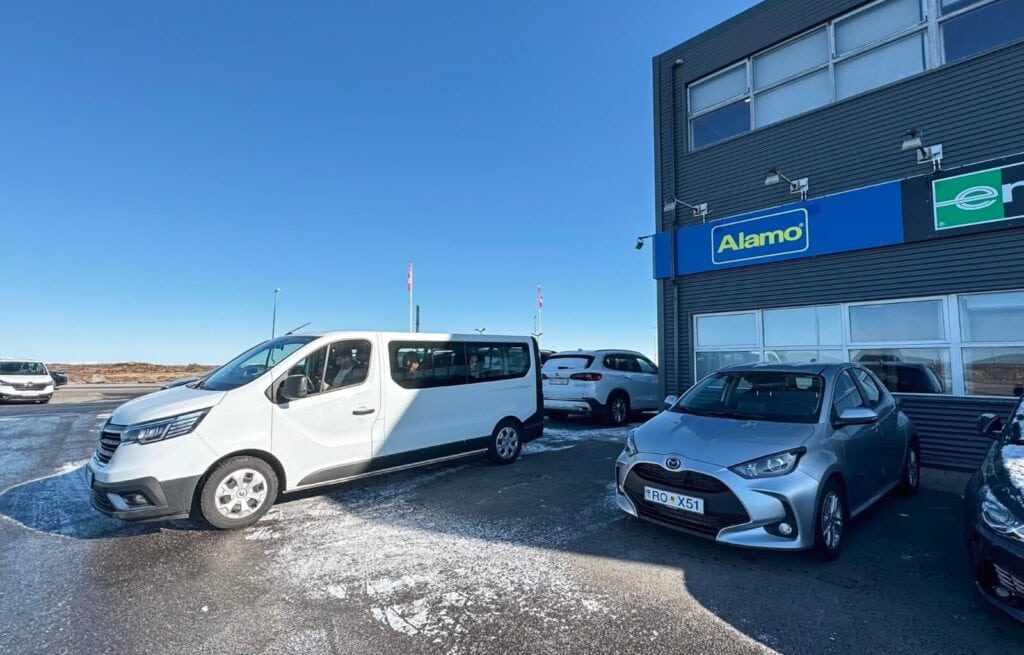
When we hired a car in Iceland, we used DiscoverCars. In fact, whenever we travel we use DiscoverCars as they always have the cheapest deal and the best options to hire.
We searched DiscoverCars, found a really good deal and picked up the car from Keflavík Airport. This was a meet-and-greet service but was pretty simple to navigate. We just had to jump on the rental car shuttle bus and it took us straight to the pickup point.
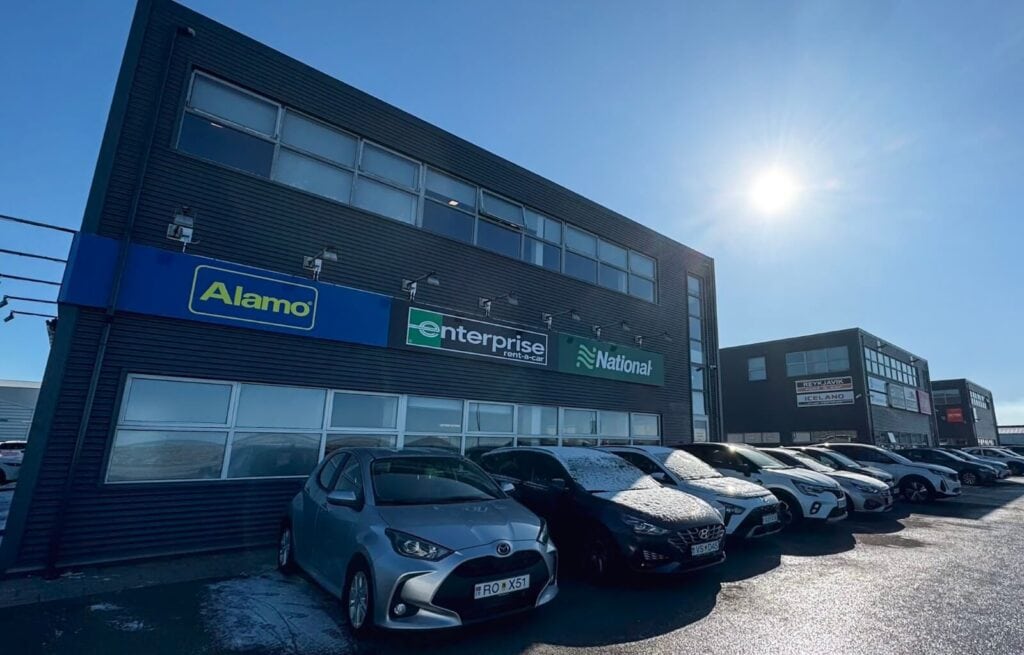
We then went over some paperwork and inspected the car to make sure we found and photographed all dinks and dents, then, off we went!
🚗 We only ever use this car hire company as they have a great range of cars and always have the best prices.
Choosing the right car
The right car for Iceland depends on how many people you are travelling with and where you plan on travelling. We last visited Iceland in April, so the highlands were closed meaning we didn’t need to worry about driving on F-roads.
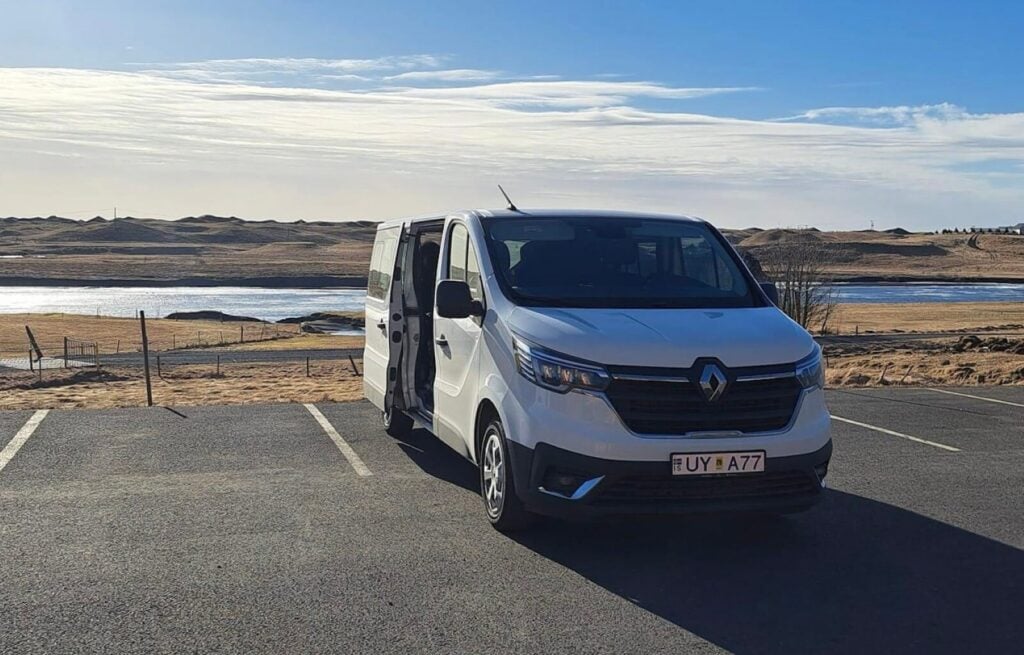
We did, however, need to think about icy conditions and potential bumpy dirt tracks. We were also quite a large party as we were travelling with family and were a group of 6 in total. As such, we chose to hire a large 9-seater van.
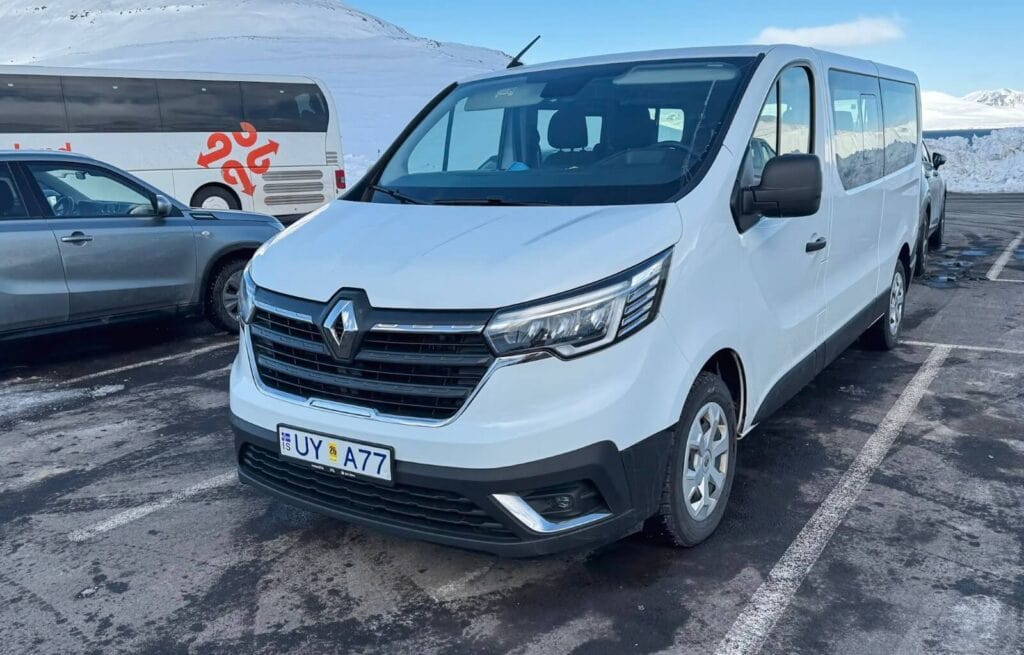
Since we were on the road so much, we wanted to make sure that everyone had enough room and was comfortable, especially for the longer drives.
We also wanted to store our luggage in the boot and not on our laps (which we ended up having to do when we hired a smaller 6-seater in Norway!).
So, when choosing a car, I recommend thinking carefully about your comfort, especially for longer drives, which there may well be if you’re planning a Ring Road itinerary.
You’ll also want to think about the height of the car. Whilst a lot of sights in Iceland are along the Ring Road, some of the more beautiful places may involve driving down a dirt path.
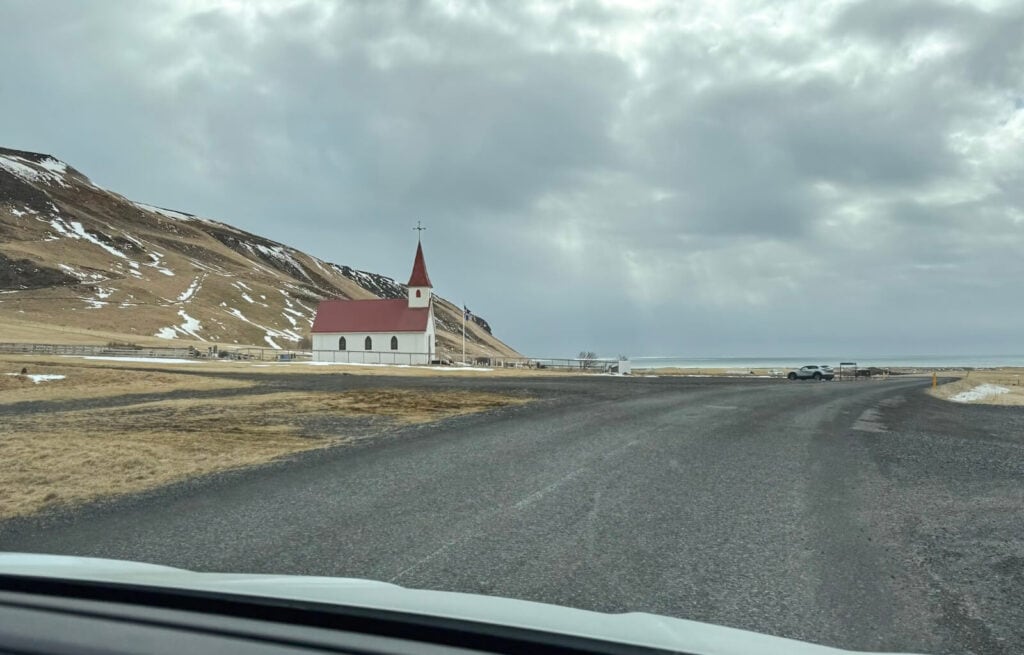
While a smaller car can do this and there are no rules to say you can’t, you could end up risking a stone flying up and damaging the car, which will cost a lot to fix in Iceland. So, I recommend steering clear of really tiny cars too.
Do you need a 4×4 to drive in Iceland?
No, you don’t need a 4-wheel drive to drive in Iceland. If you’re sticking to the Ring Road or roads off of the Ring Road, then a 4×4 isn’t necessary.
However, if you’re visiting Iceland in June to September and ,plan on driving into the highlands, you will need a 4×4. Driving into the Icelandic Highlands without a 4-wheel drive is strictly forbidden, and you will be heavily fined if you do this.
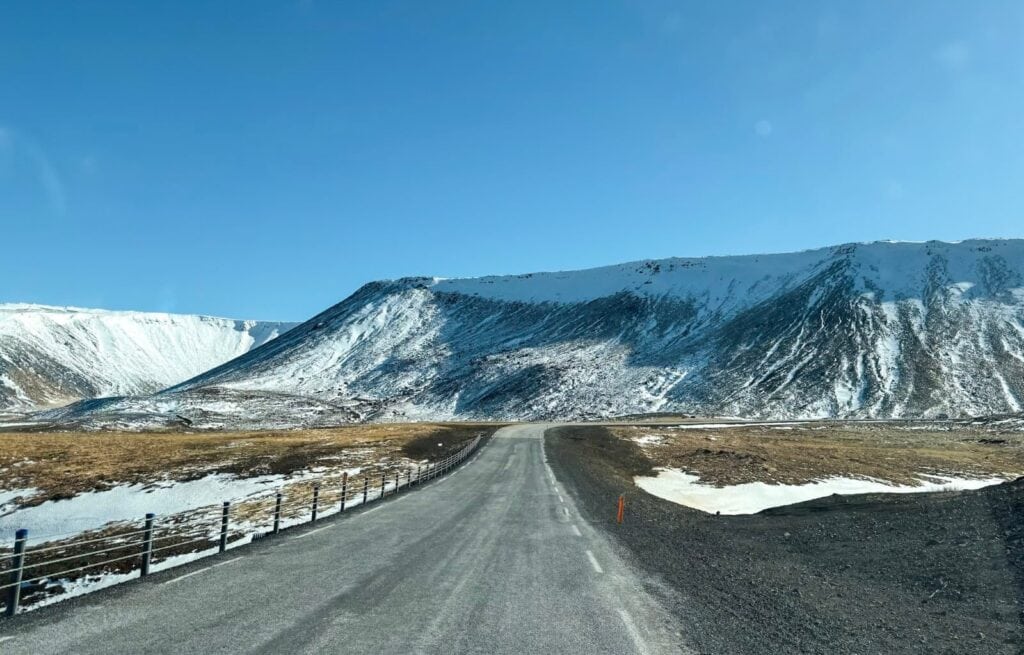
Plus, you could risk getting completely stuck and needing to be rescued as the roads up there are very different to the Ring Road. Almost all of the roads are unpaved, many are unmarked, and you may also have to drive through some rivers.
So, you’ll need a car that can handle all of that.
However, if you’re not planning on visiting the highlands in Iceland, then you can drive around the country perfectly easily in a normal 2-wheel drive.
A 2WD is also the cheapest option of car to hire in Iceland, so it’s really not worth renting a 4WD if you don’t need to.
🚗 We only ever use this car hire company as they have a great range of cars and always have the best prices.
What do you need to Drive in Iceland?
To drive in Iceland, you’ll need a full, valid driver’s licence. If you’re from the USA, the UK or Europe, you don’t need an IDP (International Driver’s Permit) to hire a car in Iceland.
However, if you are from a different country, I recommend checking with your local authority.
To hire a 2-wheel drive, you’ll need to be 20 years old at a minimum, and you’ll need to be 25 years old to hire a 4-wheel drive. However, the older you are, the cheaper the cost will be.
You’ll also need to present your passport when you pick up the car.
Rental car insurance in Iceland
When you pick up the car, the car hire staff will also likely ask you if you have car insurance. You’ll have the option to add full comprehensive insurance when you purchase the hire car and also when you pick it up, they will usually try to upsell you it as well.
And, while it’s perfectly fine to go with this option, we always choose to buy my insurance separately as it’s cheaper and covers more.
We use RentalCover and it’s never failed us. We’ve only had to claim once when a stone hit the front of the car and chipped it. We paid for the damage on a credit card and submitted the claim form online along with photos of the damage and letters from the rental company.
Rental Cover paid us the money back in less than a week!
We were very impressed with their service and highly recommend them when you hire a car.
Driving in Iceland
So, what’s it actually like to drive in Iceland? We’ve had a very good experience driving in Iceland despite being very unsure about certain things before we arrived in the country.
Our main concerns were some of the road rules, like the roundabouts and the weather conditions. Driving in Iceland in winter can be no joke, but we got pretty lucky and the weather was reasonably good all week.
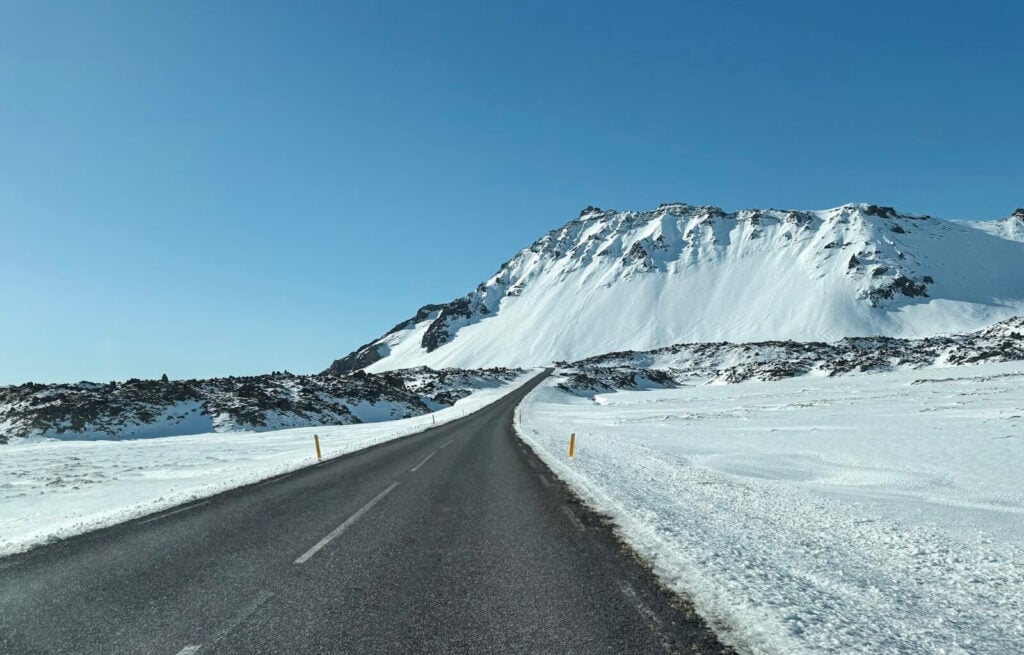
Throughout our trip, we mainly stuck to the Ring Road as our itinerary was mostly along the south coast. We also visited a few other destinations, like the Snæfellsnes Peninsula and the Reykjanes Peninsula, which were also pretty easy to drive in.
In general, as long as you stick to the rules, drive to the road and weather conditions, don’t go on an F road in a 2WD, and don’t drive off-road, you should be absolutely fine.
🚗 We only ever use this car hire company as they have a great range of cars and always have the best prices.
What are the road conditions like in Iceland?
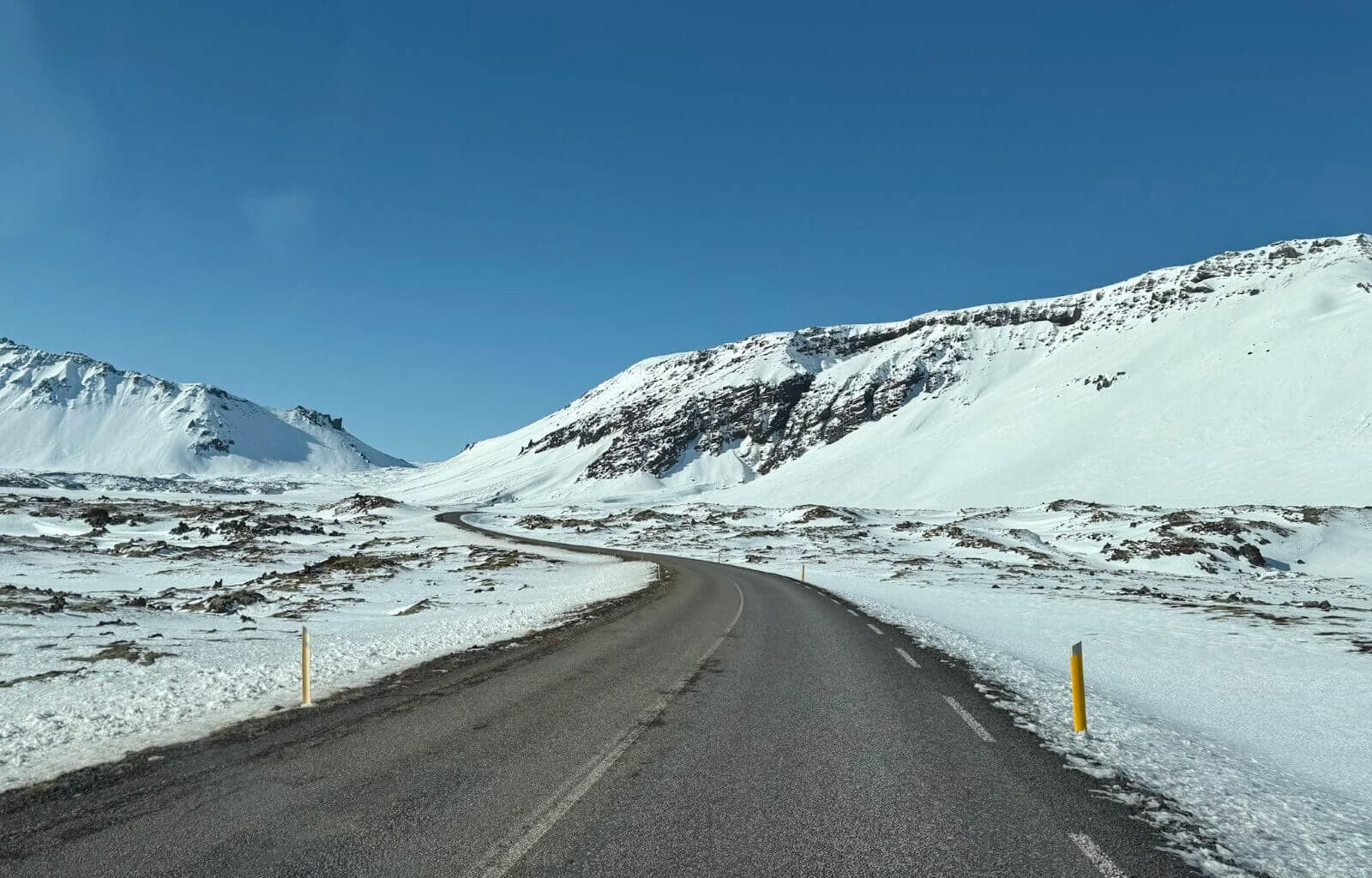
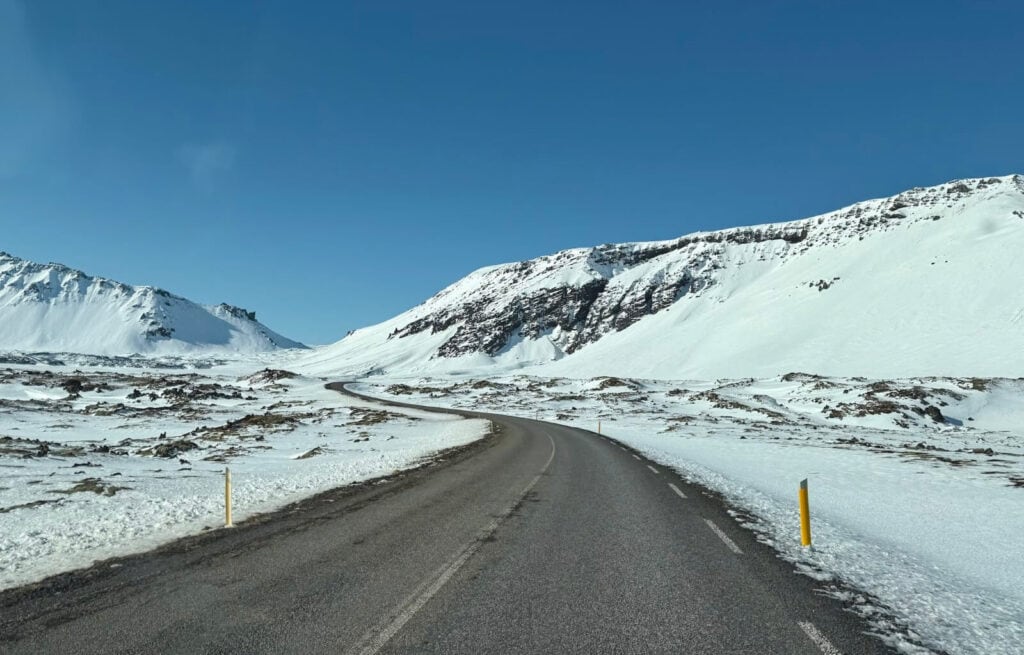
As I’ve mentioned, for the majority of our drive, we were on the Ring Road. This is a paved asphalt road that goes around the entire island. It’s well-maintained, regularly cleared from snow in the winter months, and easy to drive on.
The most common routes that people drive in Iceland are Reykjavik to Vik along the south coast and the Golden Circle. Both of these are easy, well-maintained roads and you shouldn’t have a problem driving on them.
Similarly, though busier, the roads in Reykjavik are easy to navigate too.
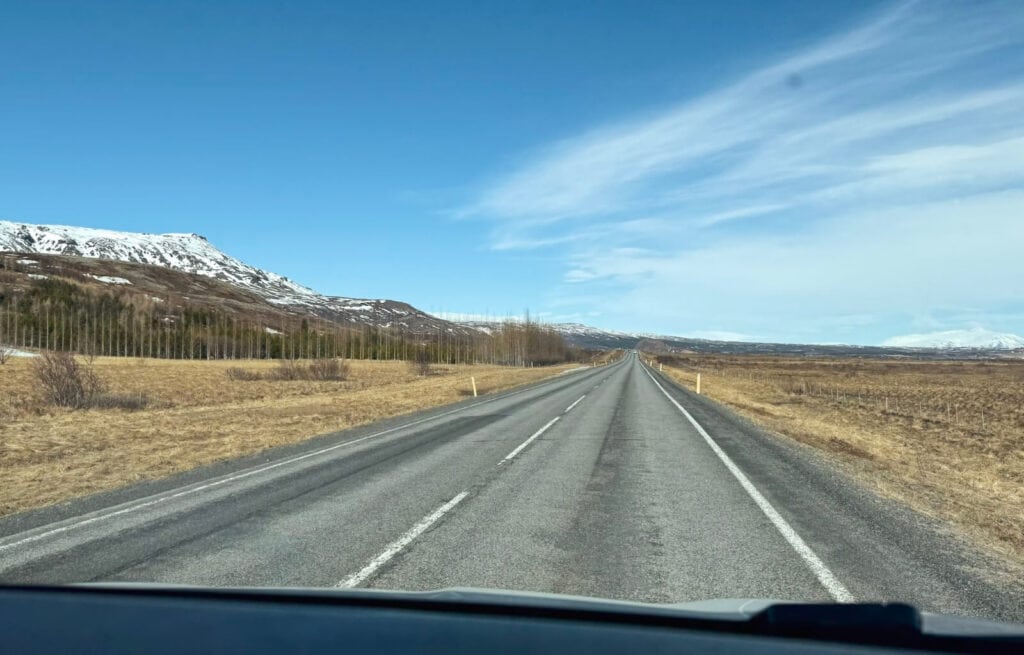
The speed limit on the Ring Road and all other paved asphalt roads in Iceland is 90kmh. It never goes higher than this, and this is the top speed limit for the whole island.
This is around 55 mph, so much slower than typical UK, USA, and European speed limits. There are quite a few cameras around Iceland, so be sure to stick to the speed limits.
Along the coast, the majority of the roads (probably around 90%) are paved, but there are also quite a large number of dirt roads.
These are reasonably well-maintained, but you definitely have to drive more carefully due to their bumpy surface and the possibility of stones flinging up and hitting the car.
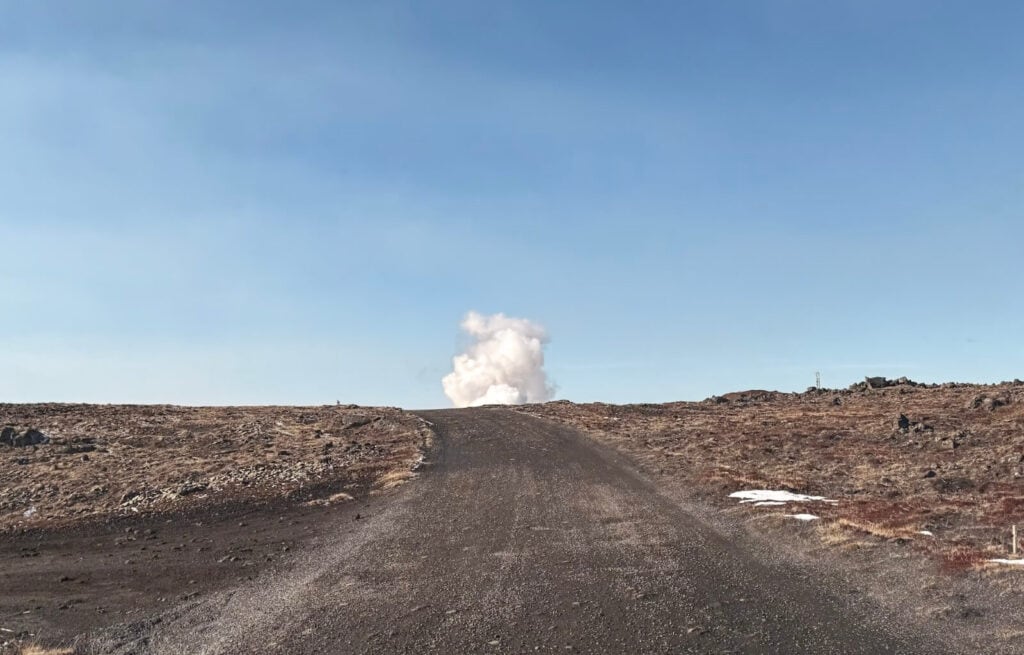
The speed limit on unpaved roads is 80kmh.
Then, finally, you have the F roads. These are the interior mountain roads and you absolutely cannot drive on them unless you have a 4×4. They are all unpaved and some of them don’t even have road markings.
Some also have river crossings, and you will get stuck if you don’t have the right vehicle.
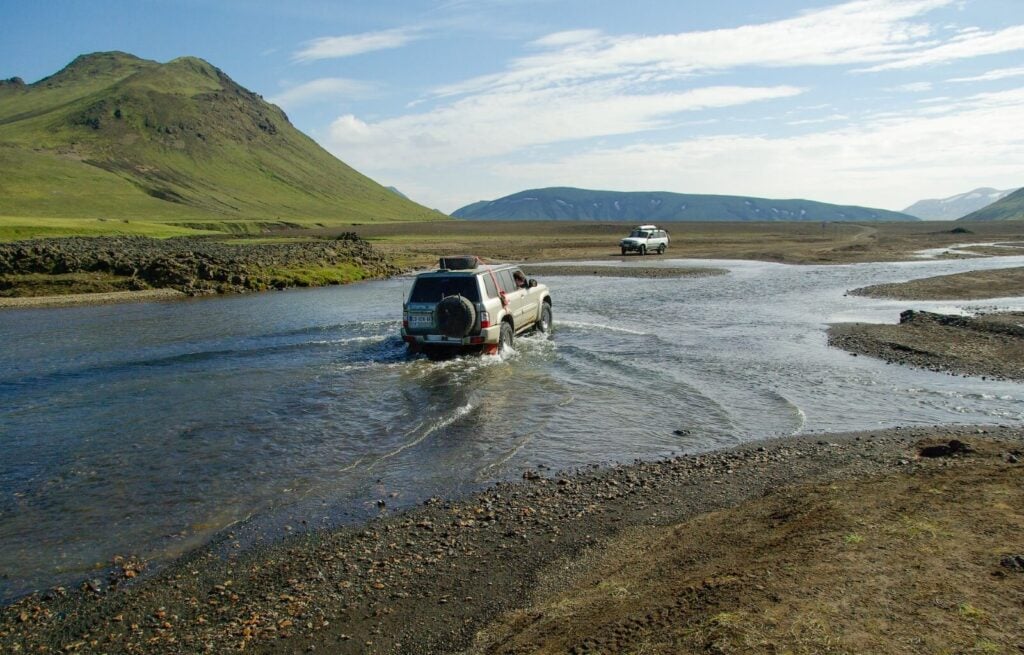
The F roads are open from mid-June until the second week of September. They can sometimes close in the summer months too if there’s snowfall, so you’ll always need to check the road closures before you set off.
You can use this app to check for closures.
There are also several things on the road that you need to be aware of.
👉 Check out our full guide on the best time to visit Iceland for all our top driving tips!
Single lane bridges
These are common throughout Iceland, even along the Ring Road. These only allow one car to cross at a time and whatever car reaches the bridge first has right of way.
Roundabouts
This can be very confusing. On two-lane roundabouts, any vehicle that is in the inside lane has the right of way, whereas vehicles on the outside lane must stop and give way.
In the UK, the outside lane would have right of way, so this took a little getting used to. We were always extra careful when approaching roundabouts.
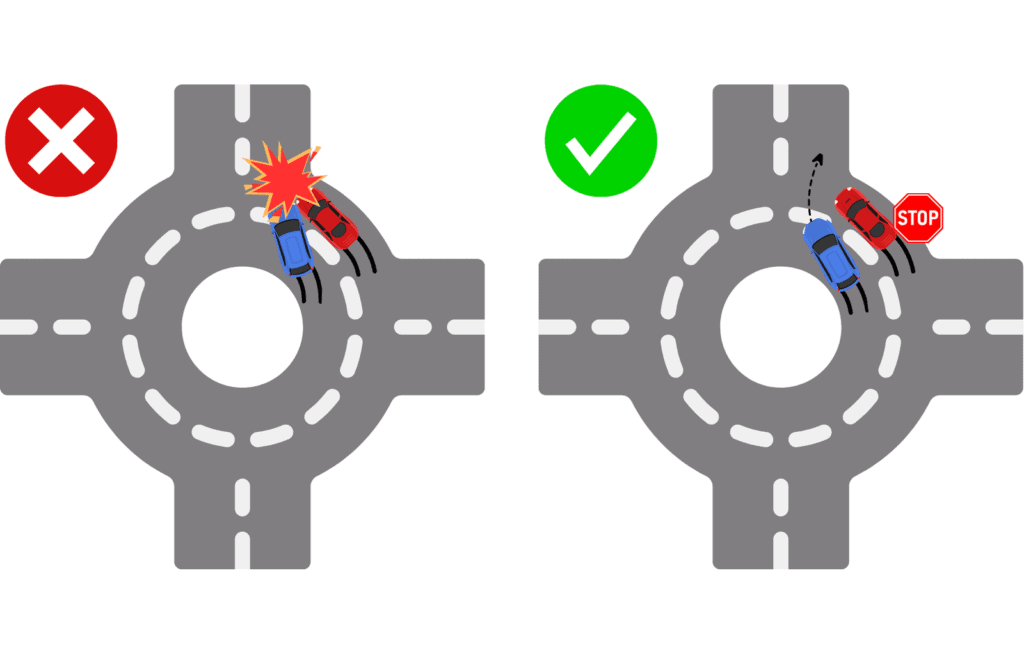
When we picked up the hire car, the receptionist also warned us about this. She said that if we caused an accident because we forgot this rule, the insurance wouldn’t cover it. So, I highly recommend approaching roundabouts with caution.
Weather conditions and road closures
This made us the most nervous about driving in Iceland. I’d heard horror stories of freak snowstorms blowing cars off the road and torrential rain so bad that you couldn’t see where you were going.
And, since we visited in April, the weather could’ve gone one way or the other.
Luckily, for the most part, we were fine. We only had one part of the drive where the conditions got a little hairy and this was between Vik and the Jokulsarlon Glacier Lagoon.
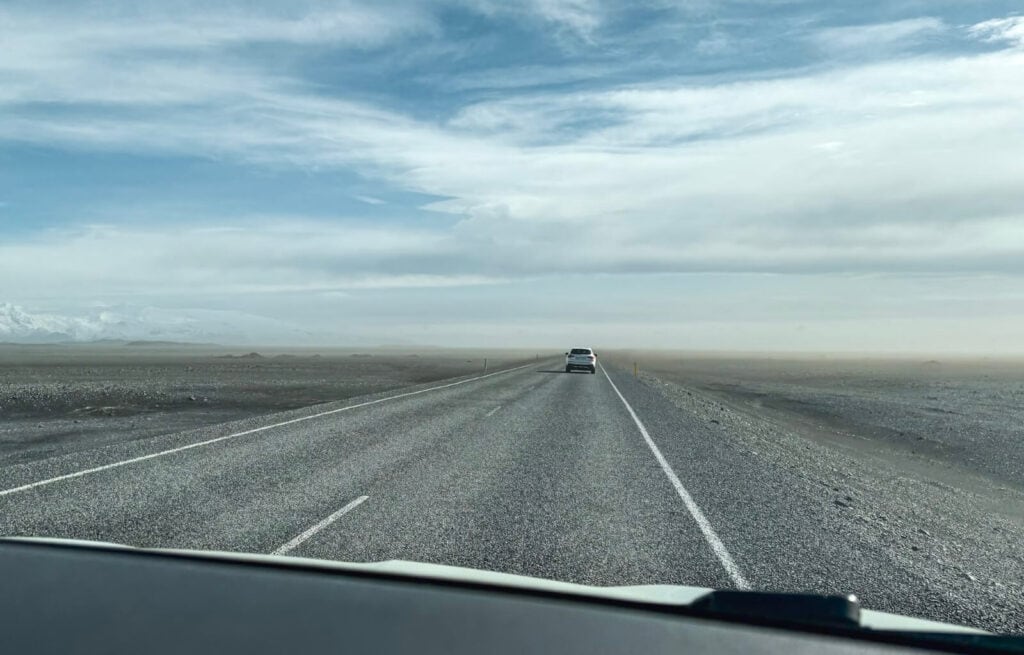
There’s a huge open stretch of road here where the wind was brutal. It was blowing gusts of sand and grit into the car and buffeting us around. This road has actually been shut in the past because the wind was too strong and not safe to drive down.
During our drive, the wind speed was around 40mph. We had to slow right down and could feel the wind shaking the van. It was a bit scary, but we took it slow and steady and it was fine.
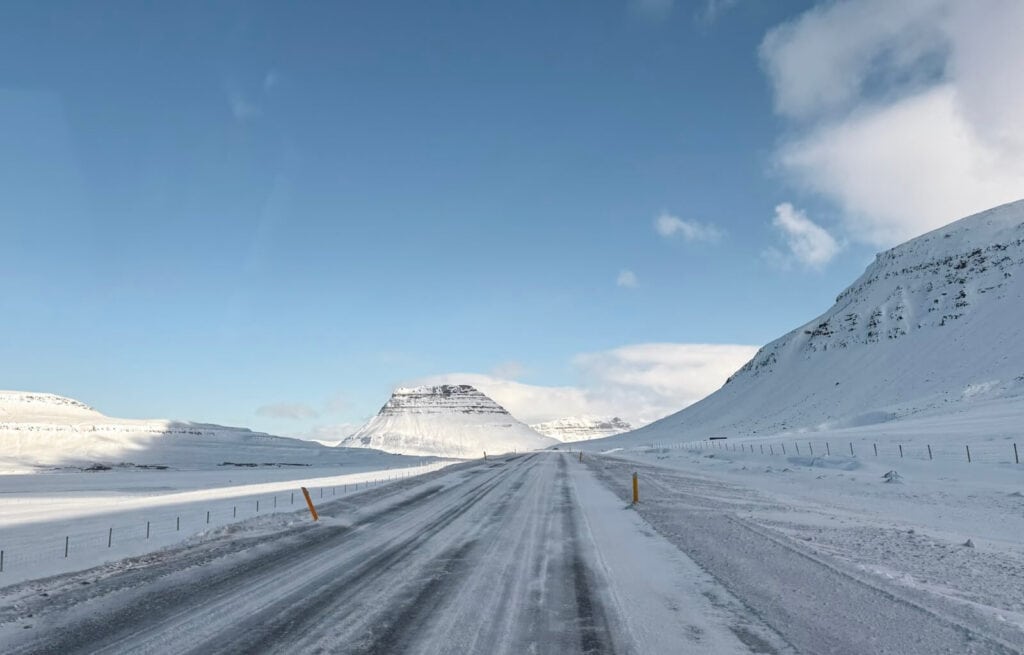
However, some people weren’t so lucky and we passed several cars that had come off the road and were stuck in a ditch.
As a general rule, if you feel unsafe because of the weather, pull over and wait until it calms down. The weather in Iceland is very fickle and can change at the drop of a hat. So, if you don’t feel safe, stop and wait it out.
TOP TIP: Be so careful when opening car doors in high winds in Iceland. Car doors CAN and WILL blow off.
Animals on the road
The other thing you may need to be aware of is animals on the road.
In certain parts of Iceland, particularly the east, west, and northerly regions, there are lots of animals roaming free, including sheep, horses and even reindeer.
They can sometimes wander into the road, so if you’re driving near them, slow down and be careful.
Parking in Iceland
The first time we visited Iceland, parking was free everywhere. However, when we came back, it was a different story. Now, almost all of the popular tourist stops, especially along the south coast, have chargeable parking.
This is usually one set price per day of 750-1000 ISK for a car and 1000-1300 ISK for a van. Of course, it’s slightly annoying because if you know that you’ll only be there for an hour, you can’t just pay for an hour – it’s one price or nothing.
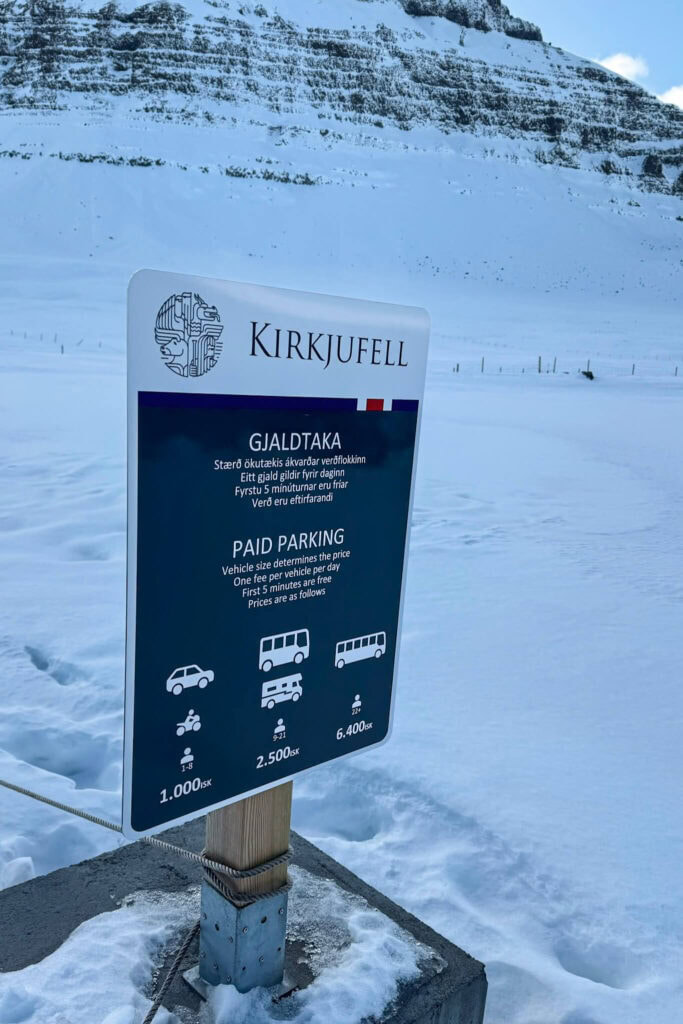
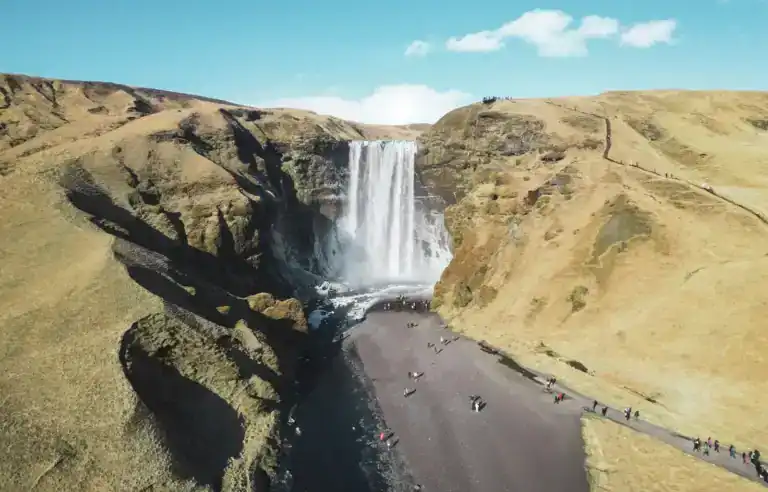
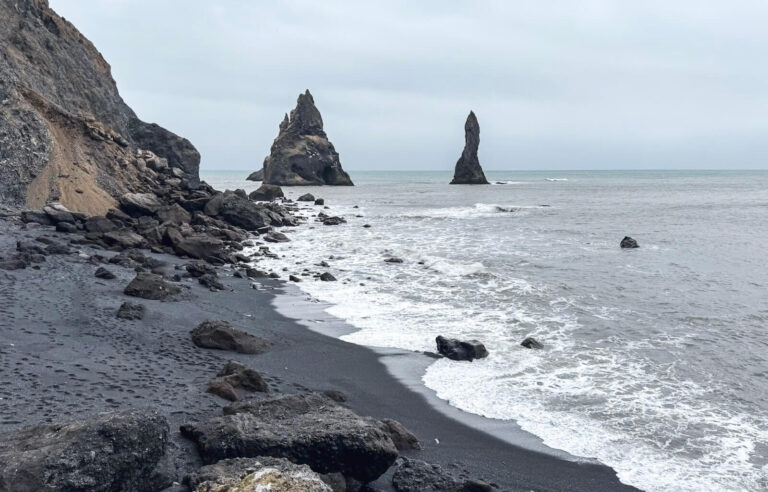
This can really add up the more places you stop at. For instance, Skogafoss, Seljalandsfoss, Reynisfjara Black Beach, Fjaðrárgljúfur Canyon, and Jokulsarlon Glacier Lagoon all have chargeable parking.
However, if you are exploring some of the lesser-visited sites in Iceland, such as the Seltun Geothermal Area, Arnarstapi Cliffs, or the east or west fjords, you’ll find parking is mostly free.
So, in this sense, it really does pay to go off the beaten path!
Most of the time, though, we were able to find a parking space. The car parks are reasonably large and there were almost always spaces.
The only two places where we struggled to find a spot were Jokulsarlon Glacier Lagoon (but we did arrive around midday due to the driving conditions) and Geysir on the Golden Circle.
TOP TIP: I recommend downloading this app to pay for parking in Iceland. Most of the parking is done online and you’ll definitely need this.
How much does a rental car cost in Iceland
The cost of a rental car in Iceland seriously depends on when you are travelling and what type of car you hire. For 6 of us for a 9-seater van for 7 days in April, we paid £632. This works out at around £90- $115 per day.
For a small 4-seater car for a week in June, I would estimate budgeting between £32-£50 ($41-$64) per day or for a large 4-seater 4×4 at the end of July, you could be looking at £65-£80 ($84-$102) per day.
It also depends on whether you want an automatic or a manual and how much mileage you want. We always go for unlimited mileage as this prevents any complications later.
All in all, I’d budget between £45-80 ($58-$102) on average per day for a hire car in Iceland.
🚗 We only ever use this car hire company as they have a great range of cars and always have the best prices.
How much does fuel cost in Iceland?
Fuel isn’t cheap in Iceland. Compared to many countries in Europe, it’s very expensive.
However, with the amount the fuel prices have risen in the UK since the pandemic, fuel in Iceland wasn’t quite as expensive (in comparison) as we thought it was going to be.
In the 7 days we were in Iceland, we drove 1663km (around 1033 miles) and spent £182.80 (around $235) on fuel. This works out as roughly 17.7p per mile, but we were driving a van with 6 people in it, so fuel economy in a smaller car would likely be much better.
As an estimate, fuel currently costs around between £1.79 – £2.14 ($2.30 to $2.75) per litre.
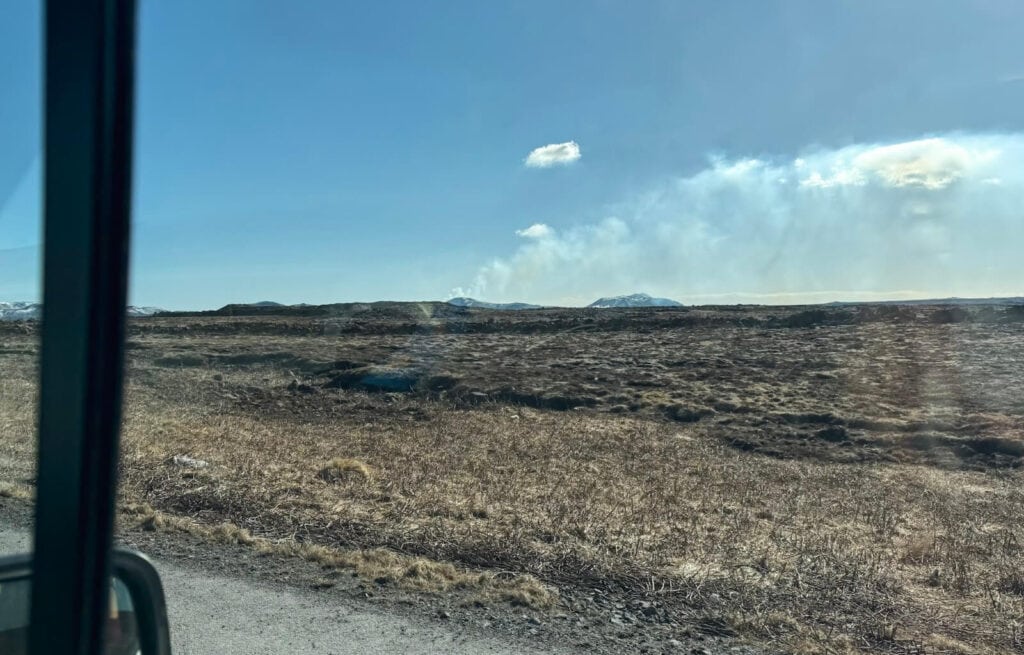
But considering a guided tour can cost between £60 – £200 per person per day, this is still much more affordable.
When it comes to filling up, we found plenty of fuel stations on our trip. But, we mainly based ourselves in the south and always ensured we had plenty of fuel before long drives.
I recommend checking for fuel stations before you set off, particularly if you’re visiting remote areas of Iceland. The highlands don’t have any fuel stations at all, so you’ll want to make sure you have a full tank before driving there.
Planning your itinerary in Iceland
One thing that’s pretty important to bear in mind when driving in Iceland is that your plans can quite easily change.
As I’ve mentioned, the weather in Iceland can be fickle and, even in the summer months, it can change very quickly. You can also get some extreme wind in Iceland to the point that roads are closed.
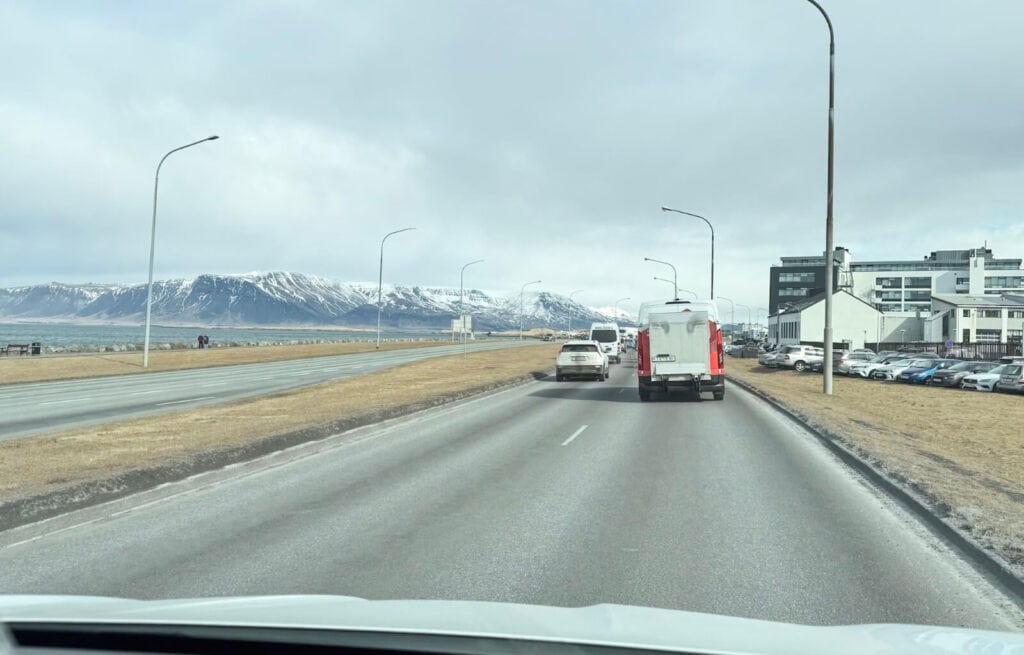
This happened recently and a section of the ring road was closed completely in Iceland due to 4 days of intense winds. If you had any plans to drive down that road during this period, you had to change them.
This can definitely cause problems, especially with hotel bookings (which is one of the reasons travel insurance is so important when travelling to Iceland), but unfortunately, there’s not much you can do about it.

So, I always recommend planning your itinerary with a bit of flexibility in mind. Check the road closures before you set off – even in sunny weather, one side of Iceland can be very different from another – and always have a backup plan.
Luckily, there are so many wonderful things to do in Iceland that finding something else to see shouldn’t be too tricky, but it’s always good to be prepared and stay as safe as possible.
👉 Hate planning> Check out our pre-made South Iceland itinerary.
Is it safe to drive in Iceland?
Yes, driving in Iceland is perfectly safe provided you follow all of the road rules, and drive to the conditions.
If you attempt to go to the highlands in a 2WD then, no, you won’t be safe and there’s a very real chance of getting stuck. Likewise, if you choose to drive really fast or in treacherous weather conditions.
You must ALWAYS drive to the road conditions, especially in Iceland where things can change so quickly. And if you don’t feel safe, stop.
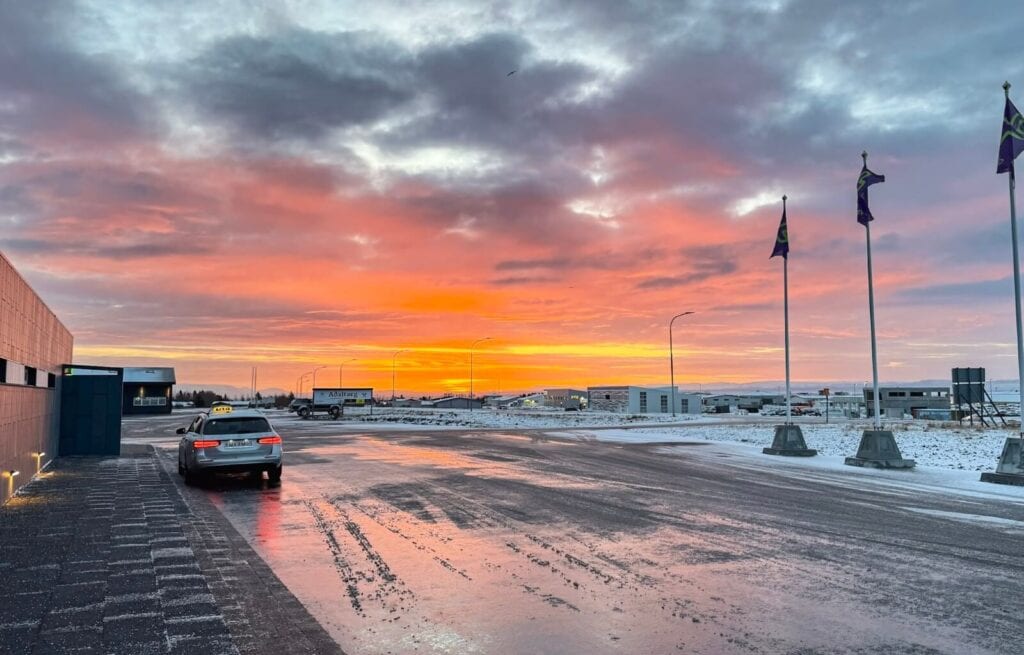
However, for the most part, driving in Iceland is no different from driving in any other country. The Ring Road is well maintained, the other drivers are considerate and tolerant of tourists, and the country is easy to navigate.
Plus, going on a road trip is one of the best ways to see the raw natural beauty that Iceland has to offer. You can see some of the most incredible places in Iceland and it’s a much better experience.
🚗 We only ever use this car hire company as they have a great range of cars and always have the best prices.
Is driving in Iceland worth it?
All in all, yes, we think it’s well worth hiring a car in Iceland. While there are certainly more risks than going on guided tours, the reward is that you can visit some of the beautiful places that are off the typical tourist trail and you have complete freedom over where to go.
We travelled around Iceland both with and without a car and, while we saw some beautiful places without a car, the places we could reach with it made the experience so much better.
If you are deciding whether or not to rent a car in Iceland, we highly recommend it and I guarantee you’ll have the best time.
👉 Planning on exploring the south coast of Iceland? Check out our favourite places to stay in Vik and the most beautiful hotels near Jokulsarlon.
Pin for Later!