
Glymur Waterfall Hike: The Complete Guide



Are you planning on hiking to Glymur waterfall? Here’s our complete hiking guide, including top tips and everything you need to know!
Glymur is one of our all-time favourite waterfall hikes in Iceland. It’s an adventurous trail with so many fun elements and, even though it’s definitely not the easiest hike in Iceland, we’d do it again in a heartbeat!
If you’re looking for one of the most rewarding hikes near Reykjavík, Glymur absolutely has to be on your list.
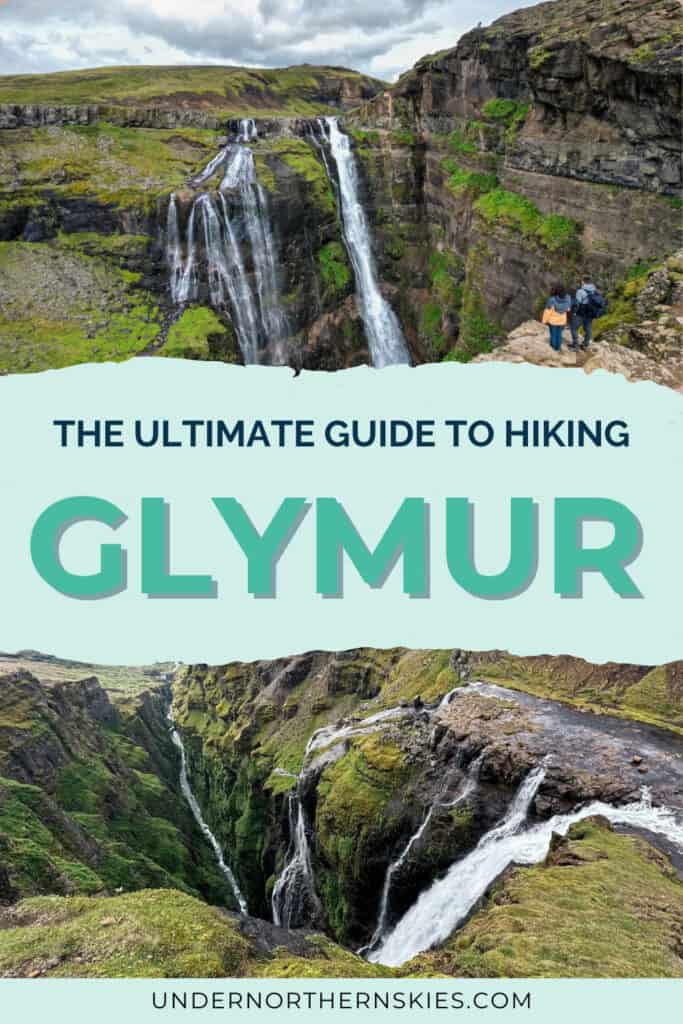
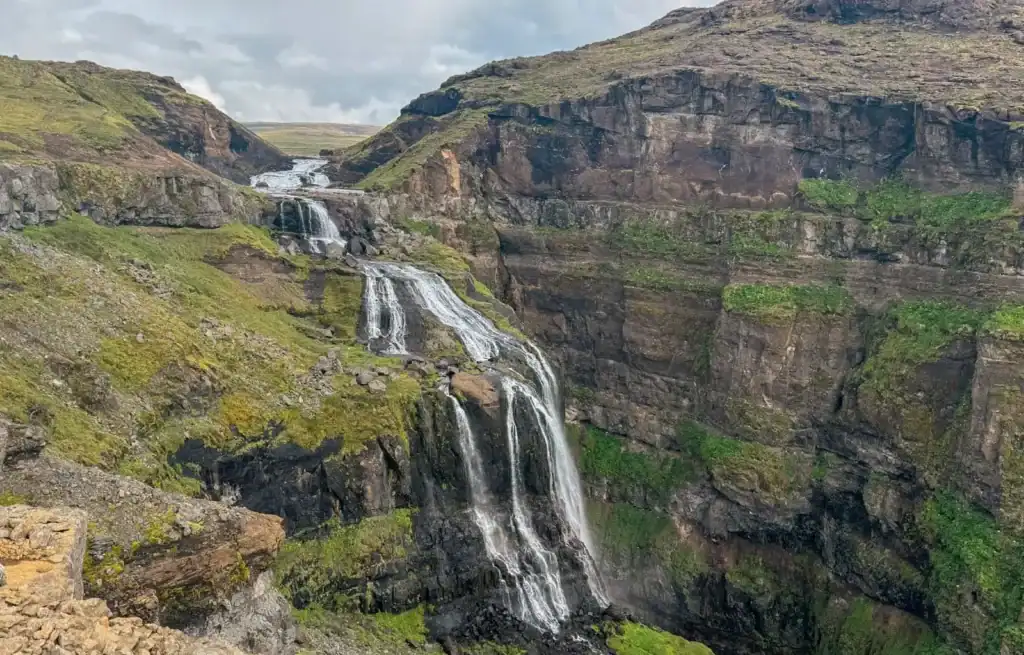
At 198 metres tall, it used to be considered Iceland’s highest waterfall. And, even though it’s now been overtaken, the hike to reach it is still one of the most spectacular in the whole country.
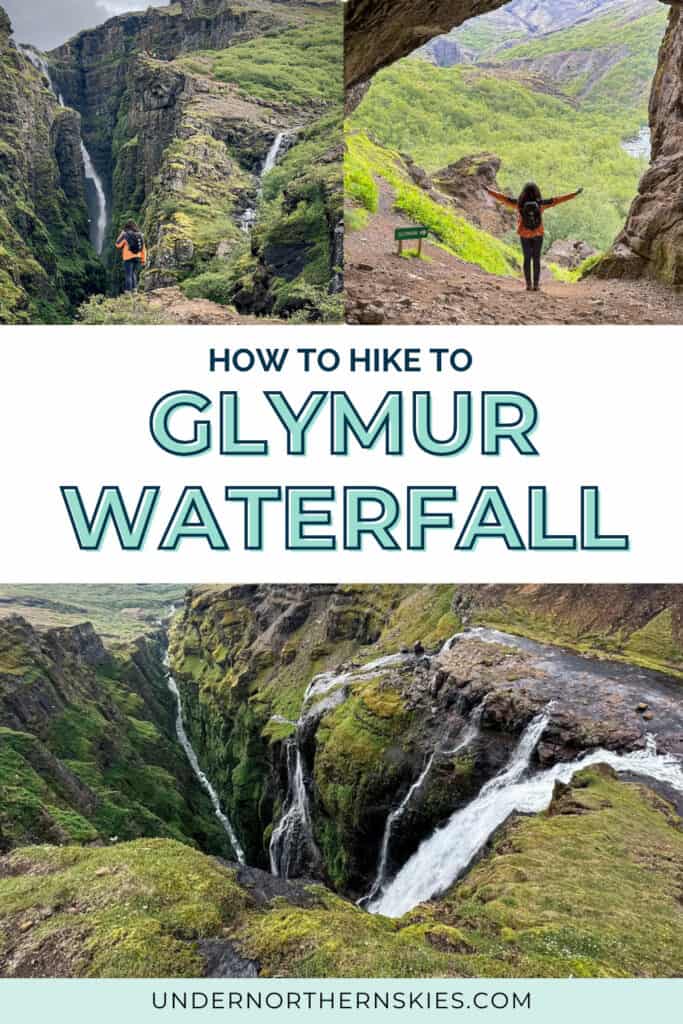
We’ve done a lot of hikes in Iceland over the years, but Glymur has a bit of everything: a beautiful canyon, a small cave you walk through, a rope-assisted river crossing (in summer), and incredible viewpoints over Botnsdalur Valley.
Plus, it’s close enough to Reykjavík that it’s a really easy half-day trip.
We 100% recommend hiking to Glymur during your time in Iceland. So, if you’re planning on hiking to this waterfall, here’s everything you need to know!
*This post may contain affiliate links that earn us a small commission at no extra cost to you. For more information, read our disclaimer.
West Iceland Must-Do’s!
Have more time near Glymur? Check out these 3 bucket-list things! ❤️
Our fave hotel: Hotel Hafnarfjell
Quick Overview
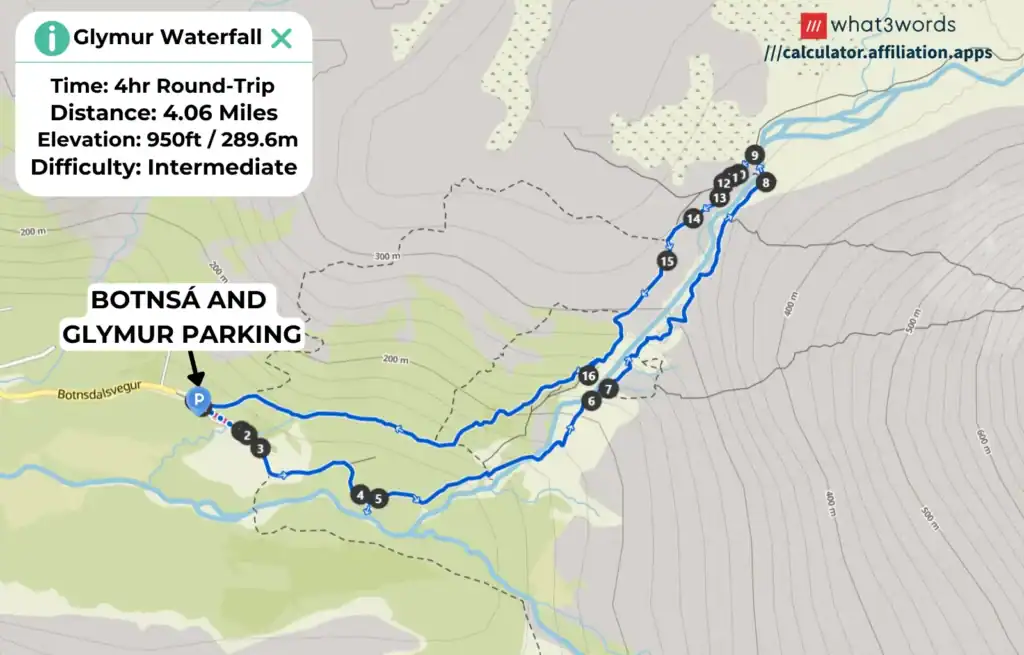
- Distance: 4.06 miles (around 7km)
- Time needed: 3–4 hours
- Difficulty: Moderate
- Elevation gain: Around 290 metres
- Starting point: Botnsdalur Valley (here)
- Facilities: None (toilets, café, etc.)

How to Get to Glymur
Glymur is located in the west of Iceland. It’s close to the Snaefellsnes Peninsula, Borgarnes, and the beautiful Hvamsvik Hot Springs. It’s in an area of Iceland that we love but think is seriously underrated.

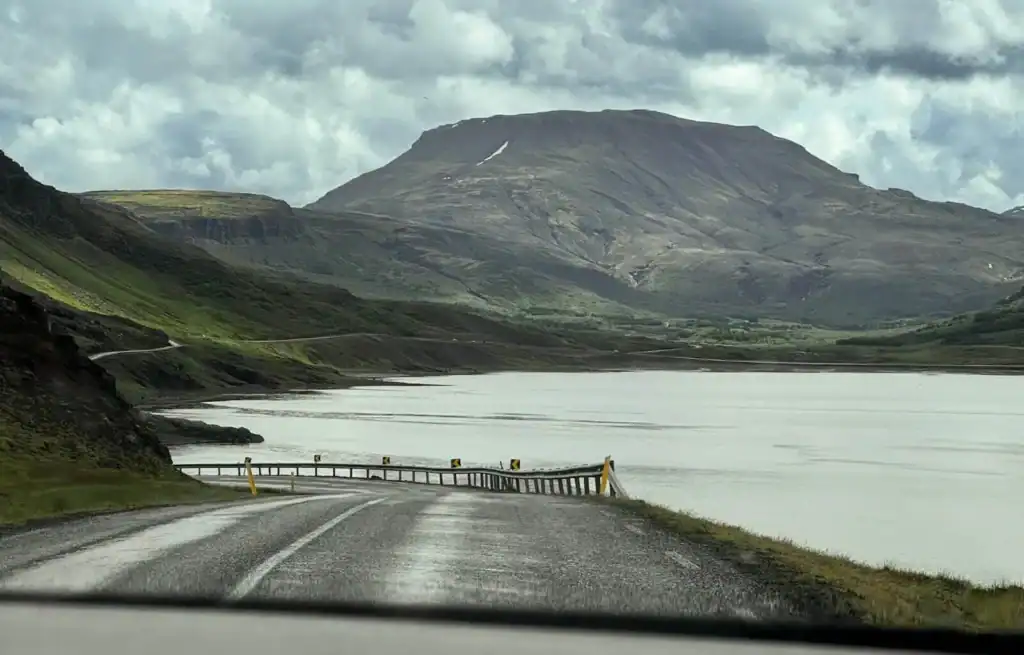
There are some very cool Icelandic hidden gems here.
To reach the trailhead for the waterfall, it’s around a 1-hour and 15-minute drive from Reykjavik. It’s an easy drive, and a lot of it is along the Ring Road, although you’ll go off this route when you reach Hvalfjordur and drive around the fjord to the trailhead.
Parking and Facilities at Glymur
The parking for Glymur is free, and there are quite a few spaces. We managed to find a spot quite near the gate, which was nice.

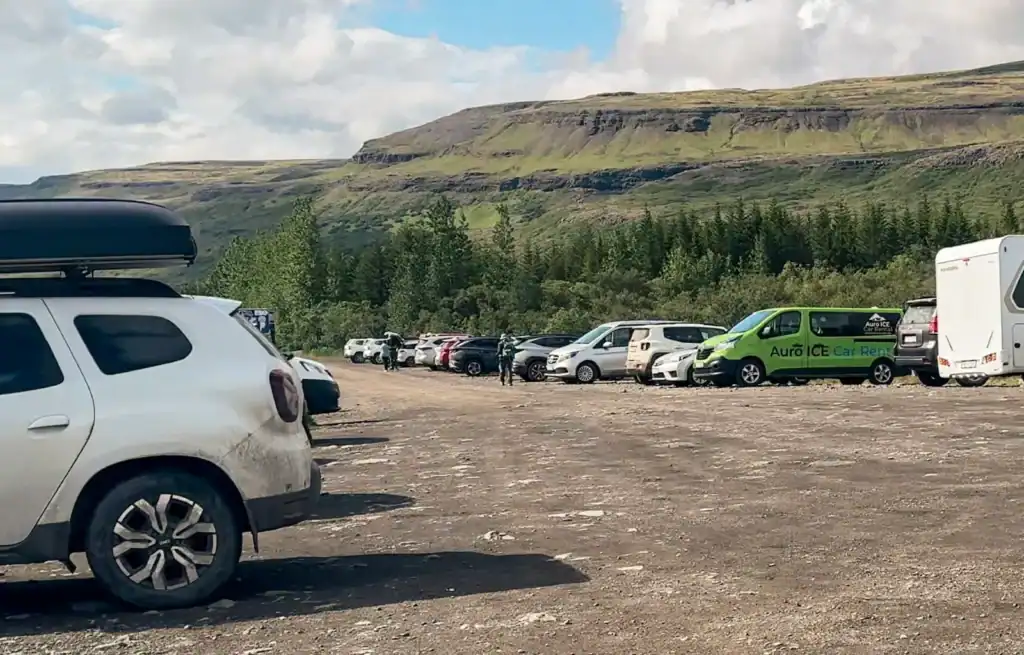
There are no facilities at Glymur, including toilets and a cafe or visitor centre. This means it’s so important to make sure you take everything with you both before and after the hike.
Bring a small bag and ensure you put any rubbish (including toilet tissue) in this bag.
Once you’ve parked up, the trail begins literally once you pass through the gate.
🍃 Please take everything with you. It’s so important to leave no trace as it keeps these magnificent landscapes looking beautiful and helps to protect wildlife and nature. Leave nothing on the trails, take nothing with you, and stick to the designated trail paths.
The Glymur Hiking Trail
I wasn’t joking when I said that this is one of the most enjoyable hikes you can do in Iceland.
The trail starts fairly flat, and you’ll walk along a hiking path surrounded by lupines on either side. You may want to bring a bug net for this section because there were a lot of flies when we visited in June, and it was quite annoying.

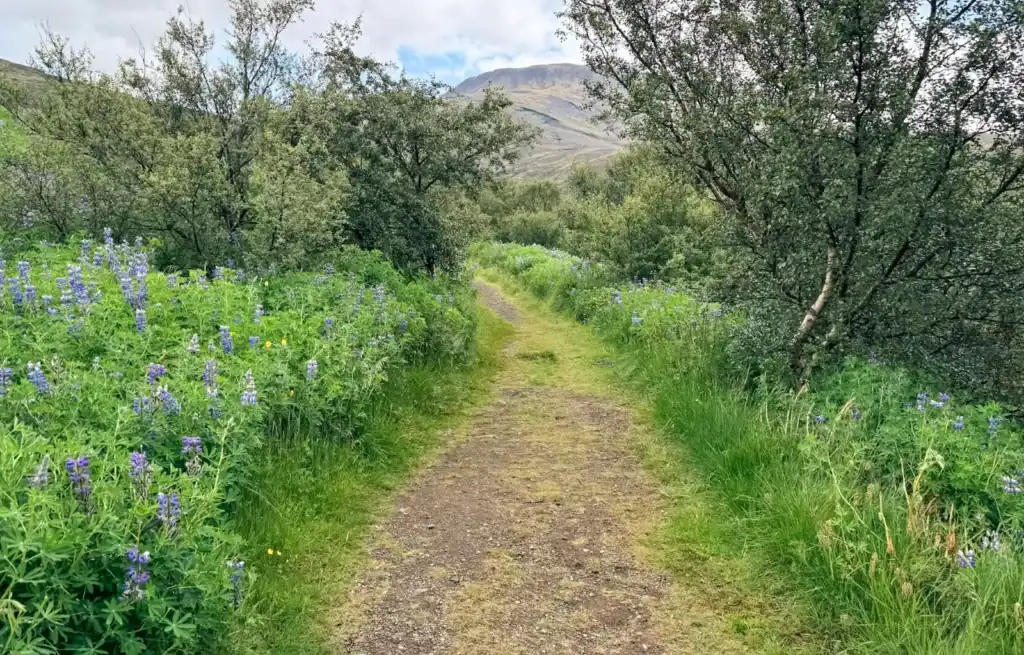

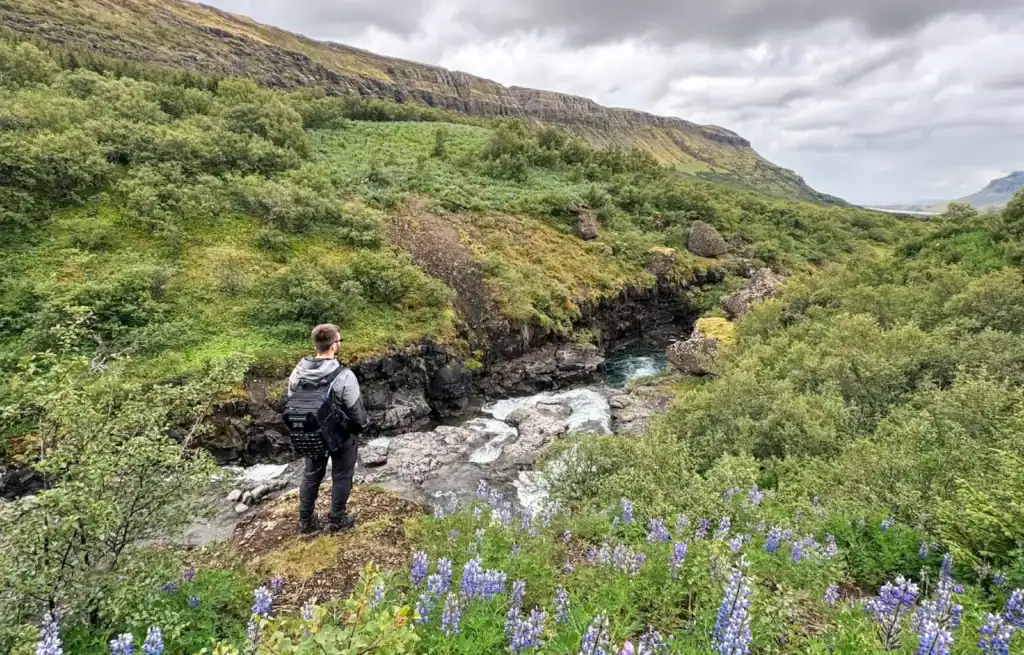
From there, you’ll see a sign that says ‘Glymur’, follow that, and this is where the hike gets really interesting.

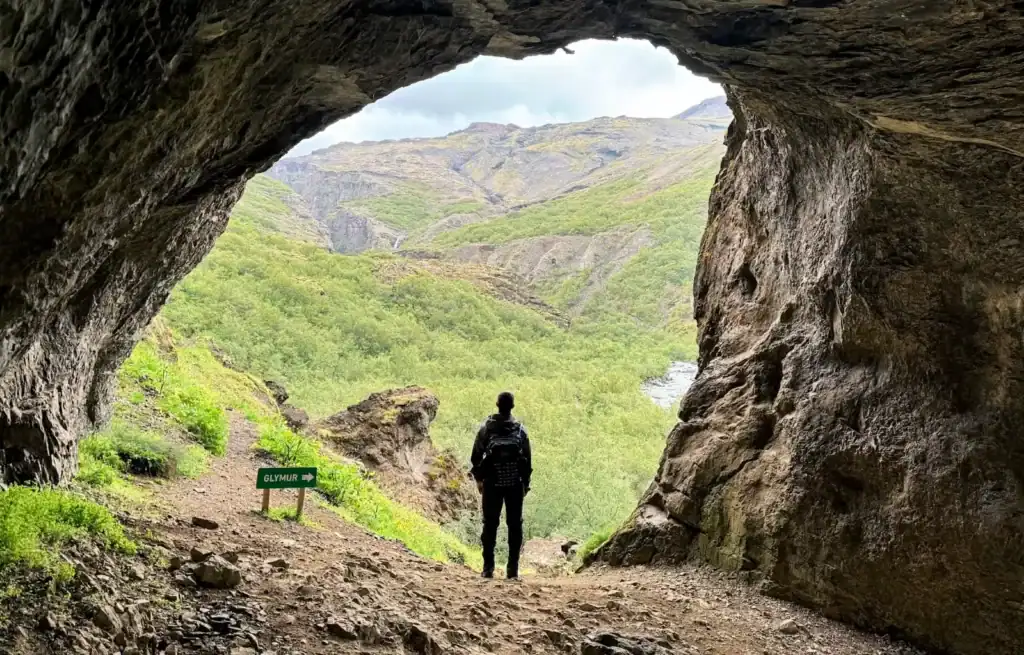
Next, you’ll pass through a rocky section with a very cool viewpoint, and the path continues through a small cave. The views over the valley are beautiful.
The River Crossing
Shortly after this, you’ll reach one of the most exciting parts of the hike – the first river crossing.
The river crossing involves walking across a log which is laid over the river. It’s a little nerve-wracking, but you have a cable to hold onto and the water underneath isn’t too deep, although it is quite fast-running.

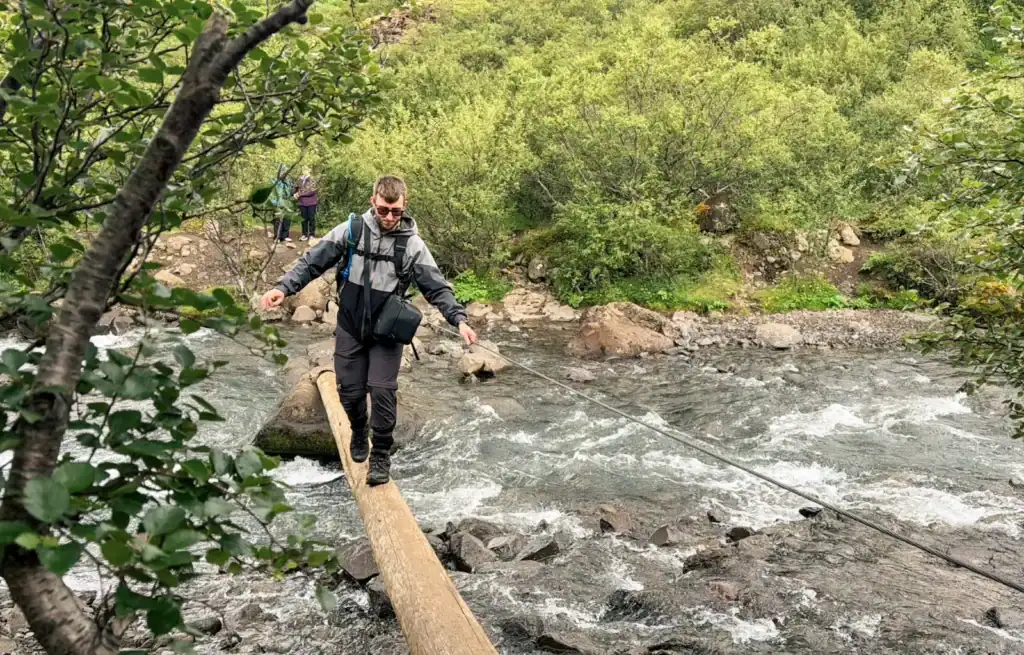
This log is only placed down from around May until October, when the water level isn’t too high, and the trail isn’t too icy. This would be quite a dangerous hike in the winter months, so it’s only accessible during this time.
👉 Check out our full guide to the best time to visit Iceland.
Continuing the Trail
After the first river crossing, the trail gets a lot more interesting. It gets much rockier from here and steeper – this is where you’ll encounter a lot more elevation.

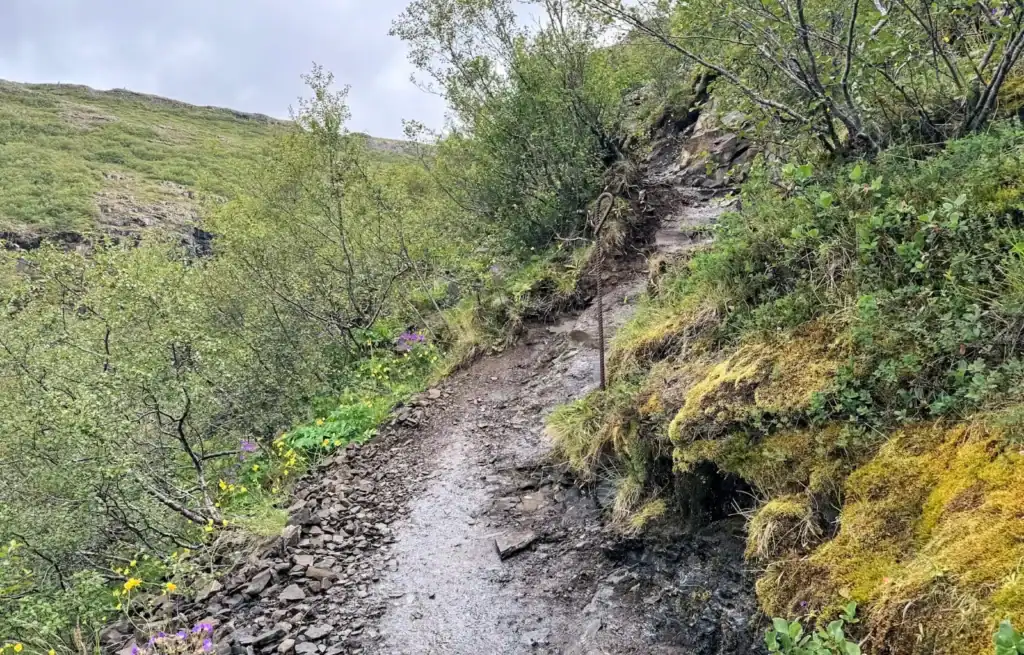
The paths are thinner, and you’ll get some sharp drops on one side. There are also some very steep sections where you’ll need to climb up using ropes.

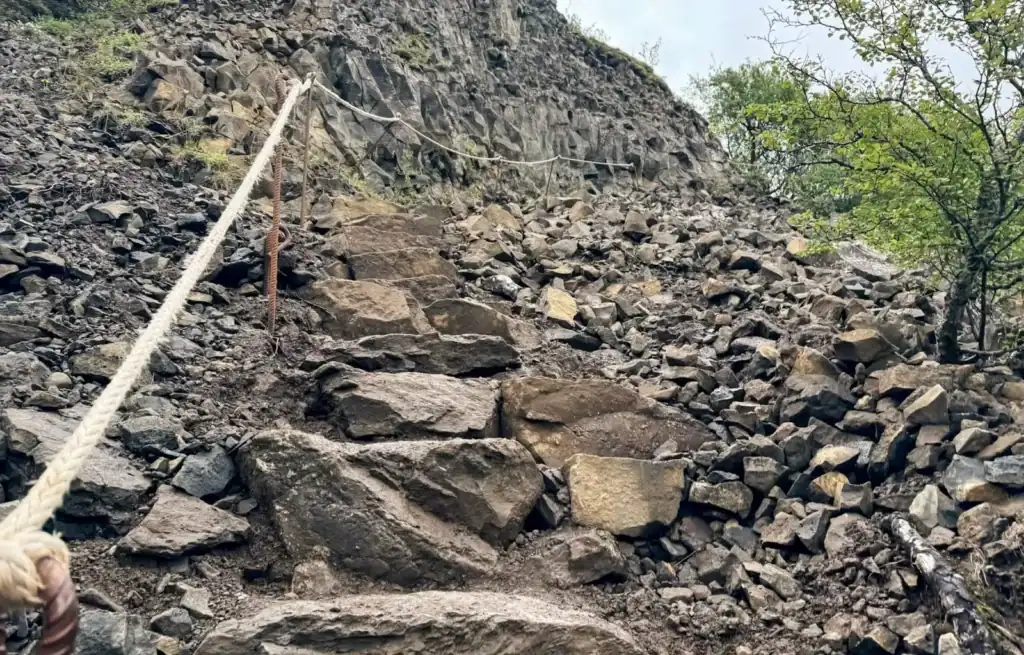
However, after continuing on this path for another 20 minutes, the trees open up, and you’ll get your first glimpse of Glymur.
These viewpoints were some of my favourite parts of the hike. The views were absolutely stunning, and we felt so small standing on the edge of the humongous canyon.

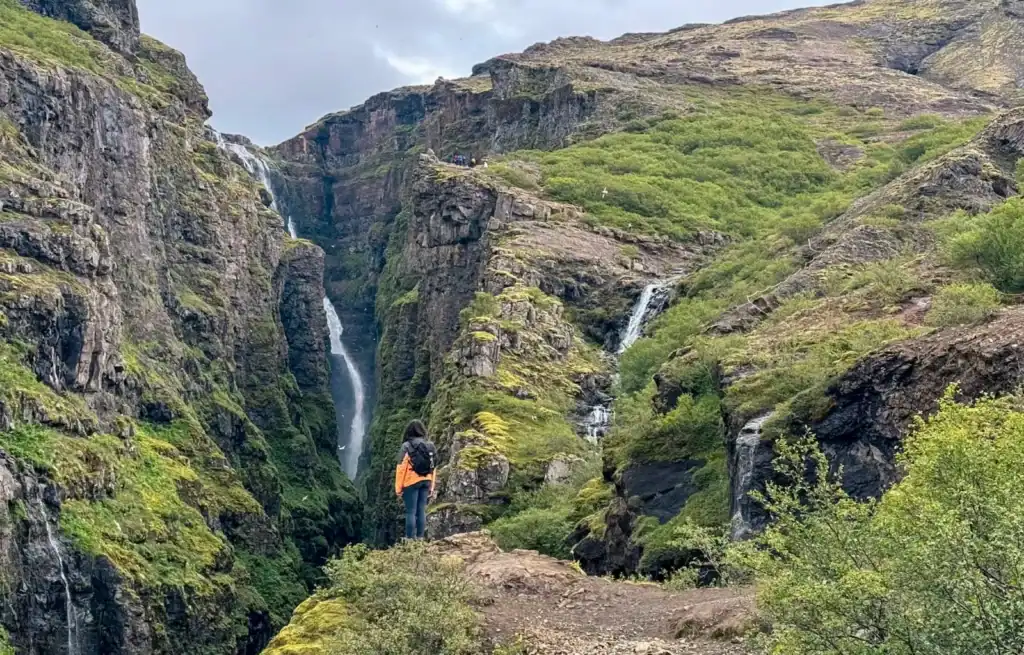
Continue the rocky route upwards. You’ll have to cross another few small streams, but these are pretty easy; you just need to gauge your footing on the rocks.

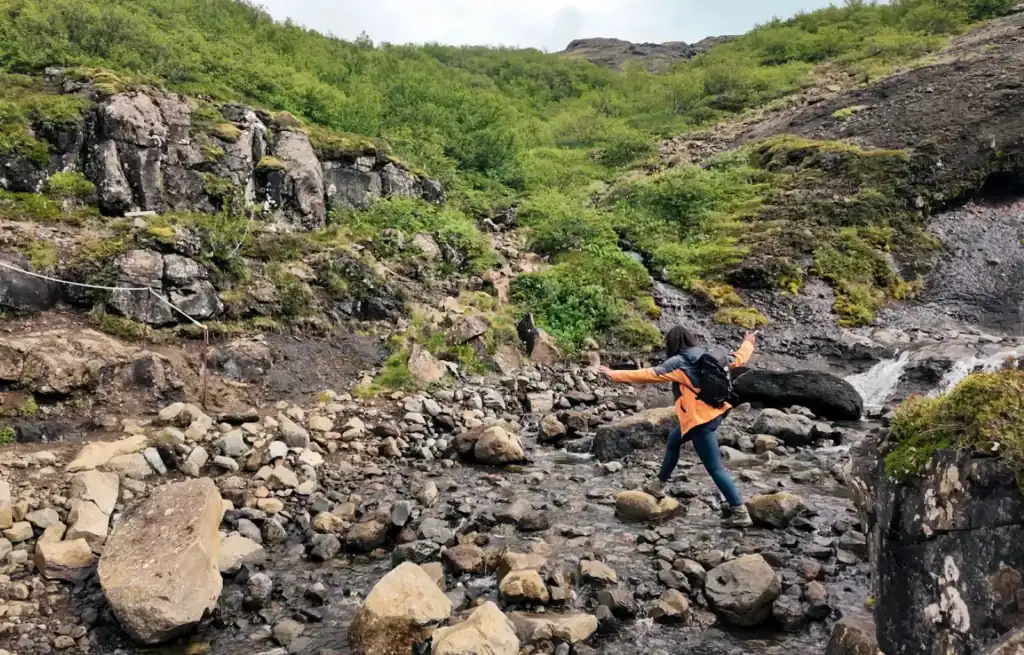

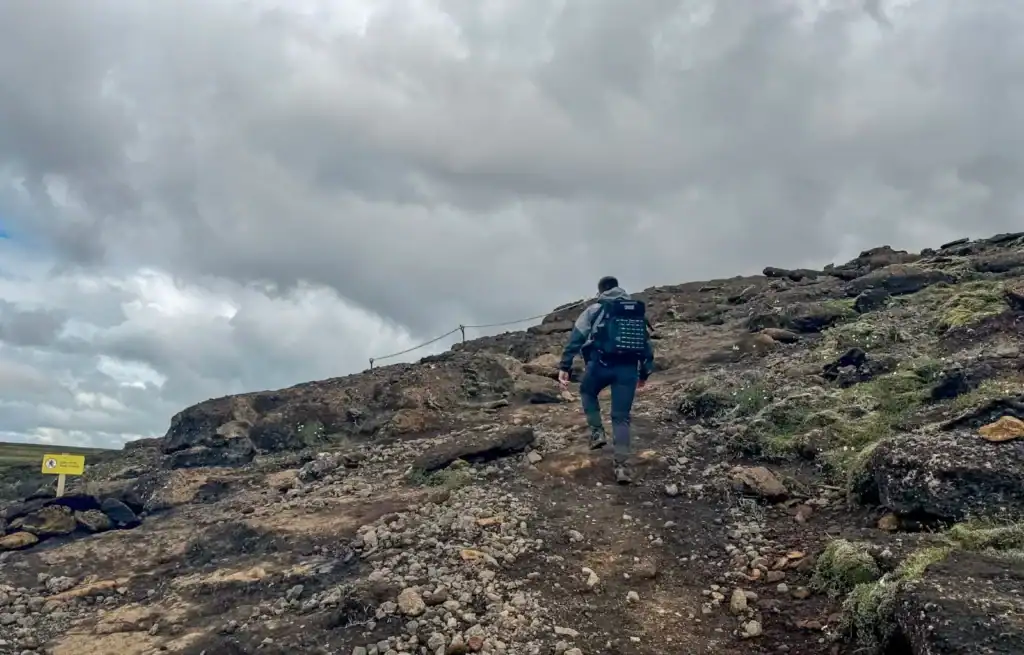
It then gets really rocky towards the top, but once you’ve climbed this final section, you’ll reach the top viewing platform of Glymur.
The Waterfall
From here, you can do one of two things. You could either turn back the way you came and do the hike as an out-and-back hike, or continue to the second river crossing and see the waterfall from the top.

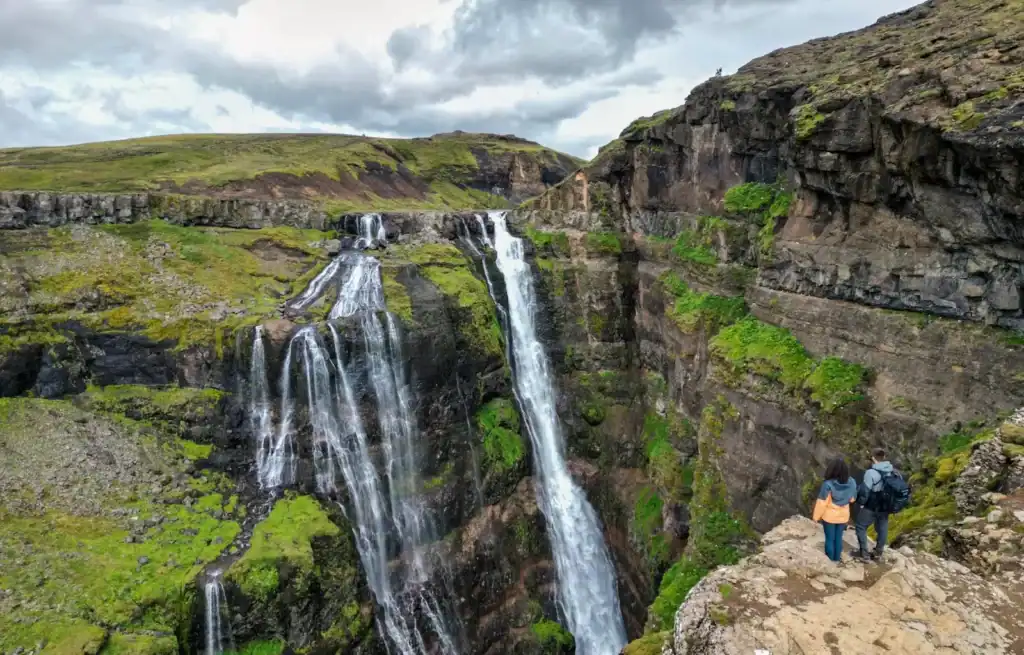
We decided to continue to the very top, so we hiked up another rocky path with a few ropes guiding the way. Once you reach the very top of the waterfall, you can see back down into the canyon and the valley and mountains beyond.

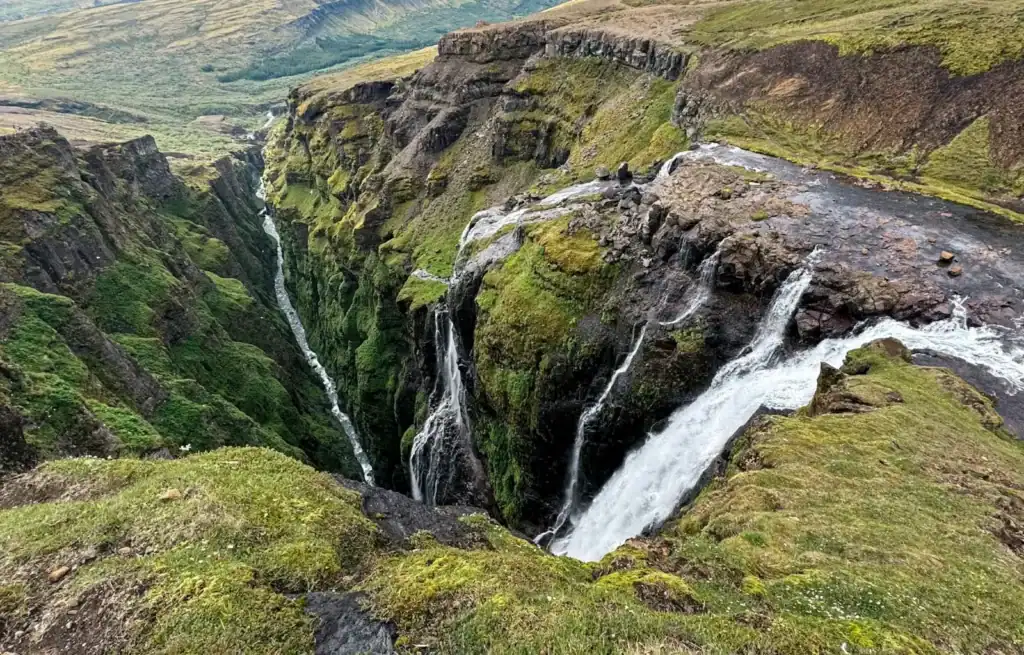
The views are honestly some of the prettiest places we’ve seen in all of Iceland.
From here, the path follows the route along the river until you reach a section where it shallows out. This is your second river crossing.

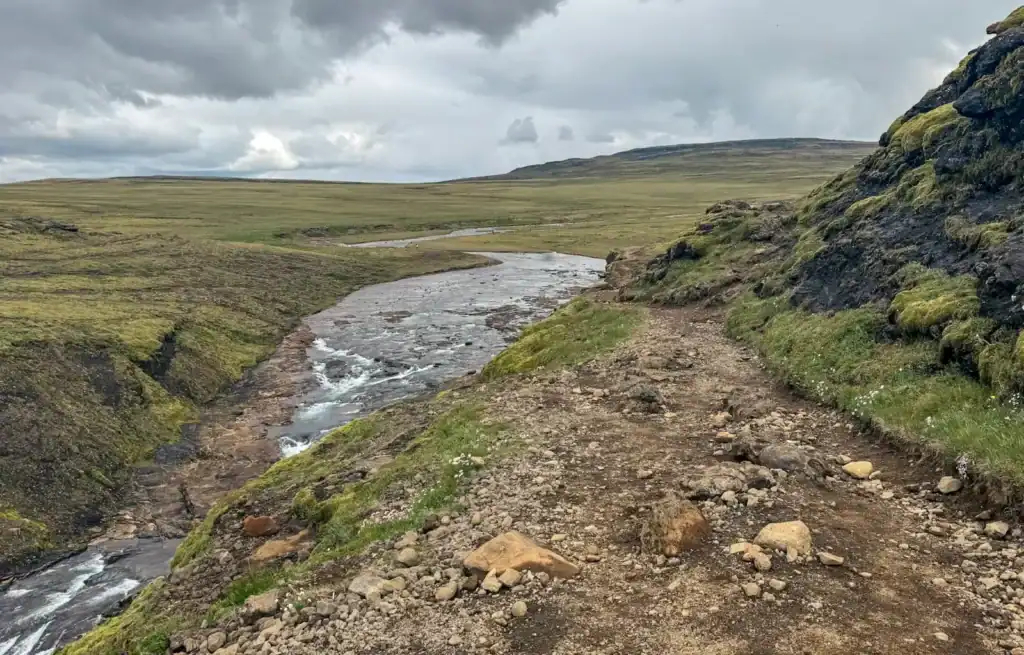
The Second River Crossing
For this river crossing, you’ll need to take off your shoes and socks and cross the river on foot. It’s one of the more entertaining parts of the Glymur hike – I don’t think we’d ever had to do this as part of a hike before!
Also, to be perfectly honest, walking across the river is a little trickier than it looks.

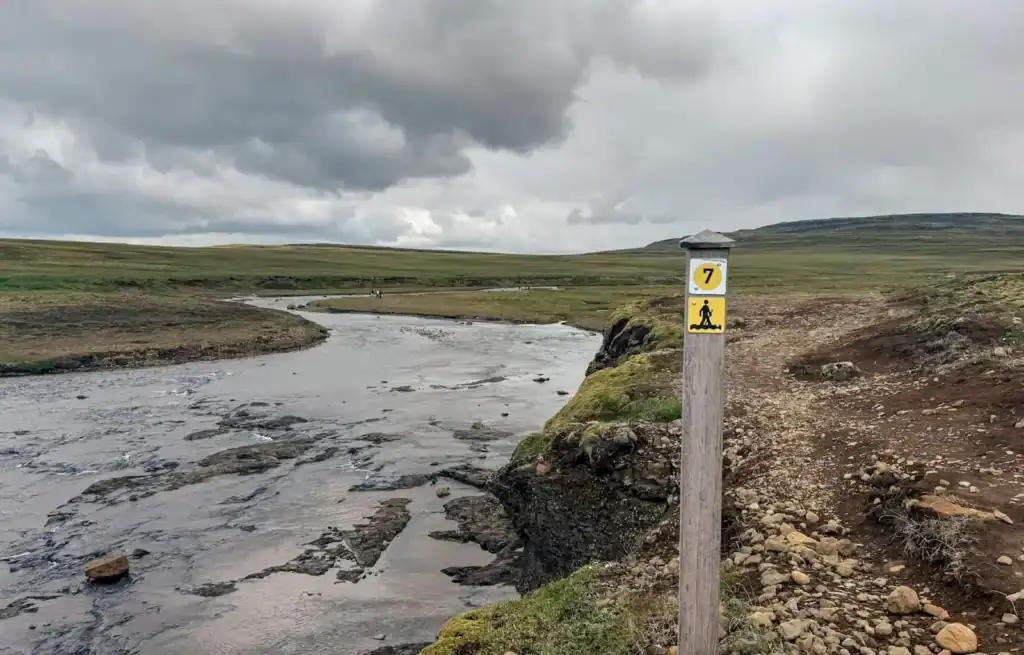
The water will come up to your knees, so make sure you’re wearing hiking trousers that you can easily roll up or convert into shorts. It’s also fairly fast-flowing, and I almost lost my balance a few times.
Secondly, the rocks on the bottom can be a little sharp on your feet, so we recommend bringing water shoes if you have sensitive soles.
Thirdly, like the start of the hike, there were quite a lot of flies around the water, which were super annoying.

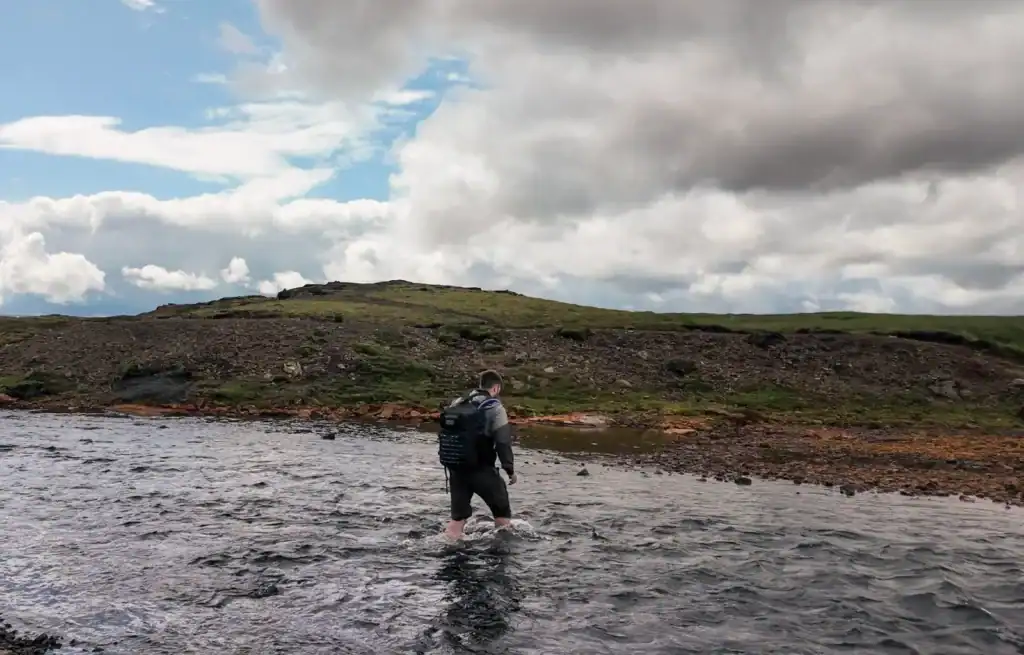
So, we had to juggle holding our hiking shoes, keeping our balance with the water flow, avoiding getting our feet stabbed by a rock, and swatting flies out of our eyes!
It was an experience, and I’m still glad we did the full loop. But, if we ever hike Glymur again, we are definitely buying a bug net for our heads!
The flies weren’t an issue for most of the hike, but for this river crossing, they were very annoying and made it more difficult.
👉 This is the bug net we recommend if you’re hiking Glymur in summer!
The Route Back Down
For the final section of the Glymur hike, you’ll be heading back down on the other side of the canyon. The path is quite easy to follow for the first 15 minutes, but then it does become a little unclear.
At one point, we got a little lost and had to retrace our steps to find the path.

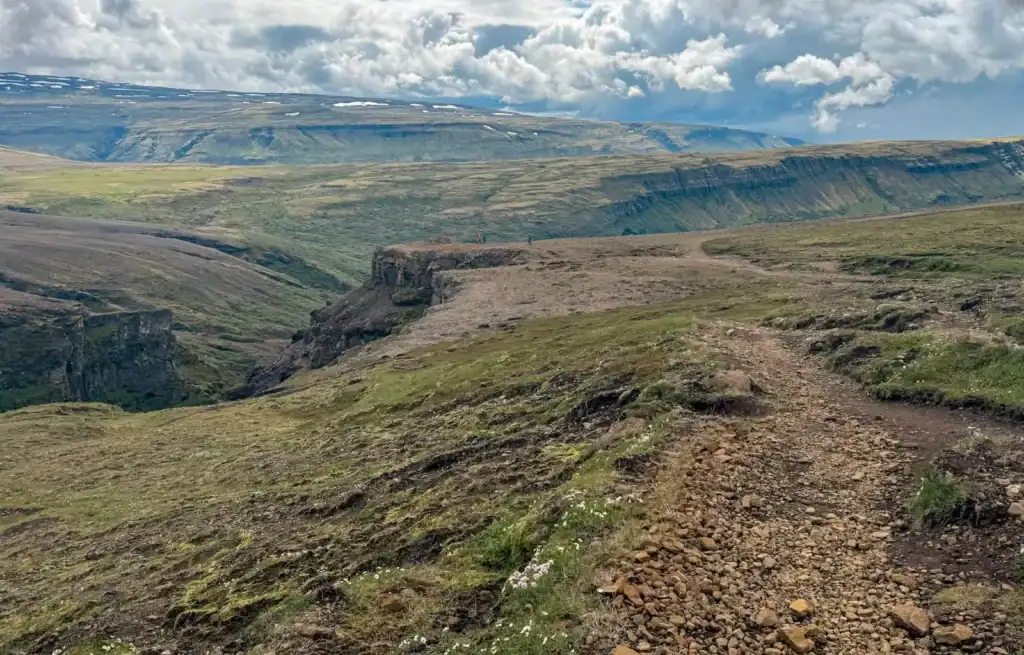
As you make your way down, the views are still super impressive. You’ll be able to see the waterfall behind you and the deep chasm of the canyon, and the mountains in front of you.



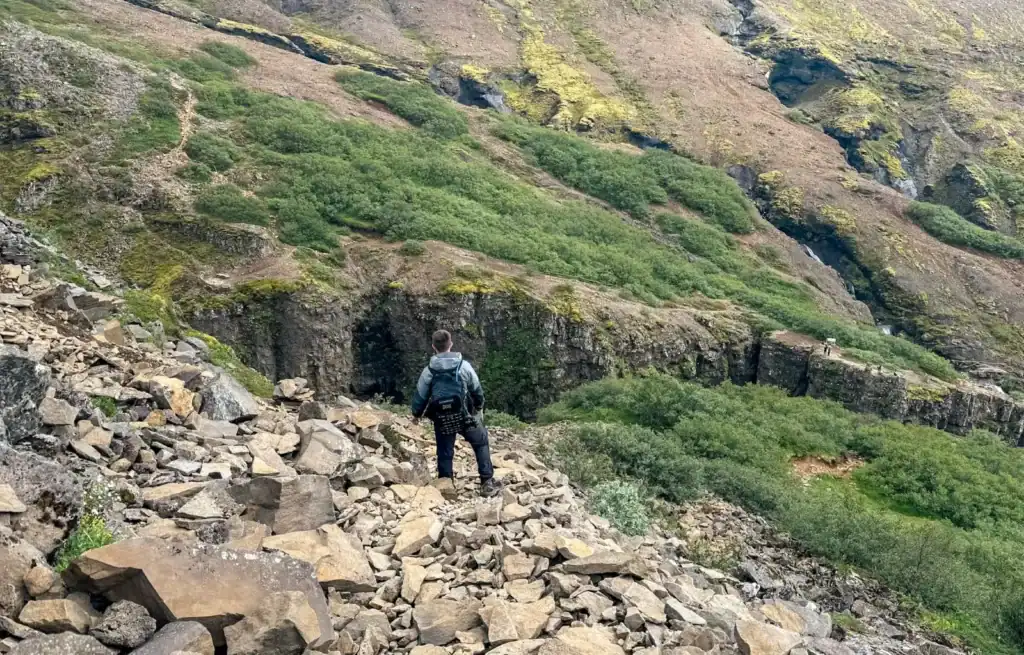
This bit can get quite rocky again in parts, and there are a lot of sections where there’s loose scree, so watch your footing and take it slowly and carefully.


Eventually, the rocky mountain path ends, and you’ll be back on the flatter section similar to the path at the beginning, through the lupines.

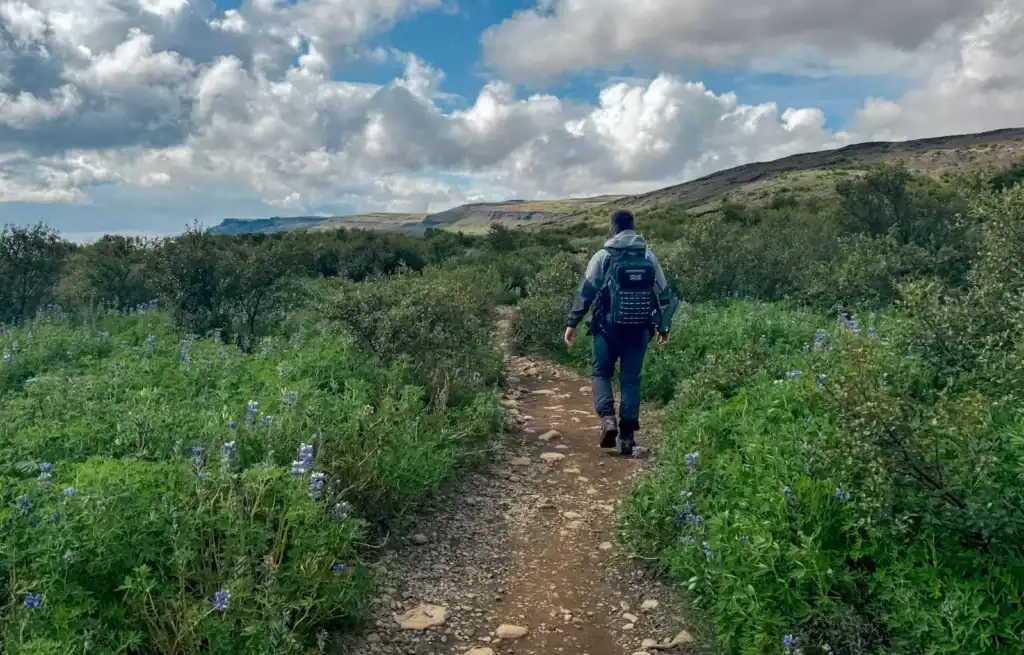
Before long, you’ll be back at your car and at the end of the trail.
Other Things to do Near Glymur
Although Glymur is impressive on its own, the whole region around Hvalfjörður and Borgarfjörður is actually packed with other pretty cool things to do.
It’s actually a bit of a hidden gem in our opinion, and if you’ve got the time, here are some of the best things to combine with your hike:
Þórufoss
If you haven’t had enough waterfalls in Iceland after visiting Glymur, this is a bit of a hidden gem. If you’re heading back to Reykjavik, it’s right on route, and some may recognise it as it was featured in Game of Thrones.

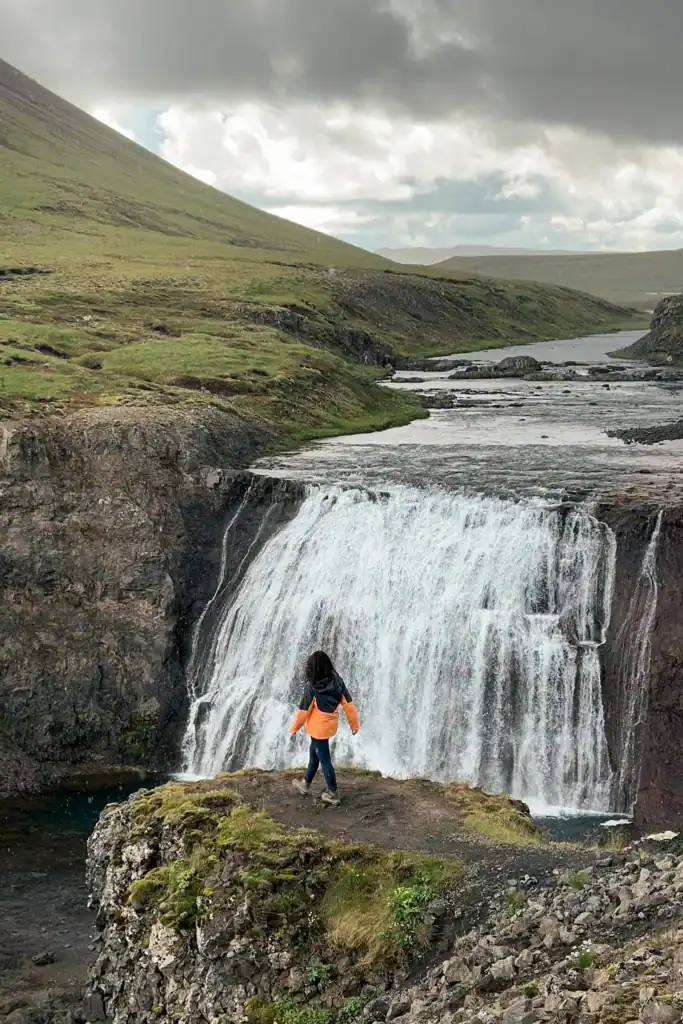
You can either view it from the top or climb down to the bottom to see it up close. It’s a lovely quick stop, and you could visit in around 30 minutes.
Hvammsvík Hot Springs
Honestly, Hvammsvik Hot Springs are one of the most relaxing geothermal spas in Iceland and the perfect place to warm up after the Glymur hike.

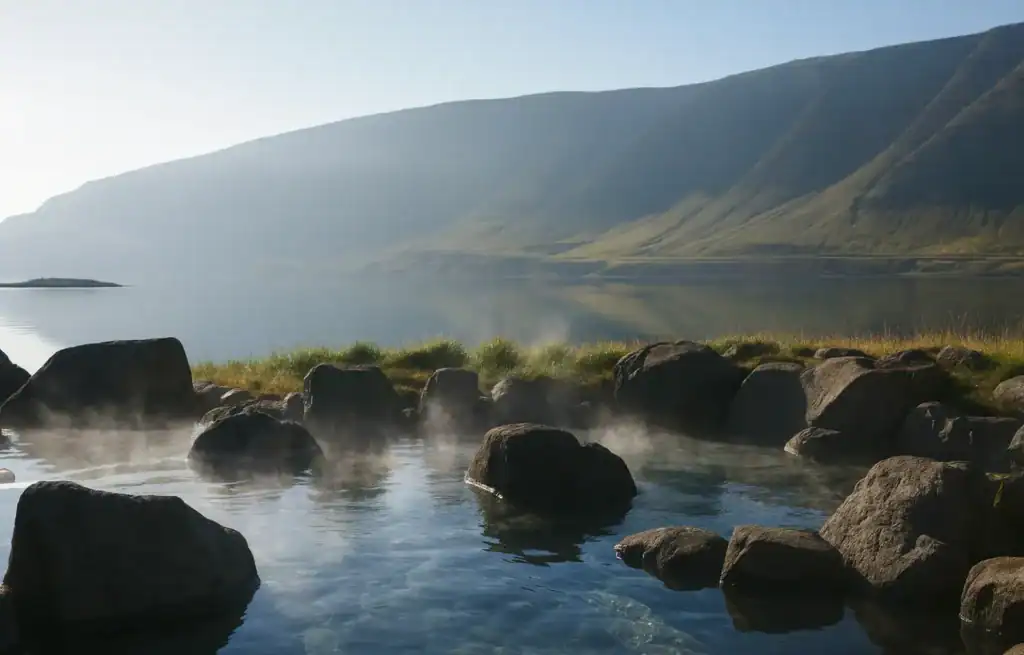
The natural pools sit right on the edge of the fjord, and if you’re visiting at sunset, the views are just perfect.
❤️ Book tickets to Hvammsvik Hot Springs here.
The Golden Circle
If the Golden Circle is on your itinerary, then it’s close enough to combine with the Glymur hike.

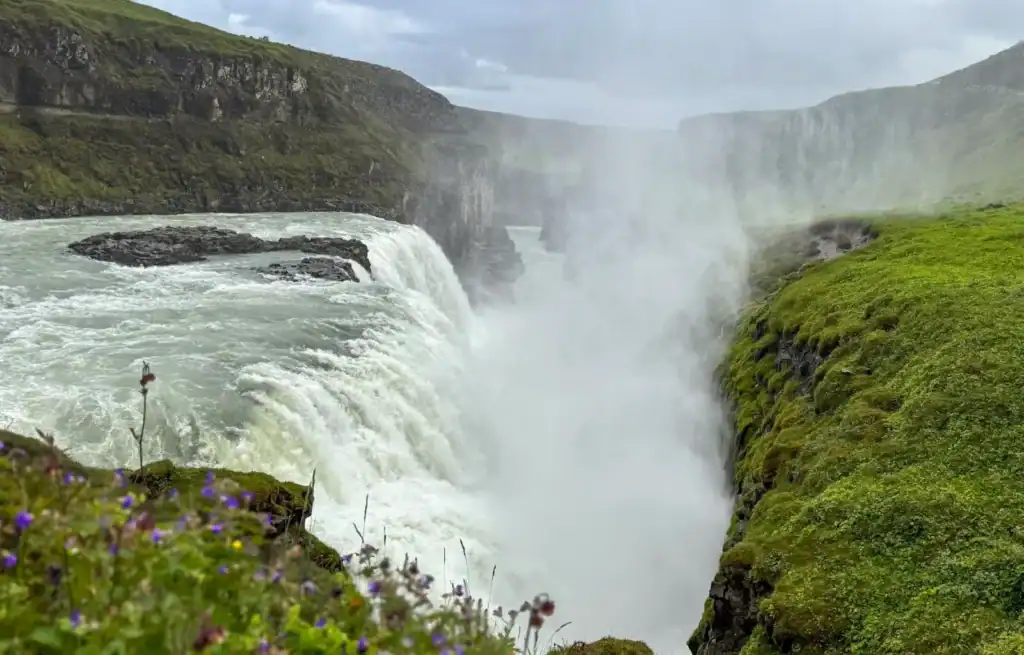
Depending on how quick you are, you could potentially do both in one day. Or, more likely, stay on the Golden Circle and continue the loop the following day.
There are some great things to see in this area, and it’s worth taking your time. You could visit Thingvellir National Park, Gullfoss, Geysir and relax in the Secret Lagoon.
Borgarnes
A small coastal town with a couple of restaurants and a charming harbour, Borgarnes is the perfect stop for lunch or coffee. Plus, the Settlement Centre museum here is surprisingly good if you’re interested in Viking history.
FAQs
Is Glymur Hard to Hike?
No, we didn’t find it hard; however, compared to some of the other waterfall hikes we’ve done, like Kvernufoss or Svartifoss, it was definitely trickier.
There’s quite a lot of rocky sections, a lot of parts where you have to pull yourself up via ropes, and two river crossings.
So, it’s definitely not the easiest hike in Iceland. However, most people with a reasonable level of fitness should be able to do it.
What Should I Wear?
We highly recommend coming prepared. Icelandic weather can be unpredictable and can also change at the drop of a hat.
We had both rain and sunshine when we hiked Glymur, and we visited in June, so it’s very important to bring waterproofs no matter the time of year you travel.
The second half of the hike was the sunniest we saw during our week in Iceland!

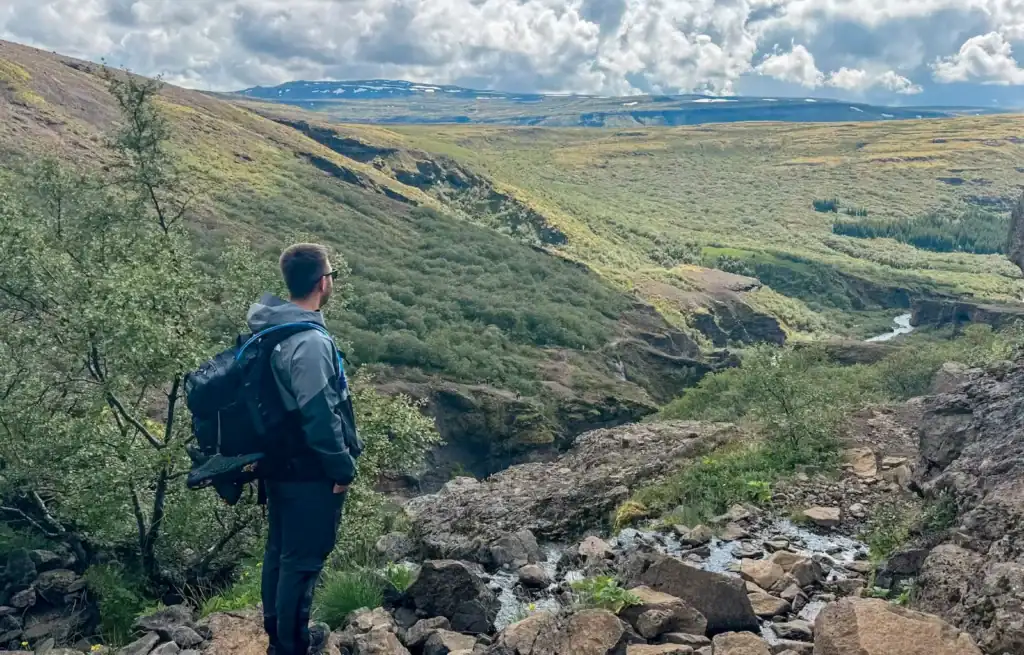
You’ll also need to wear good hiking boots. The trail is very rocky in parts, and you’ll need to protect your ankles. You should also remember to bring a towel and water shoes for the second river crossing.
Plus, you may need to bring a bug-net, depending on what time of year you visit – we highly recommend one between June and August.
Don’t forget food and a bottle of water to stay hydrated.
👉 This is the bug net we recommend if you’re hiking Glymur in summer!
Are There Places to Stay Nearby?
There are some lovely accommodation options around Glymur.
We stayed near Borgarnes the day we explored the Snaefellsnes Peninsula, and it’s home to some of our favourite cabins, hotels, and apartments.
Hotel Hafnarfjall
This is where we stayed. It has a main hotel building where you can grab breakfast, the cutest little cabins with access to a private hot tub, and just a short walk to a private black sand beach backed by mountains. It’s stunning.


🏨 Check prices and book a room at Hotel Hafnarfjell
Hvammsvík Hot Springs Accommodation
If you want something a little more unique, you can actually stay at Hvammsvík itself.

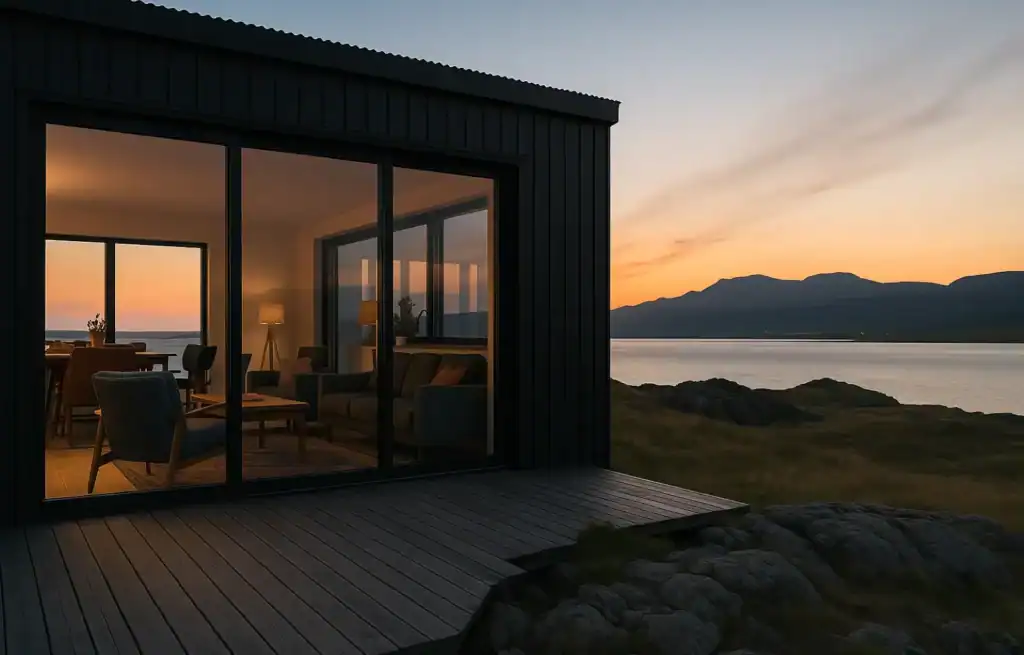
It’s a magical experience being able to dip into the hot springs first thing in the morning or under the stars at night.
🏨 Check prices and book a room at Hvammsvik
Borgarnes
Borgarnes is a great base if you want more food options, supermarkets, and services. Stay here if you’re planning to continue north toward Snæfellsnes or explore more of Borgarfjörður.
🏨 Check prices and book accommodation in Borgarnes.
Reykjavík
Because the hike is only around an hour from the capital, staying in Reykjavík is also a totally valid option.
This is especially true if you want to do Glymur as part of a road trip day and continue exploring the Golden Circle, Reykjanes, or West Iceland afterwards.


🏨 These are all of our favourite places to stay in Reykjavik
Final Thoughts: Is Glymur Worth it?
Yes, hiking Glymur is 100% worth it! It’s one of the most enjoyable hikes we’ve ever done in Iceland. The scenery is beautiful from start to finish, the waterfall is super impressive, and the hike is the perfect mixture of beauty and challenge.
Even though you’re fairly close to Reykjavik, it feels really wild and beautiful and is one of those hikes that reminds you just how insane Iceland’s nature really is.
So, if you’re looking for a fantastic hike in Iceland, we highly recommend Glymur!
Don’t forget to check out all our other hiking guides! And if you have any questions, feel free to ask in our Facebook Group!
👉 Need a place to stay? Check out our favourite hotels in Reykjavik!
Pin for Later!